Water Softener Salt in Southeastern PA: Types, Cost, and How Much to Use
October 21, 2026
If you own a water softener anywhere in southeastern Pennsylvania, you’ve probably stood in the...

Reverse osmosis (RO) is the most thorough drinking water purification available for a residential home. These systems push water through a semi-permeable membrane that blocks contaminants as small as individual molecules. Specifically, these systems remove:
What comes out the other side is pure, clean water for drinking and all other uses. At Dierolf Plumbing and Water Treatment, we provide expert reverse osmosis water system installation. We also offer expert reverse osmosis maintenance and reverse osmosis system repairs (if the need arises.
Our service areas include Bucks, Montgomery, Chester, Delaware, Berks, and Lehigh counties. If you’re wondering if an RO system is right for you, start with a free water test. We’ll honestly assess your water profile to determine whether or not reverse osmosis is the right solution for you.
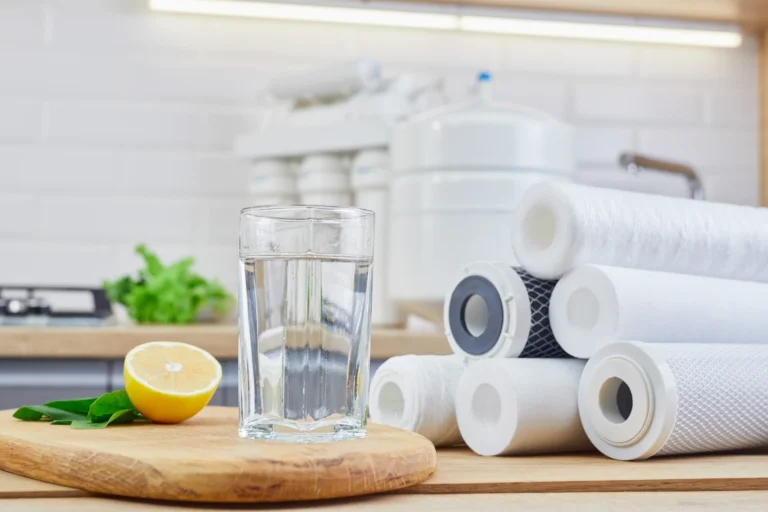
RO removes up to 99% of dissolved contaminants. Here’s what that means for the most common water quality concerns in southeastern Pennsylvania:
PFAS and PFOA contamination have been documented in public water supplies across Bucks, Montgomery, and Chester counties. RO is one of the only residential methods that effectively removes them.
RO systems remove lead from older plumbing, arsenic from well water geology, and other heavy metals, including chromium and cadmium. These contaminants are common in older housing stock throughout Reading, Allentown, and Pottstown.
Nitrates from agricultural runoff are a concern in private well water across Berks and Lehigh counties. RO removes them effectively, while most other filtration methods do not.
These chemicals are added to every public water supply in southeastern Pennsylvania for disinfection. RO removes both, along with the aftertaste and odor they cause.
RO membranes block bacteria and most viruses. For private well water with documented bacterial contamination, we often recommend pairing RO with UV filtration for complete coverage.
RO reduces total dissolved solids significantly, producing noticeably cleaner, clearer water. It also removes calcium and magnesium. If you want minerals retained, ask us about our Ultrapure Alkaline systems.
A note on PFAS in southeastern Pennsylvania: Multiple public water systems across Bucks and Montgomery counties have tested above the EPA’s updated PFAS limits. If you’re on public water in those counties, or on a private well near any industrial or military site, PFAS testing followed by RO installation is one of the most direct things you can do to protect your household.
Most under-sink RO systems use a 4 to 5-stage filtration process. Here’s what happens to your water before it reaches the glass:
The rejected contaminants are flushed down the drain. They aren’t allowed to accumulate in the system. Purified water is dispensed from a dedicated faucet mounted on your sink or integrated directly into your refrigerator line.
We don’t sell RO systems off the shelf. Every installation starts with understanding what’s actually in your water.
Related reading:
We test your water before recommending any system. The test tells us what contaminants are present, at what levels, and whether RO is the right solution or if another approach makes more sense.
We size the system for your household’s actual usage. A family of five uses water differently from a two-person household. We make sure the storage tank and flow rate match how your household lives.
Our experienced service technicians install your system correctly and cleanly. Most installations are completed in a single visit. No mess, no follow-up calls about leaks under your cabinet.
We test the system after installation to confirm it’s performing correctly, then walk you through how to use it, what the filter replacement schedule looks like, and what to watch for. You leave knowing exactly how your system works.
A reverse osmosis system is only as good as its filters. Here’s what the typical maintenance schedule looks like, followed by what happens if individual components are neglected.
Component
Replacement Interval
What Happens If Skipped
Component
Replacement Interval
What Happens If Skipped
Sediment pre-filter
Every 6 to 12 months
Clogs, reducing flow and stressing the membrane
Component
Replacement Interval
What Happens If Skipped
Carbon pre-filter
Every 6 to 12 months
Chlorine passes through and damages the RO membrane
Component
Replacement Interval
What Happens If Skipped
RO membrane
Every 2 to 3 years
Contaminant rejection rate drops — system still runs but purifies less effectively
Component
Replacement Interval
What Happens If Skipped
Carbon post-filter
Every 6 to 12 months
Minor taste and odor impact
We provide a maintenance schedule with every installation and can handle all filter replacements during annual service visits. If you’re not sure when your current system was last serviced, contact us, and we’ll take a look.
RO is the most comprehensive point-of-use drinking water solution we offer, but it’s not always the right fit for every home. Here’s a straightforward comparison:
Learn more about ultrapure alkaline drinking water filtration systems.
Not sure which fits? Schedule a water test to answer that question definitively. You can also read our comparison: Ultrafiltration vs. Reverse Osmosis.
Yes, reverse osmosis removes PFAS from drinking water. It’s actually one of the most effective ways to do so. The system’s semi-permeable membrane blocks PFAS molecules, which are too large to pass through with the water.
This is particularly relevant for homeowners in Bucks, Montgomery, and Chester counties, where PFAS contamination in public water supplies has been documented at levels exceeding updated EPA limits.
Yes, reverse osmosis removes minerals from water. Minerals, including calcium and magnesium, are removed along with contaminants. For most households, this is a non-issue, since the primary source of dietary minerals is food, not water.
If you want purified water with minerals retained, ask us about our ultrapure alkaline system, which adds a remineralization stage after RO purification.
Traditional RO systems send some water to drain as part of the purification process. Typically, for every gallon of purified water produced, 2 to 4 gallons are used, though newer high-efficiency systems have improved this ratio significantly. For most households, the water cost is minimal compared to the cost of bottled water that the RO replaces.
Yes, a reverse osmosis system can handle well water. However, it must have the right pre-filtration. Well water in Berks, Chester, and Lehigh counties often contains iron, manganese, or high sediment levels that can clog or damage an RO membrane quickly. The exact pre-filtration measures you need will be identified following your water test.
Most under-sink RO installations are completed in 2 to 3 hours. Installation requires running a dedicated faucet line, connecting to the drain, setting up the storage tank, and testing the system before we leave. If your plumbing configuration is unusual or you’re adding a refrigerator line, it may take a bit longer. We’ll give you an accurate time estimate when we assess your space.
Yes, reverse osmosis is worth it if you already have a water softener, as they address completely different things. A water softener removes calcium and magnesium to prevent scale buildup and protect your appliances. It does not remove PFAS, lead, arsenic, nitrates, chlorine, or bacteria. An RO system handles what’s in the water you drink and cook with.
How much a reverse osmosis system costs in Pennsylvania depends on several factors, including system configuration, the number of filtration stages, whether a remineralization stage is included, and your plumbing setup. Schedule a free water test, and we’ll give you a specific recommendation and a clear quote. We also offer financing options through our partners.
When you schedule your free water test, one of our experienced service technicians will test your water and give you a straight answer about what you’re dealing with and whether a reverse osmosis system makes sense for your home. We serve Bucks, Montgomery, Chester, Delaware, Berks, and Lehigh counties.
October 21, 2026
If you own a water softener anywhere in southeastern Pennsylvania, you’ve probably stood in the...
October 14, 2026
It’s Sunday morning. You turn on the shower and get a sputter, then nothing. No...
September 30, 2026
If your water tastes off, leaves orange stains in the tub, or smells like rotten...
September 16, 2026
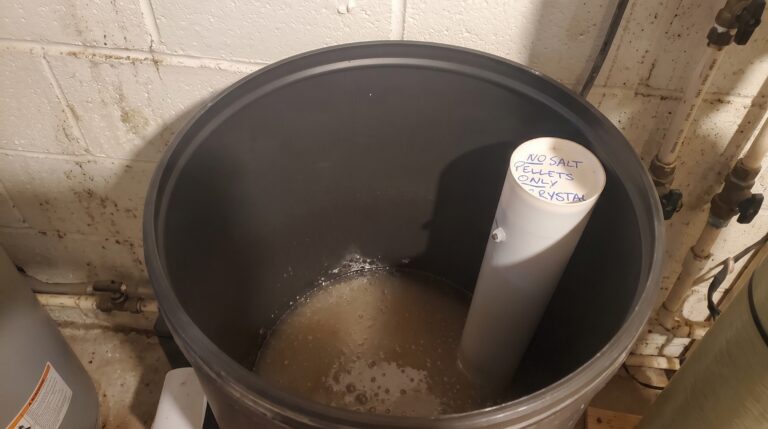
If you popped the lid off your water softener’s brine tank and found water sitting...
September 16, 2026
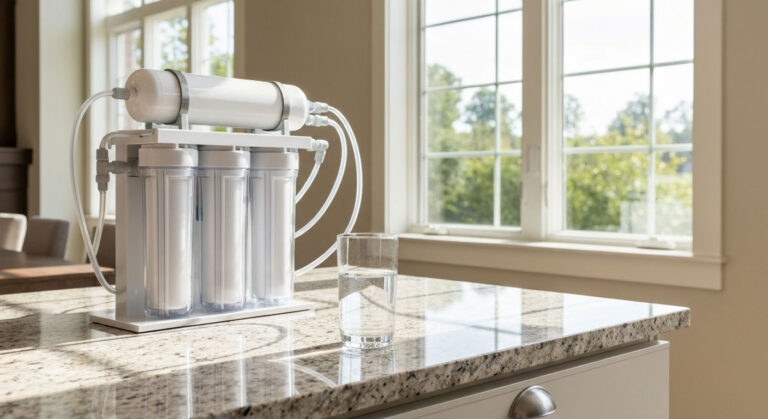
If you’ve ever looked at a glass of tap water and wondered what’s actually swimming...
September 9, 2026
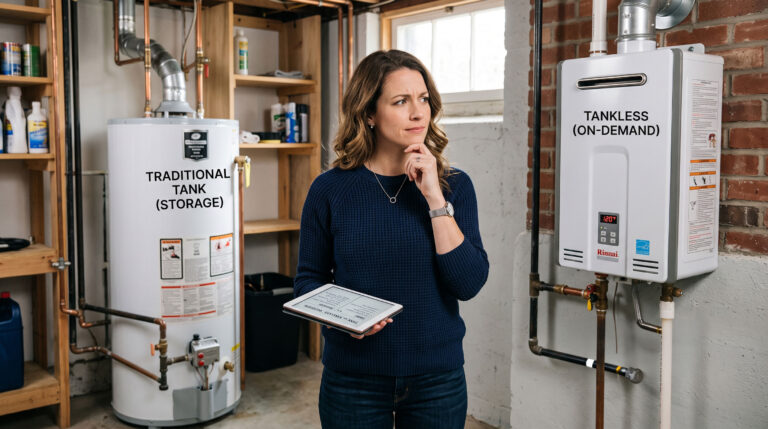
In this guide: Why This Decision Matters More Than You Think How Each System Works...
September 2, 2026
Your water softener is acting up again, and now you are stuck with the same...
August 26, 2026
In this article: What Nitrates Are and Where They Come From Why Well Owners in...