If you’re on a private well anywhere in southeastern Pennsylvania, from Bucks County down through Chester, Montgomery, Berks, Delaware, or Lehigh County, nobody is testing your water for you. No utility, no state agency, no annual notice in the mail. It’s on you, and honestly, that’s not as scary as it sounds once you know what to check and when.
This checklist walks you through a full 2026 well inspection, what you can look at yourself this weekend, what needs a licensed technician, and what your results actually mean once you have them.
Table of Contents
Why Your Well Deserves Attention This Year
Understanding Well Water Treatment in Southeastern PA
The 2026 Well Inspection Checklist
1. Inspect the Wellhead and Casing
2. Test Your Water Quality
3. Check Your Well Pump and Pressure Tank
4. Evaluate Your Existing Treatment Systems
5. Look for Signs of Contamination Near the Well
Common Well Water Problems Across the Region
Well Water Treatment Options Worth Knowing
When to Call a Licensed Professional
Schedule Your Free Well Inspection Consultation
FAQs
Why Your Well Deserves Attention This Year
Owning a private well means you are your own water utility. There’s no one checking your levels behind the scenes, so an annual inspection is really the only way to know what’s actually coming out of your tap.
Think of it the same way you’d think about a furnace tune up or a roof check. A little time now catches small problems before they turn into a failed pump, a contaminated aquifer, or a plumbing repair you didn’t see coming. This guide covers what to look at, what to test for, and what to do when something looks off.
Understanding Well Water Treatment in Southeastern PA
The geology, farmland, and older housing stock across Bucks, Chester, Montgomery, Berks, Delaware, and Lehigh counties create a fairly consistent set of well water issues. Most homeowners in this region run into some combination of hard water, iron, low pH, bacteria, and, increasingly, PFAS.
The Pennsylvania DEP’s private well page confirms the state doesn’t regulate or test private wells directly, which is exactly why homeowners need their own routine. Penn State Extension recommends testing at least every three years for a broader panel, on top of the annual bacteria and nitrate check.
The 2026 Well Inspection Checklist
Some of this you can check yourself this weekend. Other parts need a licensed professional with the right testing equipment. Here’s the full rundown.
1. Inspect the Wellhead and Casing
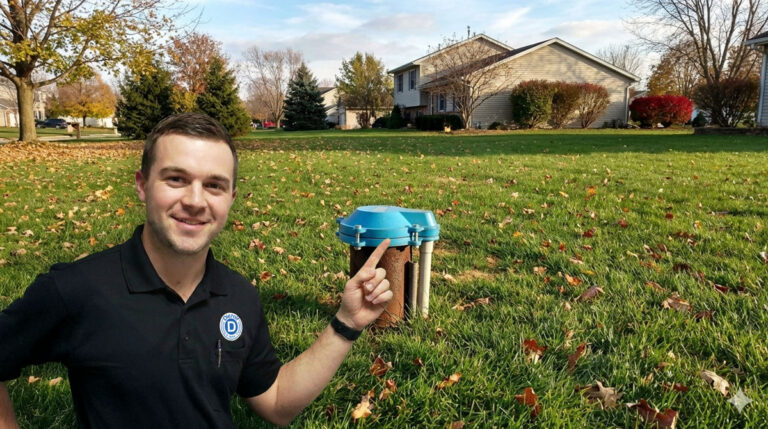
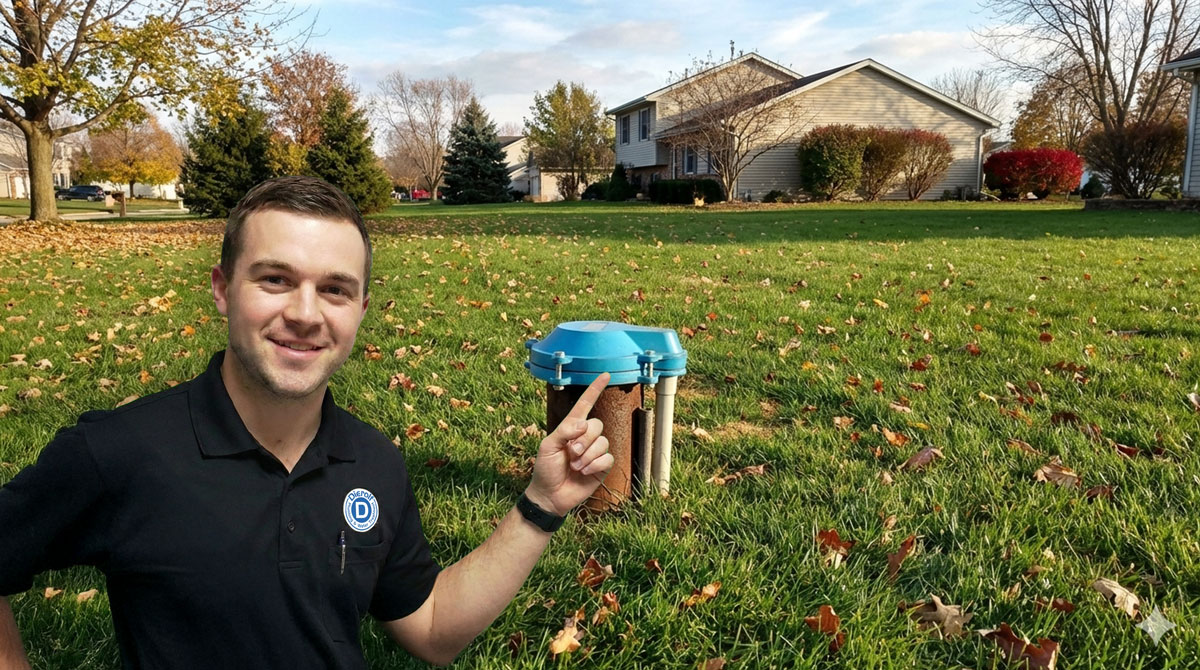
Walk out to your well and take a close look at the wellhead, the visible cap or casing above ground. It should be:
A damaged wellhead is one of the most common ways bacteria and surface contaminants get into a well. If anything looks off out there, don’t wait on it.
2. Test Your Water Quality
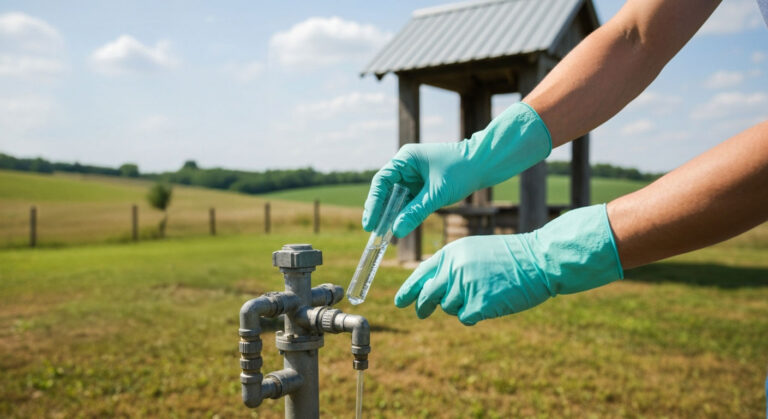
Annual testing is the single most important thing a well owner can do for their family’s health. Here’s what a solid annual panel covers and why each item matters.
| What to test | Why it matters |
|---|---|
| Total coliform and E. coli | Baseline check for biological safety |
| Nitrates | Especially important with infants or during pregnancy |
| pH | Catches acidity before it damages copper pipes |
| Iron and manganese | Common across this region’s rock formations |
| Hardness | Explains scale buildup and appliance wear |
If your property sits near farmland, a golf course, or an industrial site, add pesticides and PFAS to that list. Dierolf’s water testing and analysis service covers the full range of contaminants relevant to homes across the region, and if bacteria ever turns up in a result, our guide to coliform bacteria in well water walks through what that actually means and what happens next.
A basic bacteria and nitrate panel runs toward the lower end. A comprehensive panel that adds metals, PFAS, and volatile organic compounds runs closer to the top. Where you land depends on what’s actually going on around your property.
3. Check Your Well Pump and Pressure Tank
Your pump moves water from the aquifer into the house. Your pressure tank keeps that flow steady. Watch for these warning signs:
None of these symptoms automatically mean a full replacement, but they do mean something needs a look. Our guide on signs your well pump may be failing covers this in more detail, and a professional inspection of your well tanks and well pumps can tell you whether you need a repair, a recharge, or a new unit before you lose water entirely.
4. Evaluate Your Existing Treatment Systems
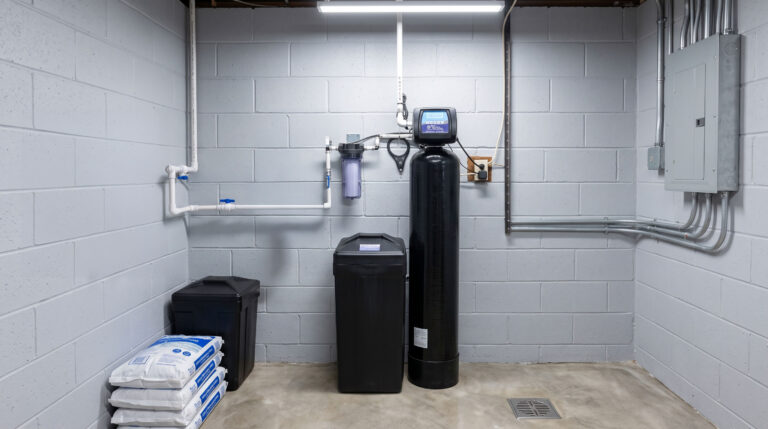
If you already run a water softener, iron filter, UV system, or reverse osmosis unit, this is the time to check each one.
Water softeners
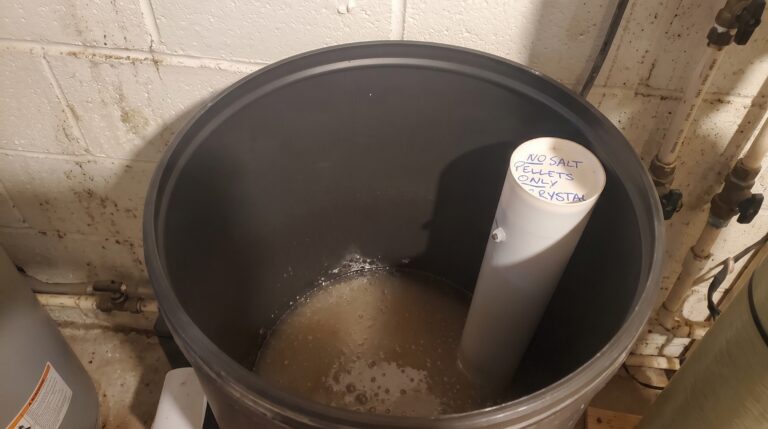
Need salt added regularly and periodic resin cleaning. Look for salt bridges, a hardened crust that stops salt from dissolving.
Iron filtration
Relies on backwash cycles to stay effective. Confirm yours is still cycling on schedule.
UV systems
The lamp degrades over time. Most manufacturers recommend replacing it every 12 months, whether it still glows or not.
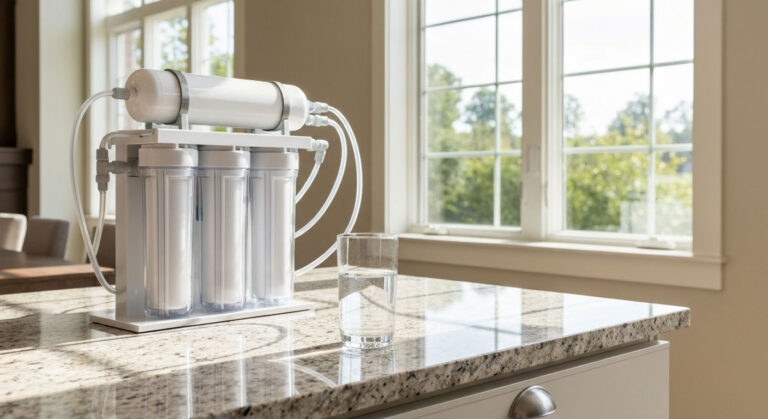
Reverse osmosis
Pre-filters typically need replacing every 6 to 12 months, and the membrane every 2 to 3 years.
Not sure when a component was last serviced? Treat this inspection as a reset and start documenting from here forward. Our guide to UV water filtration is a good next read if bacteria showed up in your last test.
5. Look for Signs of Contamination Near the Well
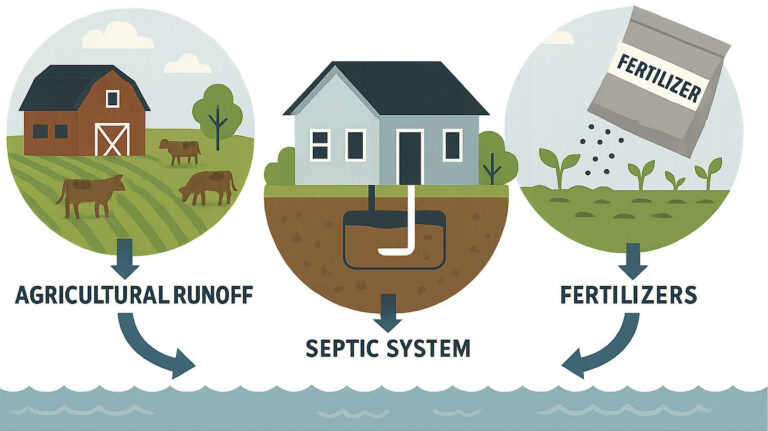
Walk a 50 foot radius around your wellhead and look for anything that could send contaminants down into your aquifer:
If you notice anything new since your last inspection, mention it when you schedule your water test. It helps narrow down what to prioritize.
Not sure what your last inspection missed?
Fill out the form on this page and our well systems team will help you figure out what to check first.
Common Well Water Problems Across the Region
Homeowners across Doylestown, Chalfont, Quakertown, New Hope, and Perkasie in Bucks County, Chester Springs and Exton in Chester County, Royersford and Schwenksville in Montgomery County, Boyertown, Douglassville, and Oley in Berks County, and Emmaus and Alburtis in the Lehigh Valley all report a pretty recognizable set of water quality complaints. Hard water is nearly universal. Iron and manganese show up often in homes drawing from the region’s rock formations. Bacteria tends to spike after heavy rainfall, when surface water works its way into older or poorly sealed wells.
None of these are hopeless, and each one has a well established fix once you know what you’re dealing with. If sulfur smell is your issue, our guide to hydrogen sulfide in well water covers exactly what’s going on and how it gets resolved.
We regularly run promotions on well inspections and water testing. Check our current offers before you schedule.
Well Water Treatment Options Worth Knowing
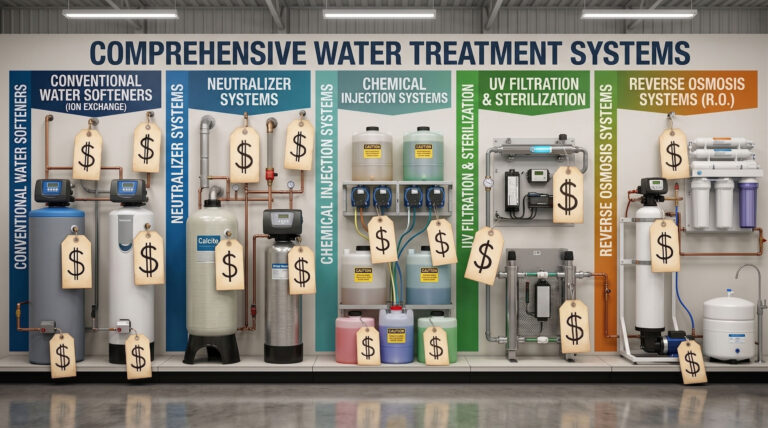
Once you have test results in hand, you can match the problem to the right fix. Here’s a plain language rundown of the most common options for well water across southeastern Pennsylvania.
Iron filtration
Removes dissolved and particulate iron before it reaches your fixtures and appliances, using oxidation and periodic backwashing.
Water softeners
Use ion exchange to swap out calcium and magnesium for sodium, which often meaningfully extends the life of water heaters and pipes.
Neutralizers
Raise the pH of acidic water, protecting copper pipes from the corrosion that can pull metals into your drinking water.
UV filtration
Exposes water to ultraviolet light to destroy bacteria and viruses without adding any chemicals. Often used as a final safeguard.
Reverse osmosis
Pushes water through a semi-permeable membrane that removes nitrates, arsenic, lead, and PFAS. Typically installed at the kitchen sink.
There’s no universal answer here. A system that works for a neighbor in Perkasie may not touch what’s actually in a well in Ottsville. If your water tested acidic, our guide to acidic well water and neutralizers goes deeper into what low pH does to your plumbing over time.
When to Call a Licensed Professional
Some of this checklist you can handle yourself. Other parts genuinely need professional equipment and training. Reach out to a licensed professional when:
Your test comes back positive for bacteria, elevated nitrates, lead, arsenic, or PFAS
Your pump is cycling abnormally or you’ve lost water pressure
You notice physical damage to the wellhead or casing
You’re buying or selling a home and need a formal well inspection for the transaction
It’s been more than three years since your last professional inspection
If a well is part of a real estate closing, our real estate well services and our guide to buying a home with a well in Bucks County both cover what a transaction typically requires. Dierolf Plumbing and Water Treatment serves homeowners across Bucks, Berks, Chester, Montgomery, Delaware, and Lehigh counties, with a well systems team that handles inspections, water testing, and the treatment systems to match whatever your results show. When you reach out, you get a real technician and a straight answer, not a sales pitch.
💧 A well inspection now can save you a much bigger repair later. No obligation, no pressure.
Schedule Your Free Well Inspection Consultation
Reach out and a real technician will walk through your well, your test results, and what actually needs attention, before anything is scheduled.
Serving Bucks, Chester, Montgomery, Berks, Delaware, and Lehigh Counties
Fill out the form on this page and someone from our team will be in touch to schedule your visit.
FAQs
How often should I get my well inspected in Pennsylvania?
At least once a year for bacteria and nitrates, with a more thorough inspection every three to five years. If you’ve never had a formal inspection, 2026 is the year to start. Fill out the form on this page if you want help figuring out where you stand.
What contaminants show up most in well water around here?
Hardness, iron, low pH, coliform bacteria, and PFAS are the most frequent findings across the region. Nitrates tend to show up more near farmland. A comprehensive test tells you exactly what’s present in your specific well.
How would I even know if my well water is making my family sick?
You often wouldn’t, at least not right away. Bacteria and nitrates are odorless and colorless, so testing is the only way to catch them. If anyone in the house keeps getting stomach issues, test promptly. For something like PFAS, testing is really the only way to know your actual exposure.
Is a water softener the same thing as a water filter?
No. A water softener specifically targets hardness by swapping out calcium and magnesium through ion exchange. A water filter is a broader category covering systems built for iron, sulfur, bacteria, or PFAS. Plenty of well water homes need both, depending on what testing reveals.
If I already have a water softener, do I still need reverse osmosis?
Possibly. A softener handles hardness, but it doesn’t touch nitrates, arsenic, lead, PFAS, or bacteria. A reverse osmosis system at the kitchen sink adds another layer of protection for drinking and cooking water. Whether you need one comes down to your test results.
How long does a well pump actually last?
Most well pumps last 10 to 15 years with proper maintenance, and pressure tanks typically last 10 to 12 years. If yours is getting close to that range, a professional look at your well tank and pump is a smart move before it fails on you unexpectedly.
Why does my well water smell like rotten eggs?
That smell usually points to hydrogen sulfide gas, which shows up in certain geological formations across southeastern Pennsylvania. It’s not always a health hazard, but it’s unpleasant and can corrode plumbing over time. A sulfur filtration system addresses it directly, and a water test will confirm whether additional treatment is needed.