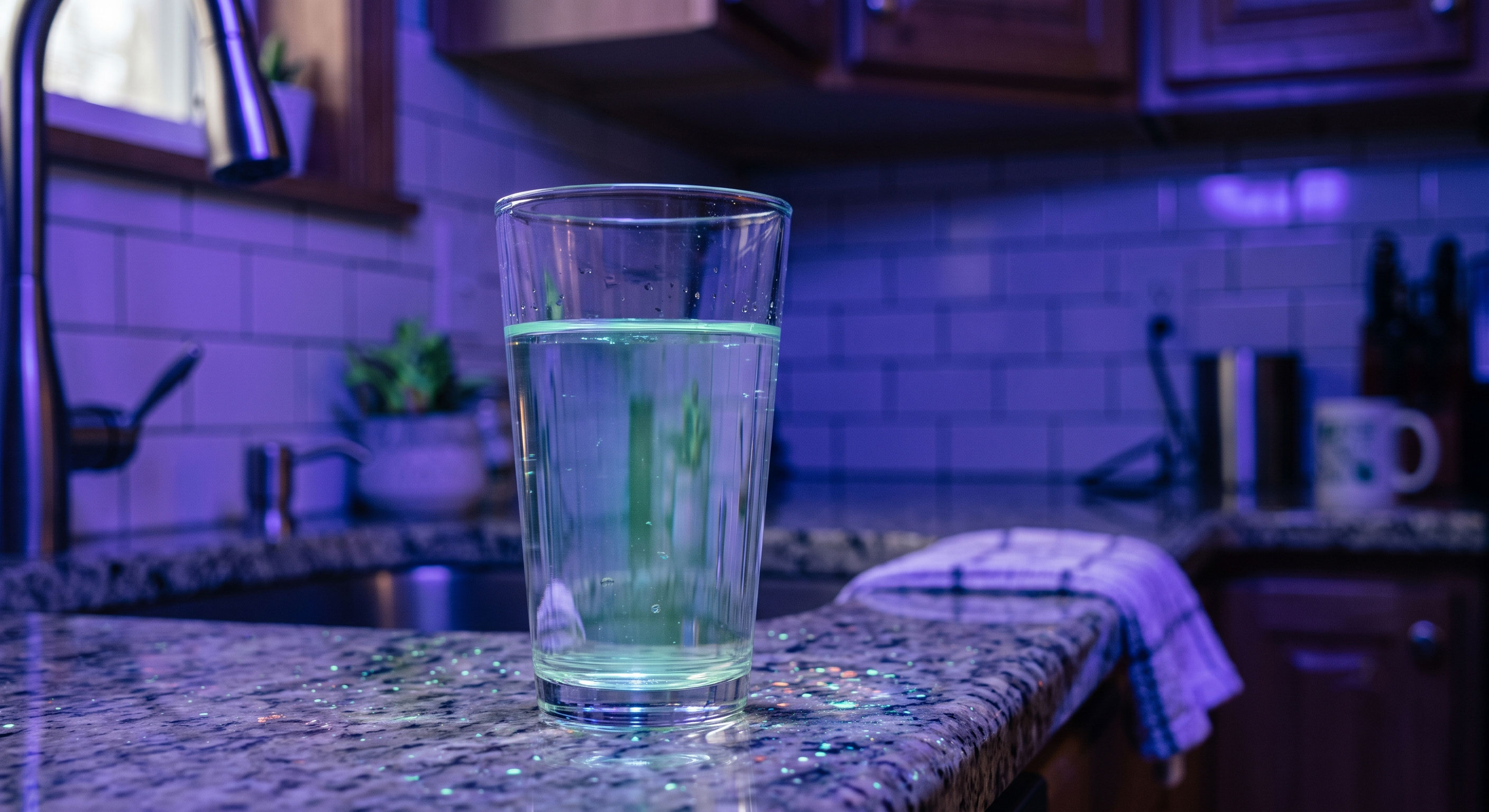
Ever turned on the tap in your Montgomery County kitchen and wondered what’s actually in that water? If your home runs on a private well anywhere from Pottstown to Skippack to Schwenksville, that question matters more than you might think. Bacteria and other microorganisms can get into a well without ever changing how the water looks, tastes, or smells.
A UV water disinfection system is a chemical-free way to knock those threats out before they reach your glass. But does your Montgomery County home actually need one? This guide walks through how UV water sterilizers work, when they make sense for local wells, and what to think through before you invest in one.
Table of Contents
- What Is a UV Water Disinfection System?
- How UV Water Sterilizers Work
- Why Montgomery County Wells Are at Risk
- Signs Your Well Water May Need UV Disinfection
- Benefits of UV Light Water Treatment
- UV System Installation and Maintenance
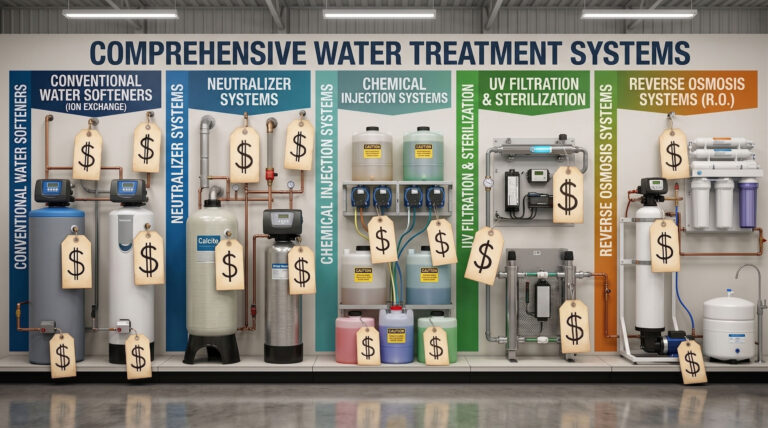
- UV vs. Other Water Treatment Methods
- Choosing the Right UV System for Your Montgomery County Home
- Schedule a Free UV Water Consultation
- FAQs
- Conclusion
What Is a UV Water Disinfection System?
A UV water disinfection system uses ultraviolet light to destroy bacteria, viruses, and other microorganisms in your water supply. It doesn’t add anything to your water. No chlorine taste, no odor, no change in how your water looks or feels coming out of the tap.
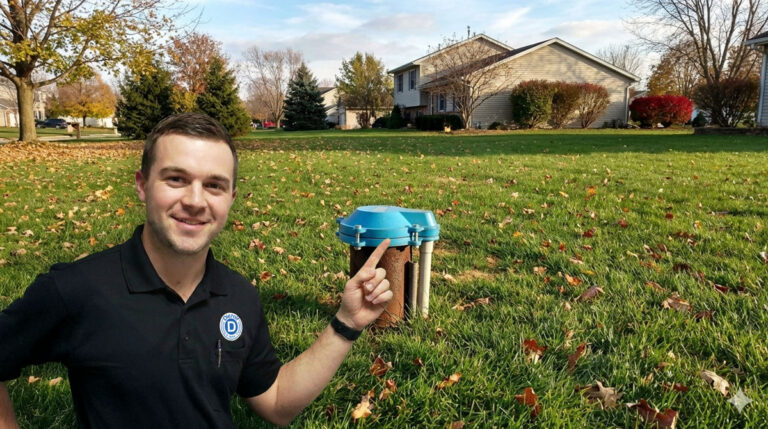
UV systems are especially common on private wells, where there’s no municipal chlorine disinfection working behind the scenes. Montgomery County has a lot of those wells, particularly in the townships north and west of Norristown, out through the Perkiomen Valley and up toward the Berks County line.
How UV Water Sterilizers Work
UV light works at a specific wavelength, 254 nanometers, that’s lethal to microorganisms but completely safe for people. There’s no contact time needed and no chemicals to store.
Water enters the chamber after passing through any sediment pre-filters.
UV light exposure disrupts the DNA of bacteria, viruses, and parasites as they pass the lamp.
Treated water flows straight to your taps, unchanged in taste or smell.
Most residential UV systems handle 8 to 12 gallons per minute, which covers typical household demand. The lamp stays on continuously, so every drop that leaves your faucet has already passed through it.
Why Montgomery County Wells Are at Risk
Not every Montgomery County home needs UV treatment, but a lot of the county’s geography and housing stock line up with the situations that make it worth serious consideration.
Private well density in the northern and western county. Townships like Upper Salford, Lower Salford, New Hanover, Douglass, Marlborough, Skippack, and Perkiomen still rely heavily on private wells rather than public water. If that’s your home, you’re the one responsible for making sure the water is safe. There’s no chlorine backstop like a public system has.
Karst geology in parts of the county. The limestone valley that runs through parts of Whitpain, Plymouth, and Worcester townships is known for karst conditions, where fissures in the rock let surface water and whatever it’s carrying move into groundwater faster than in solid bedrock areas. The Pennsylvania DEP notes that wells in limestone or karst areas can be more vulnerable to surface contamination, especially after heavy rain.
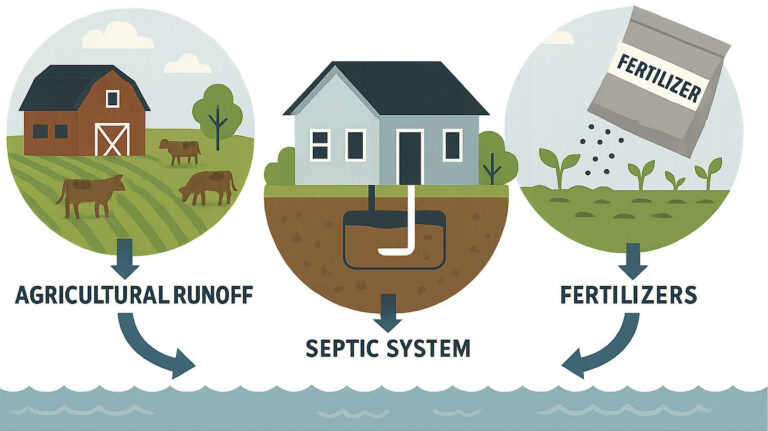
Shallow wells, older well casings, and homes near farmland or septic systems face similar exposure. If you’re near Gilbertsville, Pennsburg, Green Lane, Royersford, or the border with Berks County, agricultural runoff and legacy land use are both realistic contributing factors.
Real estate transactions. Montgomery County sees a steady stream of home sales involving private wells, and a bacterial water test is a routine part of many of those closings. If a test comes back positive for coliform bacteria or E. coli, disinfection isn’t optional. Our real estate water testing services are built around exactly that timeline.
Documented contamination concerns. Homeowners near the Boyertown area on the Montgomery-Berks border should also be aware of ongoing PFAS monitoring tied to a nearby landfill. Our article on the Boyertown landfill PFAS contamination issue covers what’s known so far. That said, PFAS is a chemical concern that UV light does not address. It’s a separate issue worth understanding alongside bacterial risk, and our piece on unregulated contaminants in Montgomery County water lays out the broader picture.
Signs Your Well Water May Need UV Disinfection
A few warning signs suggest a Montgomery County well might be harboring bacteria that call for UV treatment.
Don’t wait for symptoms to show up before testing. Bacteria don’t change how water tastes or smells, so the only reliable way to know is a lab test. Penn State Extension’s research on coliform bacteria in Pennsylvania wells found it in roughly a third of the private wells sampled statewide, which is a big reason annual testing matters even when nothing seems wrong.
If anyone in your home has a compromised immune system, the stakes are higher. Our article on water filtration for immunocompromised individuals goes into more detail on why an extra layer of protection is often worth it.
Not Sure What’s in Your Well Water?
A straightforward water test tells you exactly what you’re dealing with, before you spend a dollar on treatment.
Benefits of UV Light Water Treatment
UV disinfection offers a few real advantages for Montgomery County homeowners dealing with bacterial contamination.
No chlorine, no byproducts
Your water tastes and smells exactly the same after treatment.
Immediate protection
Disinfection happens instantly as water flows through, with no contact time required.
Broad-spectrum effectiveness
Kills E. coli, coliform bacteria, giardia, and cryptosporidium.
Low operating cost
Runs on roughly the electricity of a 60 watt light bulb, with just an annual lamp swap.
There’s no chemical storage to think about and no waste created. Whenever you turn on a faucet, the system is already doing its job.
UV System Installation and Maintenance
Installing a UV system properly takes some expertise. Sizing, placement, and integration with your existing plumbing all matter.
Professional installation. UV systems go in after any sediment filters and before your pressure tank, and the work involves both electrical and plumbing connections. This isn’t a DIY project.
Pre-filtration. UV light can’t penetrate cloudy or sediment-heavy water effectively, which is common in some parts of Montgomery County with higher iron or turbidity. Most installations pair a sediment filter with the UV system.
Annual maintenance. The UV lamp needs replacing every 12 months even if it still appears to be working, since UV output fades with age well before the bulb actually burns out. The quartz sleeve around the lamp may also need periodic cleaning to clear mineral buildup.
Installation cost depends on system size, existing plumbing, and whether pre-filtration needs to be added. Annual operating costs, mostly electricity and lamp replacement, typically run $150 to $250 a year.
We regularly run promotions on water treatment installations. Check our current offers before you schedule.
See Current Water Treatment Specials
UV vs. Other Water Treatment Methods
Understanding how UV stacks up against other disinfection options helps you make the right call for your Montgomery County home.
| Method | What It Does | Tradeoff |
|---|---|---|
| Chlorination | Kills bacteria via chemical injection | Requires chemical storage and ongoing purchases |
| Ozone treatment | Chemical-free disinfection | More complex and costly than UV |
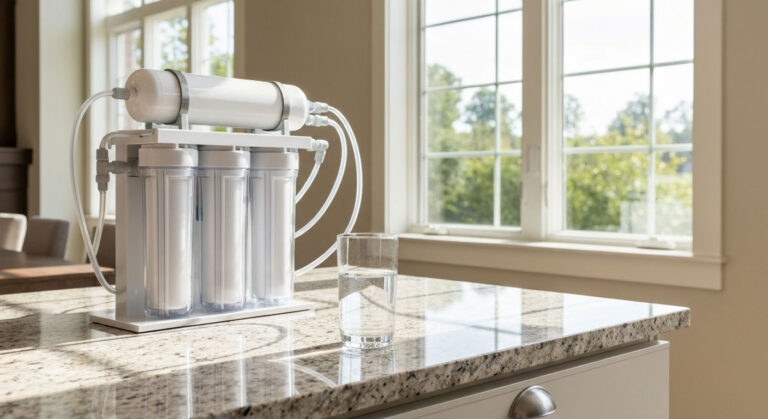
| Reverse osmosis | Removes bacteria, minerals, and many chemicals | Higher cost, wastes water, often more than needed for bacteria alone |
| UV disinfection | Kills bacteria, viruses, and parasites | No effect on chemicals, minerals, or hardness |
A lot of Montgomery County homes end up combining treatments. UV for bacterial safety alongside a water softener for hardness, or a reverse osmosis system at the kitchen tap for drinking water that also addresses PFAS or other dissolved contaminants. If you’re weighing reverse osmosis against ultrafiltration specifically, our article on choosing between the two for a Skippack area home walks through the difference. If hardness is your bigger concern, our piece on hard water versus soft water for Collegeville homes is a good next read.
Choosing the Right UV System for Your Montgomery County Home
Picking the right system comes down to your water usage, water quality, and plumbing setup.
Flow rate. Look at your peak water usage to make sure the system can keep up. Most residential systems handle 8 to 12 gallons per minute, which covers typical households.
Water quality. High iron, manganese, or turbidity, all fairly common in parts of Montgomery County with older wells, can interfere with UV effectiveness. Pre-treatment may be necessary first.
Certification. Look for systems certified by NSF International or the Water Quality Association, which confirms the system meets recognized performance and safety standards.
Local service. A system is only as good as the support behind it. Our water treatment team services Montgomery County homes directly, so when your lamp needs replacing or something seems off, a real technician can be at your door rather than a call center reading a script.
If you’re still working through which type of system fits your situation, our broader guide on choosing the right water treatment system for a southeastern PA home is a useful starting point. And if you haven’t tested your water in a while, our annual well water check-up guide covers what a full test actually includes.
Dierolf Plumbing and Water Treatment pairs UV filtration with full water testing and analysis for homeowners throughout Montgomery County, from Pottstown and Royersford through Schwenksville and Skippack. Local knowledge of the county’s well conditions helps make sure the system you get is actually sized and installed right for your water. Recent spring testing coverage for Pottstown, Royersford, and Schwenksville gives a closer look at what’s showing up locally.
💧 Wondering if your Montgomery County well needs UV protection? Let’s find out together, no obligation, no pressure.
Schedule a Free UV Water Consultation
Tell us about your well and what’s prompting the question. A real member of our water treatment team will follow up to talk through testing and, if needed, the right UV setup for your home.
Serving Montgomery County, PA
Fill out the contact form on this page and someone from our team will be in touch to schedule your visit.
FAQs
How long do UV water treatment systems last?
The chamber and electronics typically last 10 to 15 years with proper care. The UV lamp itself needs replacing every 12 months, even if it still seems to be working, since UV output fades over time.
Does a UV system remove chemicals or minerals from my water?
No. UV light only targets microorganisms. It won’t touch chemicals, minerals, PFAS, or hardness, so you may still need additional treatment for those issues.
What happens to my UV system during a power outage?
It stops working. UV systems need electricity to run, so during an outage you should avoid drinking or cooking with untreated water until power is back and the system is running again.
How much does UV water treatment cost in Montgomery County?
Installation typically runs $800 to $2,000 depending on system size and whether pre-filtration is needed. Annual operating costs, mostly electricity and lamp replacement, run about $150 to $250 a year. Reach out for an exact estimate based on your home.
Can I install a UV system myself?
You shouldn’t. Proper installation involves plumbing and electrical work, plus correct placement relative to your pressure tank and any sediment filters. A licensed professional should handle it.
Do I really need to test my well every year if nothing seems wrong?
Yes. Bacteria don’t change how water looks, tastes, or smells, so a clean-seeming glass of water can still test positive. Pennsylvania’s DEP and Penn State Extension both recommend annual testing for coliform bacteria, especially for private wells that have no other oversight.
Conclusion
A UV water disinfection system gives Montgomery County homeowners on private wells a straightforward, chemical-free way to deal with bacterial contamination. If your water has tested positive for bacteria, or you’d just rather know for sure than guess, UV treatment is one of the more effective and lower-maintenance ways to handle it.
The right call starts with an actual water test, not a guess. Whether you’re in Pottstown, Royersford, Skippack, Schwenksville, or anywhere else in the county, a professional water test tells you exactly what’s in your well before you spend a dollar on treatment.
Ready to find out if your Montgomery County home needs UV protection? Fill out the form on this page and our team will follow up to schedule your visit.