In This Guide
- Why Hard Water Is Such a Common Problem in Phoenixville
- What a Water Softener Actually Does
- Before the Installation: Water Testing Comes First
- How a Water Softener Installation Works, Step by Step
- What to Expect After Installation
- When to Pair a Softener with Other Treatment
- What Does Water Softener Installation Cost in Phoenixville?
- How Dierolf Plumbing and Water Treatment Can Help
- Schedule Your Free Water Analysis
- FAQs
If you live in Phoenixville or the surrounding areas of East Pikeland, Schuylkill Township, Spring City, or Royersford, you’ve probably noticed the signs: white crusty buildup on your faucets, soap that won’t lather right, or a water heater that seems to be working overtime. That’s hard water. And in this part of Chester County, it’s the rule, not the exception.
The good news is that a properly installed water softener solves the problem for the long term. This guide walks you through the full installation process from first water test to the moment soft water starts flowing through your home. We also cover what to expect from your water here specifically, because Phoenixville’s water supply has some quirks worth knowing about before you commit to a system.
Why Hard Water Is Such a Common Problem in Phoenixville
Phoenixville’s drinking water comes entirely from the Schuylkill River. The Phoenixville Water Authority treats it and Pennsylvania American Water distributes it. The river flows southeast from Schuylkill County through limestone bedrock and sedimentary rock formations all the way down to Philadelphia. As it moves through that geology, it picks up dissolved calcium and magnesium the whole way.
According to published water quality data from Pennsylvania American Water, hardness in the Phoenixville system typically runs between 7 and 11 grains per gallon, depending on where you are in the distribution system. Water treatment professionals consider anything above 7 GPG to be hard. So at minimum, Phoenixville water is right at the edge of hard, and in some parts of the service area it climbs well above that.
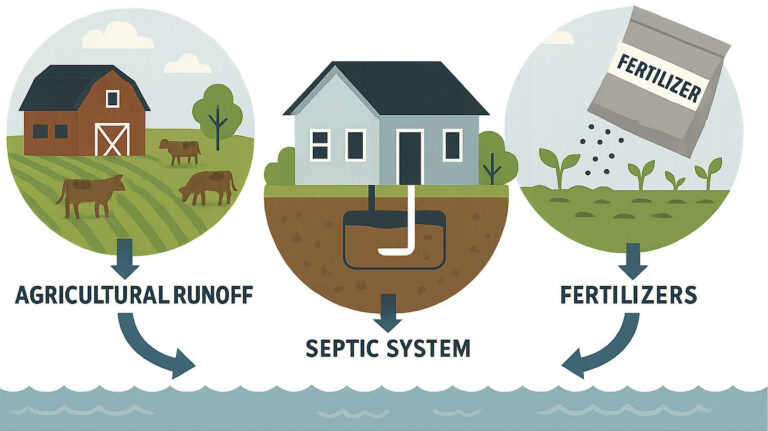
If you’re on a private well in East Pikeland Township, Schuylkill Township, or the rural edges of Spring City, your situation is a little different. Well water in Chester County often brings its own challenges alongside hardness, including iron, low pH, and bacteria. Those issues change which treatment approach is right for you, which is exactly why testing comes before anything else.
The U.S. Geological Survey has documented that the Mid-Atlantic region, including southeastern Pennsylvania, consistently experiences hard to very hard water. It’s rooted in geology that isn’t going anywhere.
Signs of Hard Water in Your Phoenixville Home
What a Water Softener Actually Does
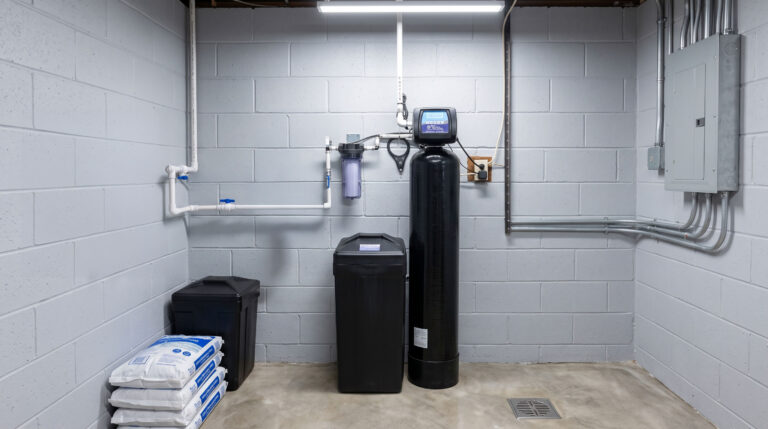
A water softener removes calcium and magnesium through a process called ion exchange. Inside the resin tank, thousands of tiny resin beads carry a negative charge. As water passes through, those beads attract and hold the positively charged hardness minerals. Sodium ions replace them. The water that comes out the other side no longer deposits scale anywhere it flows.
Over time, the resin beads become saturated with hardness minerals and need to be flushed clean. That’s what the brine tank is for. A salt-and-water solution rinses the resin, the hardness minerals drain away, and the system recharges itself automatically, usually overnight while you’re sleeping.
A softener treats hardness specifically. It does not address other contaminants. For most Phoenixville homeowners on public water, that’s the main issue to solve. For well water customers in East Pikeland or Schuylkill Township, you may be dealing with more. We’ll cover that in a section below.
Before the Installation: Water Testing Comes First
Installing a water softener without testing your water first is a bit like buying glasses without an eye exam. You might end up with the wrong prescription.
A professional water testing and analysis tells you how hard your water actually is, measured in grains per gallon, and whether other contaminants are present that could affect how a softener performs. Iron is a particularly common issue in Chester County well water. Running a standard softener on water with high iron levels will foul the resin bed and significantly shorten the system’s life.
If you’re on a private well anywhere in the Phoenixville area including Kimberton, Mont Clare, or the rural stretches of East Pikeland, an annual well water check-up is the right starting point before any treatment equipment goes in. Testing also reveals low pH, sulfur, bacteria, and other issues that need their own solutions, either alongside a softener or before one.
Knowing what’s actually in your water means the system installed is sized and configured for your real conditions, not a generic estimate.
Not Sure What’s in Your Phoenixville Water?
We’ll come out, test your water, and give you a straight answer. No sales pitch, no pressure. Just results you can use.
How a Water Softener Installation Works in Phoenixville, Step by Step
Every installation is a little different depending on your home’s plumbing layout, the water supply source, and the system selected. But the core process follows the same sequence every time.
Step 1: Choosing the Right System Size
Water softener capacity is measured in grains. That’s how many grains of hardness the system can remove before it needs to regenerate. A system that’s too small regenerates constantly and wastes salt and water. A system that’s too large sits idle too long between cycles, which can allow bacteria to develop in the resin bed.
Sizing depends on your household’s daily water usage and the hardness level from your water test. A family of four with Phoenixville municipal water testing at 10 GPG needs a meaningfully different system than a well water customer in East Pikeland with water testing at 20 GPG and iron present. Your installer calculates this based on your actual test results, not a one-size-fits-all chart.
Demand-Initiated Regeneration
The system monitors actual water usage and only regenerates when the resin bed is genuinely exhausted. Most efficient option for most households.
Timer-Based Regeneration
Regenerates on a fixed schedule regardless of actual usage. Less common in new installations, but found in older systems in the area.
Cabinet-Style (Single Unit)
Combines the resin and brine tanks in one compact unit. A good fit for tighter mechanical rooms in older Phoenixville Borough homes.
Step 2: Selecting the Installation Location
The softener has to go on the main water line entering your home, before water reaches your water heater, fixtures, and appliances. That way, every drop of water in the house is treated.
The ideal spot is a basement, utility room, or garage. It needs to be close to a floor drain or utility sink for the brine discharge line, protected from freezing temperatures, and near an electrical outlet for the control head. Older homes in the Phoenixville Borough and in Spring City can have tight, older mechanical rooms. Your installer will assess the layout and figure out the cleanest path.
Step 3: Shutting Off the Water Supply
Before any work begins, the main water supply to the house is shut off. The installer also opens a faucet somewhere in the home to relieve pressure in the lines and drain standing water from the section of pipe where the softener will connect. Standard practice for any main water line work.
Step 4: Cutting Into the Main Water Line
The installer cuts into the main supply line at the chosen location and prepares the pipe ends for connection. Depending on what your home has, copper, PEX, CPVC, or something older, the connection method varies. The goal is the same: a clean, secure splice that handles your household’s full water pressure without leaking.
This step requires real skill and the right tools. Improper cuts or mismatched fittings are a very common source of leaks in DIY installations. In Pennsylvania, work on main water supply lines is subject to plumbing codes, and a licensed master plumber makes sure the installation meets those standards.
Step 5: Installing the Bypass Valve
A bypass valve goes in alongside the softener. It lets you or a technician route water around the unit when needed, for maintenance or if you want untreated water for outdoor irrigation. Softened water isn’t recommended for garden watering because of its sodium content.
It’s a small component, but an important one. The bypass valve gives you flexibility without having to shut off water to the whole house.
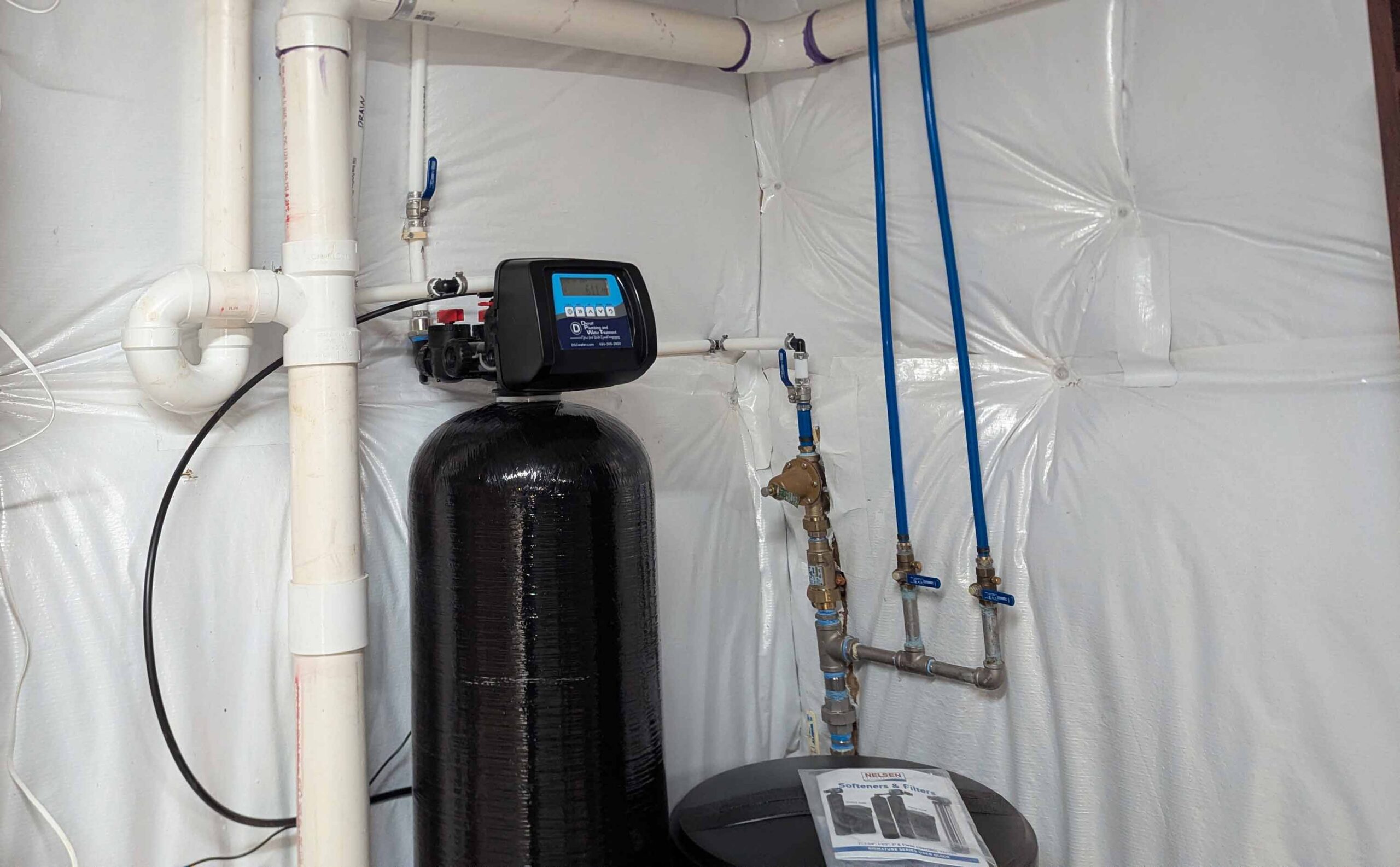
Step 6: Connecting the Brine Tank and Resin Tank
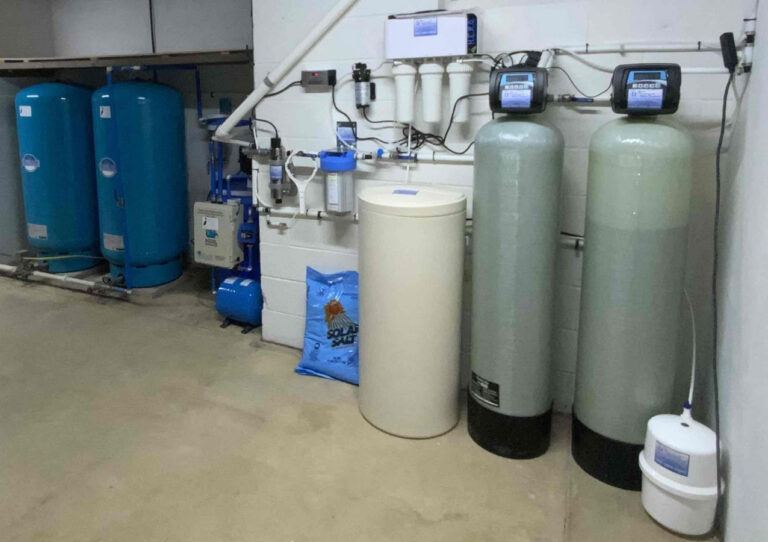
Most residential softeners have two tanks: the resin tank where ion exchange happens, and the brine tank that holds the salt solution used during regeneration. Some systems combine both in a single cabinet unit, which can be practical for older homes with smaller utility spaces.
The installer positions both tanks, connects them to each other and to the main water line, and confirms all fittings are tight. The resin tank connects to the incoming supply on one side and the outgoing treated water line on the other. The brine tank connects to the control head, which manages when and how regeneration runs.
Step 7: Setting Up the Drain Line
During regeneration, the softener flushes hardness minerals and excess brine out through a drain line that runs to a nearby floor drain, utility sink, or standpipe. Proper installation includes an air gap, a physical separation between the drain line and the drain opening, which prevents contaminated water from being siphoned back into the softener or your water supply.
The drain line also needs to be secured so it can’t be accidentally pulled free or kinked. A blocked drain line will cause the regeneration cycle to fail. You can read more about why air gaps matter and how they protect your water supply.
Step 8: Programming the Control Head
The control head is the brain of the system. It manages the regeneration schedule, the volume of water used per cycle, and the timing of the brine flush. Your installer programs it based on your household’s water usage and the hardness level from your water test.
Most modern control heads use demand-initiated regeneration. The system monitors actual water usage and only regenerates when the resin bed is genuinely exhausted. That’s more efficient than older timer-based systems that regenerate on a fixed schedule regardless of need. Your installer will walk you through the settings and explain how to adjust them if anything changes.
Step 9: First Regeneration Cycle and System Check
Once everything is connected and programmed, the installer turns the water back on and runs the system through its first regeneration cycle. This flushes any resin fines or manufacturing residue from the tank and confirms that every connection is tight, the drain line is flowing correctly, and the control head is cycling as programmed.
After the initial cycle, the installer checks the water at a nearby faucet to confirm hardness has dropped to the target level. Any adjustments to programming or connections happen at this stage, before the job is complete.
Quick Reference: The 9 Steps at a Glance
Size the system based on your water test results and household usage
Choose the location on the main line before the water heater and fixtures
Shut off the water and depressurize the line
Cut and prepare the main supply line for connection
Install the bypass valve for maintenance flexibility
Connect both tanks and secure all fittings
Set up the drain line with a proper air gap to the floor drain or utility sink
Program the control head based on your water hardness and household size
Run the first regeneration cycle and verify performance at the tap
What to Expect After Installation
The change is noticeable quickly. Within a day or two, you’ll feel the difference in the shower. Soap lathers more easily, and new scale stops forming on fixtures. Existing buildup on showerheads and faucets will gradually dissolve over the following weeks as soft water runs through.
Your water heater will run more efficiently without scale insulating the heating element. Scale is actually one of the most common reasons water heaters fail early. A water softener protects your water heater in several ways that most homeowners don’t think about until something breaks. Dishwashers and washing machines will perform better and last longer. Clothes washed in soft water tend to feel softer and hold their color over time.
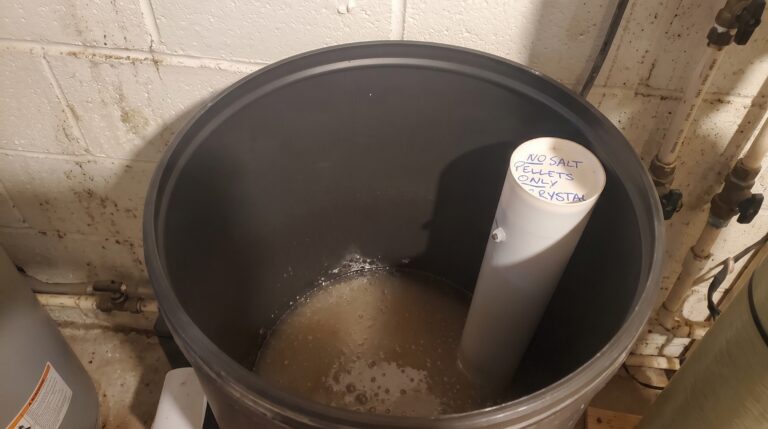
You will need to keep the brine tank stocked with salt. How often depends on your household’s water usage and hardness level. Most families refill every four to eight weeks. Your installer will give you a realistic estimate based on your specific setup and will recommend the right type of salt for your system.
A well-maintained softener typically lasts 15 to 20 years. Annual cleaning of the brine tank and periodic servicing extend its life and keep it running efficiently.
When to Pair a Water Softener with Other Treatment
A water softener addresses hardness specifically. It does not remove other contaminants. For most Phoenixville Borough homeowners on public water, hardness is the primary issue and a softener handles it cleanly.
But if your water test reveals additional issues, here’s how to think through next steps:
Iron in Well Water
Iron is a common issue in Chester County well water, particularly for homeowners in East Pikeland Township and the rural areas east of Phoenixville toward Valley Forge. Running a standard softener on water with elevated iron levels can quickly foul the resin bed. An iron filtration system installed ahead of the softener protects the resin and ensures the whole system works as designed.
Low pH and Acidic Water
Low pH is another well water problem in this region. Acidic water corrodes pipes, fittings, and fixtures. A neutralizer raises the pH before the water reaches your softener and your plumbing, protecting both.
Drinking Water Quality
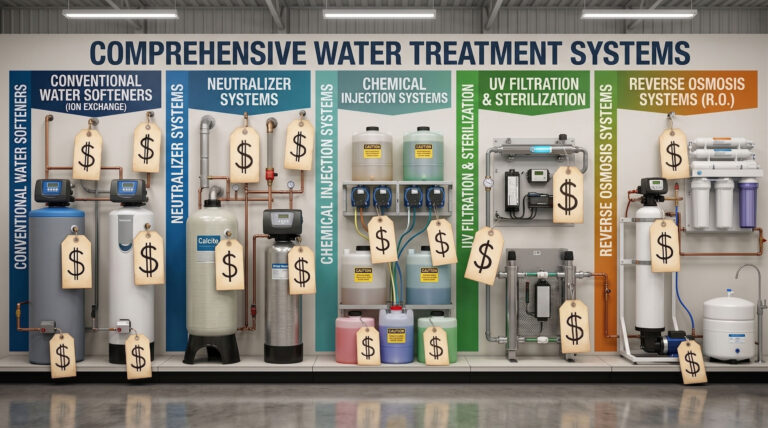
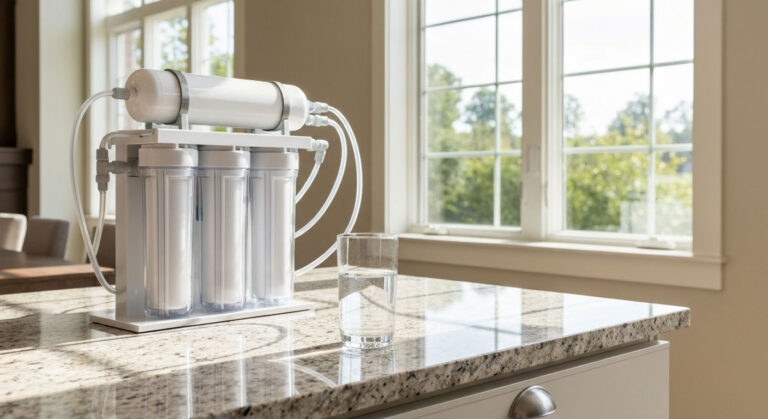
For drinking water, many homeowners in the Phoenixville area add a reverse osmosis system at the kitchen tap. An RO system pushes water through a semipermeable membrane that removes nitrates, lead, PFAS, and a wide range of other contaminants a softener doesn’t touch.
Bacteria in Well Water
For well water in Schuylkill Township and surrounding rural areas, a UV filtration system uses ultraviolet light to neutralize bacteria and viruses without adding chemicals. Combined with a softener and iron filter, it covers most of what well water throws at you in this part of Pennsylvania.
What a softener does NOT address:
What Does Water Softener Installation Cost in Phoenixville?
The cost of a water softener installation depends on the system capacity you need, the complexity of the plumbing in your home, and whether additional treatment equipment is being added at the same time. Older homes in Phoenixville Borough and Spring City can have more complex plumbing situations than newer construction in East Pikeland.
This range covers most standard residential installations in the Phoenixville area, including the system and licensed plumber installation. Well water setups with iron filtration or additional treatment will fall higher in the range or beyond it. The best way to get an accurate number is to have your water tested first.
We regularly run promotions on water softener installations. Check our current offers before you schedule.
See Current Water Softener Specials
How Dierolf Plumbing and Water Treatment Can Help Phoenixville Homeowners
Every home’s water is different. What makes sense for a home in the Phoenixville Borough on public water may be completely wrong for a well water home in Kimberton or out toward Mont Clare. The water chemistry, the plumbing layout, and the household’s needs all matter. That’s why Dierolf starts every water softener project with a professional water test, not a sales pitch.
Dierolf’s licensed master plumbers handle the full installation. That means cutting into the main line, connecting the tanks, programming the control head, and verifying performance at the tap before the job is done. If your water needs more than softening, Dierolf can design a complete treatment system that addresses every issue your test reveals.
We serve homeowners throughout Chester County including Phoenixville, Spring City, East Pikeland, Schuylkill Township, Kimberton, Mont Clare, and surrounding communities. We also serve neighboring Montgomery and Berks County communities. You can learn more about our water softener services or explore how a water softener works in more detail before your consultation.
💧 Ready to stop fighting hard water? Get a free in-home water analysis — no obligation, no pressure.
Schedule Your Free Phoenixville Water Analysis
Tell us a bit about your home and we’ll set up a free in-home water test and softener consultation. We’ll test your water, review the results with you, and recommend only what actually makes sense for your situation.
Free In-Home Water Analysis for Phoenixville Area Homeowners
We’ll test your water on the spot, explain what we find in plain language, and help you understand your options. No commitments required.
FAQs: Water Softener Installation in Phoenixville, PA
How long does a water softener installation take in Phoenixville?
A standard residential installation typically takes two to four hours for a licensed plumber. Older homes in the Phoenixville Borough with more complex plumbing, or setups that involve adding iron filtration or other treatment at the same time, may take longer. Your installer can give you a realistic time estimate after seeing your home.
Do I need a water test before getting a water softener installed?
Yes. A water test tells you how hard your water actually is, which determines the right system size. It also reveals whether other contaminants like iron or low pH are present that could affect how the softener performs. Skipping the test is a common mistake that leads to undersized systems, fouled resin beds, or problems that go unaddressed. You can schedule a free water analysis here.
Can I install a water softener myself in Pennsylvania?
Some homeowners try it, but the work involves cutting into your main water supply line, handling pressurized plumbing, and correctly programming the control head. Errors cause leaks, water damage, or a system that simply doesn’t perform. In Pennsylvania, work on main water supply lines is subject to plumbing code, and a licensed plumber ensures the installation meets those requirements. It’s also worth noting that many manufacturer warranties require professional installation.
Will a water softener make my water taste salty?
A properly functioning softener adds a very small amount of sodium to your water. Most people don’t notice any taste difference at all. The amount depends on your water’s hardness level. Phoenixville’s water runs 7 to 11 GPG, so sodium addition is modest. If sodium in drinking water is a health concern, a reverse osmosis system at the kitchen tap removes it effectively.
How much salt does a water softener use?
Salt usage varies based on your water’s hardness and your household’s daily consumption. A typical family of four with Phoenixville’s water hardness might use between 6 and 10 pounds of salt per week. Your installer can give you a more precise estimate based on your test results and household size.
Does a water softener remove PFAS, TTHMs, or bacteria from Phoenixville water?
No. A water softener removes hardness minerals through ion exchange only. It does not remove PFAS, trihalomethanes (TTHMs), chromium, bacteria, nitrates, or lead. If those contaminants are a concern, additional treatment such as a reverse osmosis system or UV filtration system is needed alongside the softener. A water test will clarify exactly what’s in your water.
I’m on well water in East Pikeland or Schuylkill Township. Is a water softener still the right first step?
Possibly, but not until you test. Well water in Chester County often has iron, low pH, or bacteria alongside hardness. Installing a softener without addressing those issues first can damage the resin bed and reduce the system’s effectiveness. A professional water test will tell you exactly what you’re working with so the right equipment goes in the right order. Schedule a free water analysis to get started.
How long does a water softener last?
A well-maintained system typically lasts 15 to 20 years. Keeping the brine tank stocked with the right salt, cleaning it annually, and having the system serviced periodically all extend its life and keep it running efficiently. If you’re seeing signs that something might be off, check out these warning signs your water softener may not be working.