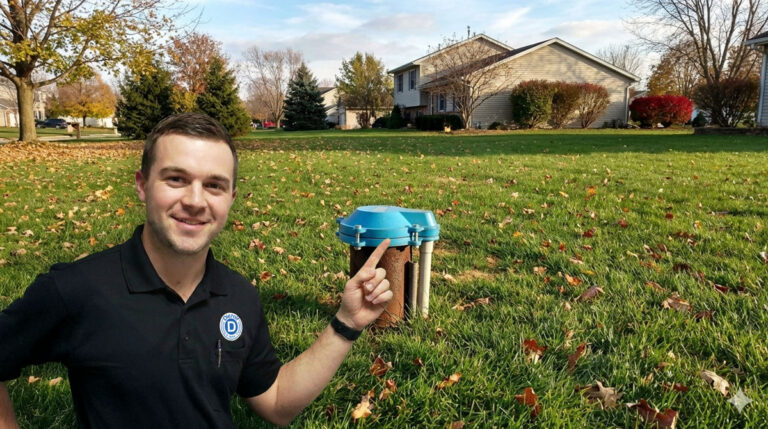

Exton might feel suburban — with its Route 30 retail corridor, growing residential developments, and proximity to West Chester and Malvern — but a surprising number of homes here still rely on private wells. If yours is one of them, May is the month to pay attention. Spring runoff across West Whiteland Township and East Whiteland Township has already pushed surface contaminants downward, and your well sits directly in that path.
Most well owners in the Exton area don’t think about water testing until something seems off. But by that point, contaminants have often been building for months. A spring test gives you an accurate picture of what your family is actually drinking right now.
Why May Matters for Exton Well Owners
The U.S. Environmental Protection Agency recommends that private well owners test at least once a year. May is the best window because the seasonal events that most affect groundwater quality — snowmelt, heavy spring rain, soil disturbance — have already happened. You’re testing the water that has been through all of that.
In Exton specifically, there’s an additional layer of complexity. This area has seen significant commercial and light industrial development over the past few decades. Older sites near Route 30, Route 100, and the Pennsylvania Turnpike interchange bring a different risk profile than you’d find in a purely agricultural township. That history matters for what shows up in local groundwater.
What Spring Does to Groundwater in West Chester County
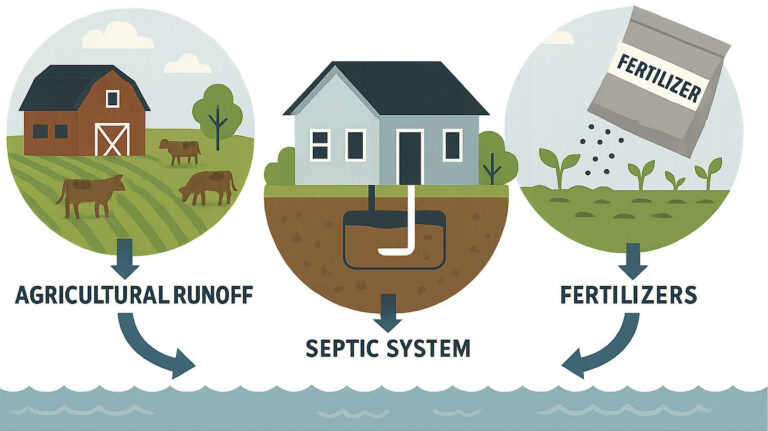
When snowmelt and spring rain run across paved surfaces, lawns, and remaining agricultural land in West Whiteland and East Whiteland Townships, it picks up whatever is on the surface. Road salt from the winter. Fertilizer from lawns and landscaping. Surface bacteria from wildlife and pets. All of it percolates into the soil and can reach the water table that feeds your well.
Frozen ground thaws unevenly, creating pathways for surface water to reach depths it normally wouldn’t in drier months. For homes in the more rural pockets of Exton — along Upper Valley Road, Ship Road, and the quieter residential streets off Route 100 — this is a real seasonal dynamic.
Contaminants to Watch for in Exton Area Wells
Hardness and Iron
Chester County’s geology produces hard water with elevated calcium, magnesium, and iron. Scale buildup on fixtures, shortened appliance life, and orange staining on laundry are the most visible signs.
Coliform Bacteria
A reliable indicator that surface water has entered your well. More likely after heavy spring rains or if your well casing or cap has aged. No taste. No smell. Only a test catches it.
VOCs from Land Use History
Exton’s commercial development history means some properties carry risk of volatile organic compound (VOC) contamination from older industrial or fuel storage activity. If your home is near a redeveloped site, VOC testing is worth discussing.
Nitrates
Near remaining farmland and older septic systems in the township. Elevated levels are a concern for infants and pregnant women, per the CDC.
PFAS and Industrial History in Chester County
PFAS — per- and polyfluoroalkyl substances — have been detected in groundwater across Pennsylvania, including Chester County. These chemicals were used extensively in firefighting foam, industrial processes, and consumer products. They don’t break down in the environment, and they have no taste, odor, or color at levels that still affect health.
Chester County has been proactive about studying its water quality. The Brandywine Conservancy has received state funding specifically to improve water quality awareness in Chester County. If your well is near any site with industrial history, PFAS testing is worth including in your spring panel. You can also learn more about how PFAS gets into drinking water to understand your risk.
What a Professional Water Test Actually Covers
A home test kit from a hardware store is a starting point, not an answer. A professional water testing and analysis service measures total coliform and E. coli, nitrates, pH, hardness, iron and manganese, turbidity, VOCs if relevant, and PFAS. The results include actual concentrations — not just pass/fail — and compare those against EPA and Pennsylvania DEP thresholds.
That context is what turns a lab report into an actual action plan for your family’s water. Read more about what happens during a free water test to know what to expect.
Questions About Your Exton Well?
Dierolf’s licensed water specialists serve the West Whiteland and East Whiteland Township area. Let’s start with a free in-home water analysis.
Treatment Options That Match Your Results
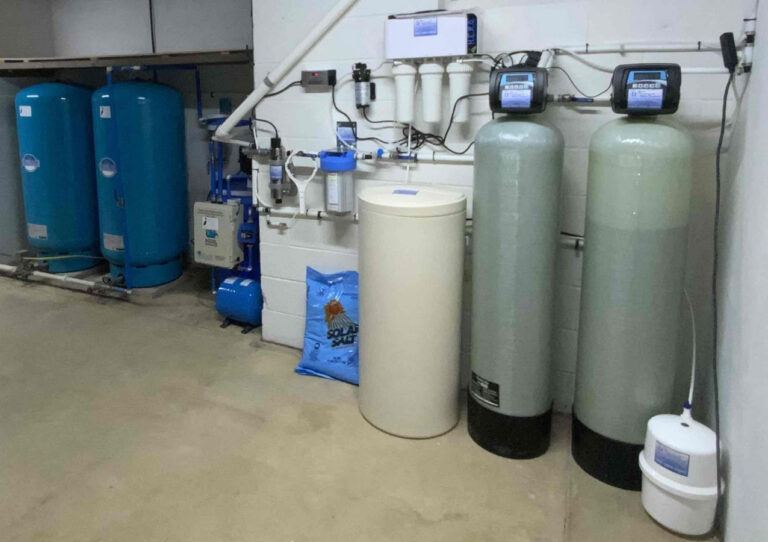
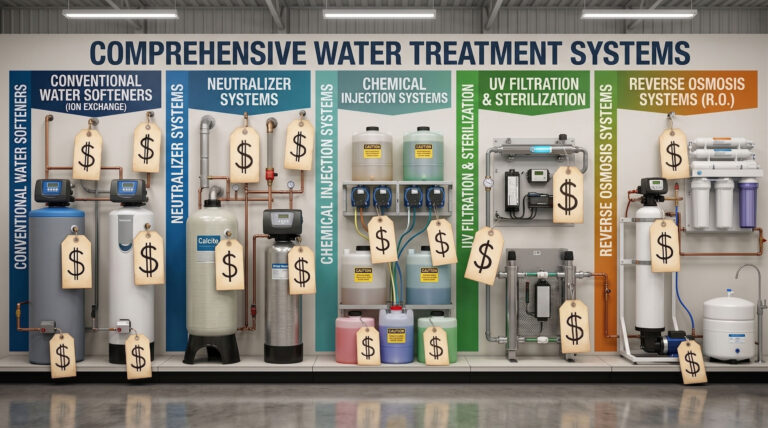
Bacteria detected — A UV filtration system uses ultraviolet light to neutralize bacteria and viruses without adding chemicals. Quiet, low-maintenance, and effective.
High iron — An iron filtration system removes dissolved and particulate iron before it reaches your plumbing and fixtures.
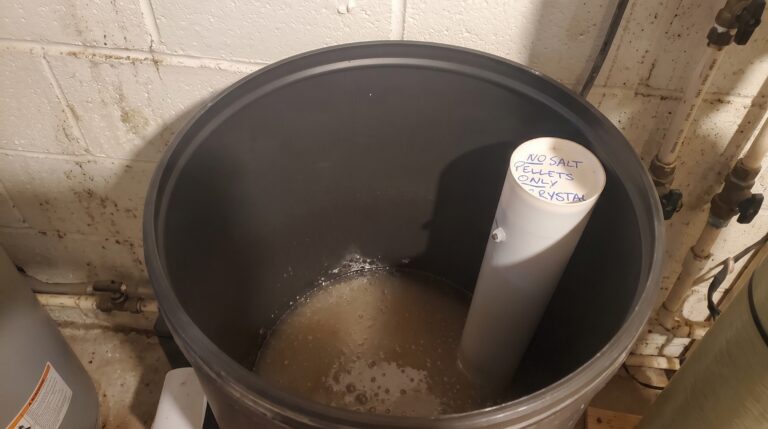
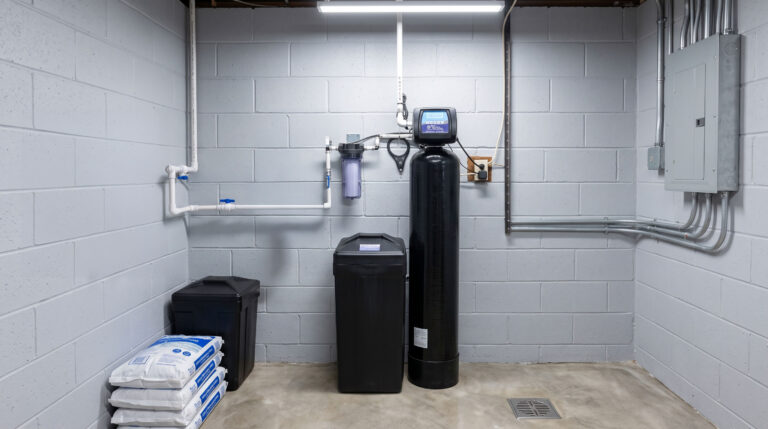
Hard water — A water softener removes calcium and magnesium through ion exchange, extending the life of your water heater and appliances.
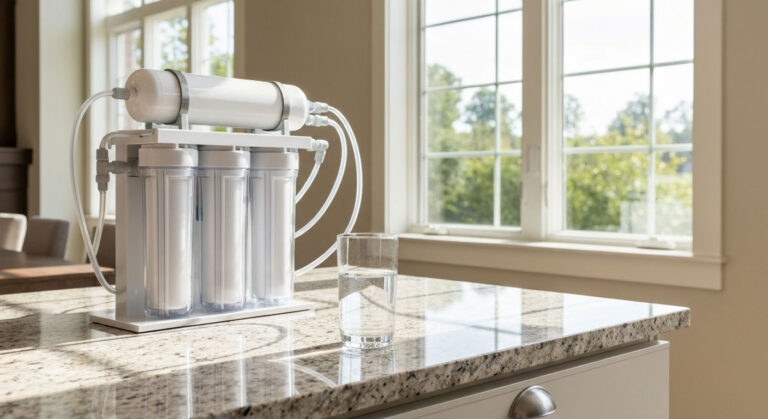
PFAS, nitrates, or VOCs — A reverse osmosis system at the kitchen tap is one of the most effective options for chemical contaminants. It removes PFAS, nitrates, and heavy metals through a semi-permeable membrane.
We regularly run promotions on water treatment system installations. Check our current offers before you schedule.
See Current Water Treatment Specials
How Dierolf Serves the Exton Area
Dierolf Plumbing and Water Treatment serves homeowners throughout Chester County, including Exton, Malvern, West Chester, Berwyn, and surrounding West Whiteland and East Whiteland Township communities. Our licensed master plumbers handle everything from the initial water test to the installation of the right treatment system for your specific results.
This is a straightforward process. You schedule a free in-home water analysis, we test and review the results with you, and we recommend only what your water actually needs. No upselling. No one-size-fits-all packages.
💧 Know what’s in your Exton well before summer — free analysis, no pressure.
Get Your Free Well Water Analysis in Exton
Fill out the form below and a Dierolf water specialist will reach out to schedule your in-home consultation. We’ll test your water, review the results, and recommend only what your well actually needs.
Schedule Your Free In-Home Water Analysis
Serving Exton, Malvern, West Chester, Berwyn, and throughout Chester County.
Frequently Asked Questions
I had my water tested when I bought the house. Isn’t that enough?
Not necessarily. Groundwater conditions change over time — new development nearby, aging well components, seasonal contamination events. A test at closing captures one moment in time. Annual testing in May gives you a current, accurate picture. Schedule a free analysis here.
Should I test for PFAS if I’m near a commercial area in Exton?
It’s worth discussing with a water professional. PFAS contamination is linked to industrial and commercial land use history, firefighting activity, and certain types of manufacturing. If your property is near older commercial development or redeveloped industrial land, including PFAS in your test panel is a reasonable precaution.
What’s the difference between a home test kit and a professional test?
Home kits test a limited range of parameters and give broad pass/fail readings. They can’t detect PFAS, VOCs, or low-level contaminants with the precision needed to make good treatment decisions. A professional water testing and analysis service gives you actual concentrations and compares them against EPA and PA DEP thresholds.
My water smells slightly like rotten eggs. What does that mean?
That’s typically hydrogen sulfide, which is common in some Chester County wells. It’s treatable with a sulfur filtration system. Read more about what a rotten egg smell in your water means and then schedule a test to confirm.