
Whether your Allentown home is served by the City of Allentown’s water system or the Lehigh County Authority, you have a water utility doing the baseline work of treating and delivering safe drinking water. But treated public water is not the same as problem-free water at your tap. Spring is the time of year when Lehigh Valley homeowners start noticing the signs of hard water, scaling, odd tastes, and other issues that public treatment doesn’t address. May is a smart month to take a closer look.
In This Article
- Why Spring Matters for Allentown Water Quality
- Water Quality Concerns Specific to Allentown and the Lehigh Valley
- What Municipal Treatment Doesn’t Fix in Your Home
- Treatment Options for Allentown Homeowners
- What a Professional Water Analysis Covers
- How Dierolf Plumbing and Water Treatment Can Help
- Schedule Your Free Water Analysis
- FAQs
Why Spring Matters for Allentown Water Quality
Allentown’s water comes from a mix of surface water and groundwater sources, depending on your part of the city and which authority serves your address. Spring runoff adds turbidity and contaminant load to surface water sources, which increases the treatment demands on the supply system. Even when utilities meet those demands, the water arriving at your tap reflects both what the utility delivers and what your home’s plumbing adds to it.
Spring is also when homeowners tend to notice their water quality most acutely — scale buildup after a winter of closed windows and heavy indoor water use, taste changes as seasonal chemistry shifts, or just a renewed awareness of what they’ve been drinking all winter. May is a good time to get a clear picture.
Water Quality Concerns Specific to Allentown and the Lehigh Valley
Hard Water Throughout the Lehigh Valley
Hard water is the single most common water quality complaint among homeowners across Allentown, Bethlehem, Emmaus, Salisbury Township, and the surrounding Lehigh Valley communities. The carbonate and limestone geology of this region naturally produces high-hardness water, and neither the Allentown system nor the Lehigh County Authority removes hardness minerals from the public supply. Scale on faucets, shortened water heater life, dry skin, and spotty dishes are all hard water symptoms. A closer look at what hard water actually does to your home explains why it matters beyond aesthetics.
PFAS and Industrial History in the Lehigh Valley
The Lehigh Valley has a significant industrial history, and PFAS contamination has been detected in groundwater sources across the region. The Pennsylvania DEP continues to monitor PFAS levels in both public and private water sources throughout Lehigh County. For homeowners on well water in the Allentown area, PFAS screening is increasingly important. For those on public water, understanding what your utility reports and what further reduction options exist at the tap is worth knowing.
Older Housing and Internal Plumbing
Allentown has substantial older housing stock — neighborhoods with homes built in the early and mid-1900s where internal plumbing may include older solder joints, brass fixtures, or lead service line connections. The utility’s water can be treated and clean at the distribution point, but lead and copper can still leach into water at the tap from in-home plumbing. If your home is older and you haven’t specifically tested for lead at the faucet, it’s worth including in a water analysis. Here’s what to know about lead in drinking water and how treatment works.
Chlorine and Chloramine in Treated Water
Allentown’s system uses chlorine-based disinfectants to maintain safe water throughout the distribution system. The chemical that does that job also arrives at your tap. Many homeowners are sensitive to the taste or smell, and some prefer to reduce their exposure to disinfectant byproducts. This article on how chlorine in public water affects your skin explains what’s happening and what the options are.
What Municipal Treatment Doesn’t Fix in Your Home
Allentown’s water utility meets regulatory standards before delivering water to your home. But regulatory compliance and household-level water quality are two different things. Here’s what public treatment is not designed to address:
Allentown Homeowners: Find Out What’s Actually at Your Tap
A free in-home water analysis goes beyond what your utility reports and shows you what’s coming out of your faucet.
Treatment Options for Allentown and Lehigh Valley Homes
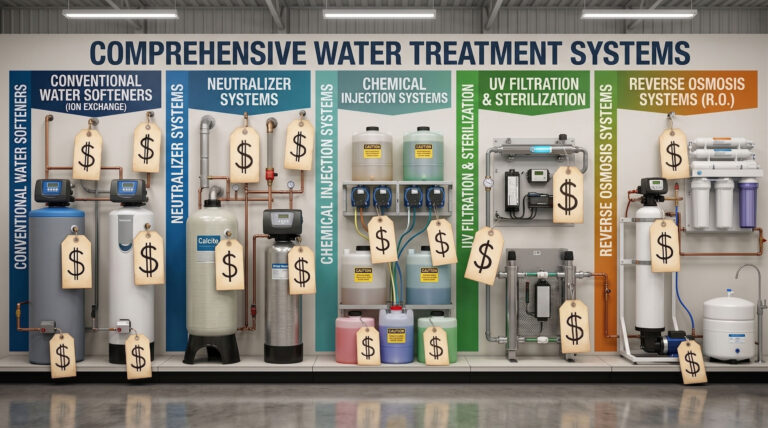
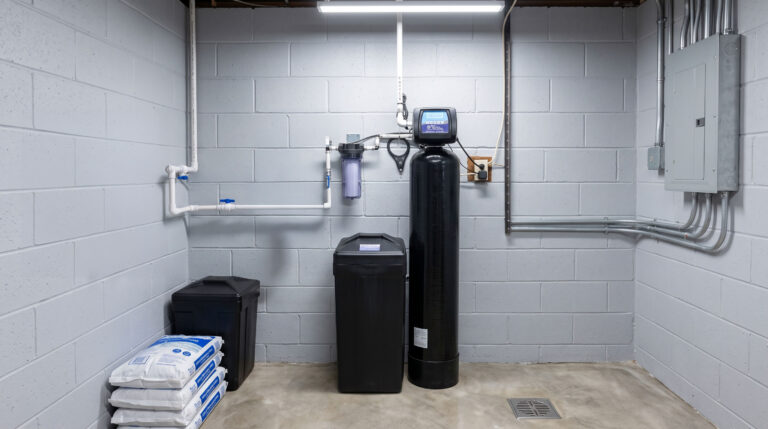
Water Softener
The most impactful improvement for most Allentown homes. Removes hardness minerals, extends appliance life, and makes an immediately noticeable difference in skin, hair, and dishes.
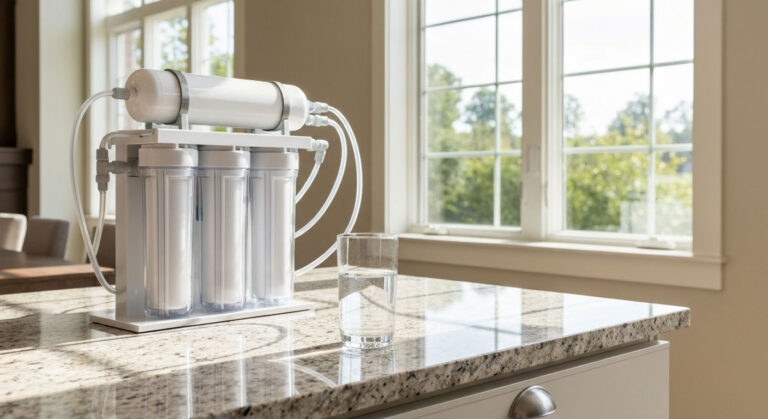
Reverse Osmosis System
Point-of-use system for drinking and cooking water. Highly effective for PFAS, lead, nitrates, and chloramine reduction. Installed under the kitchen sink.
Whole-Home Carbon Filter
Reduces chlorine and chloramine throughout the entire home. Good choice for homeowners sensitive to taste, odor, or disinfectant effects on skin.
UV Filtration
For well water users in the Allentown area, UV is the standard for bacteria and virus elimination. Chemical-free and low-maintenance.
We regularly run promotions on water softeners and other treatment systems. Check our current offers before you schedule.
See Current Water Treatment Specials
What a Professional Water Analysis Covers for Allentown Homes
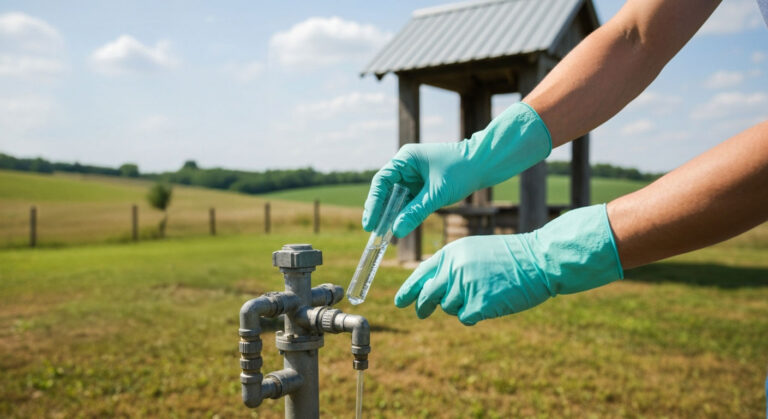
A professional water testing and analysis service tests your water at the tap, with actual concentrations measured against EPA and Pennsylvania DEP safety thresholds. For an Allentown area home on public water, a useful analysis covers:
pH and hardness — establishes the baseline for softening recommendations and appliance impact
Chlorine and chloramine levels — measured at your faucet, which is what matters for exposure
Lead and copper — important for older homes in Allentown’s established neighborhoods
Iron and turbidity — even public water can carry seasonal sediment or iron at certain times of year
PFAS screening — recommended for Lehigh Valley homeowners given the regional contamination history
How Dierolf Plumbing and Water Treatment Serves Allentown
Dierolf Plumbing and Water Treatment serves homeowners throughout Allentown, Bethlehem, Emmaus, Salisbury Township, South Whitehall, Whitehall Township, and the broader Lehigh Valley. Our experienced service technicians handle everything from initial water analysis through full installation of the right treatment system for your home and your water.
We also handle residential plumbing and water heater services — so if a spring checkup is on your list this year, we can address more than just the water quality side in a single visit. If you’d like to understand the testing process before you schedule, this walkthrough covers exactly what to expect.
💧 Allentown’s water meets the standard — but your home’s water may not meet your standard. Let’s check.
Schedule Your Free In-Home Water Analysis
Fill out the form below and a member of our team will reach out to schedule your free water analysis. No pressure, no obligation.
Get Your Free In-Home Water Analysis
Serving Allentown, Bethlehem, Emmaus, Salisbury Township, Whitehall, and surrounding Lehigh Valley communities.
Frequently Asked Questions
Allentown has a public water system. Why would I need a water test?
Your utility meets regulatory standards at the treatment plant, but several issues are not addressed by municipal treatment — including hard water, residual disinfectants, and anything that leaches from your home’s internal plumbing. A home water analysis tests what’s actually at your tap, which can be quite different from what the utility reports.
Is hard water a big problem in Allentown?
Yes — it’s one of the most common water quality issues throughout the Lehigh Valley. The carbonate geology of this region produces naturally high-hardness water, and public treatment doesn’t remove those minerals. Scale on faucets, reduced appliance lifespan, dry skin, and spotty dishes are the most common symptoms. A water softener is the standard solution.
Should Allentown homeowners be concerned about PFAS?
PFAS have been detected in Lehigh Valley groundwater, and the region’s industrial history is a relevant factor. Both well water users and those on public water in the area have reason to want to know their PFAS levels. A reverse osmosis system at the kitchen tap is one of the most effective options for reducing PFAS in drinking water. Contact us to discuss your options.
Does Dierolf serve Allentown and the Lehigh Valley?
Yes. Dierolf Plumbing and Water Treatment serves homeowners throughout Allentown, Bethlehem, Emmaus, Salisbury Township, South Whitehall, Whitehall Township, and the surrounding Lehigh Valley area. Fill out the form above and we’ll reach out to schedule a free in-home water analysis.
My home was built in the 1950s. Should I be concerned about lead in my pipes?
It’s worth testing specifically for lead at the tap, especially in a home that age. Older solder joints, brass fixtures, and service connections can leach lead into water even when the utility delivers clean water up to your meter. A professional water analysis can include lead screening, and there are point-of-use solutions available if levels are elevated. Reach out to schedule a consultation.