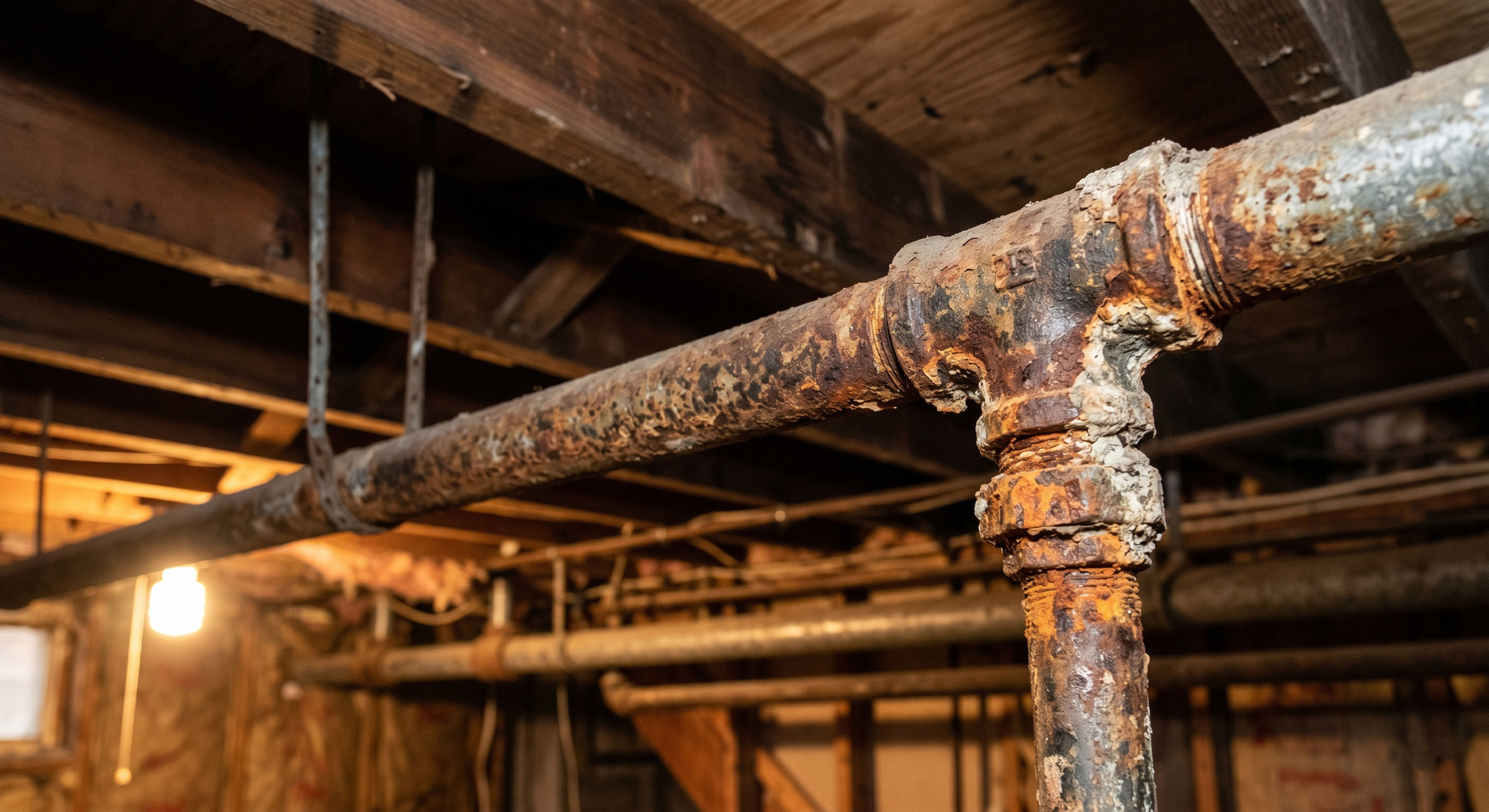
Water keeps a home running. But in an older home, the pipes delivering that water every day may be quietly working against you — no dramatic warning signs, just slow deterioration behind the walls. Across Bucks County, Chester County, Montgomery County, and Berks County, many homes were built between the 1920s and 1970s. They are charming and well-built. They are also full of original plumbing.
This article walks through seven of the most common plumbing problems found in older southeastern Pennsylvania homes — what causes each one and what to do about it. Whether you have lived in your home for thirty years or recently bought a property with some history behind it, knowing what to look for can save you from a much bigger repair bill down the road.
In This Article
- Why Older Homes in Southeastern PA Have Unique Plumbing Challenges
- 1. Galvanized Steel Pipes Corroding From the Inside
- 2. Lead Pipes and Solder Joints
- 3. Slow or Chronically Clogged Drains
- 4. Running or Constantly Cycling Toilets
- 5. Low Water Pressure Throughout the House
- 6. Water Heater Age and Sediment Buildup
- 7. Well System Wear on Rural Properties
- How Dierolf Plumbing and Water Treatment Can Help
- Schedule a Free Plumbing and Water Consultation
- FAQs
Why Older Homes in Southeastern PA Have Unique Plumbing Challenges
Southeastern Pennsylvania has some of the richest housing stock in the region. Towns throughout Bucks, Chester, Montgomery, and Berks counties are lined with homes built between the 1920s and 1970s — full of character, and full of original plumbing systems that were never designed to last this long.
The challenge is not just age. Older materials, older installation methods, and decades of hard water deposits, seasonal temperature swings, and deferred maintenance all compound on each other. Southeastern PA is known for hard water — mineral levels throughout the region can accelerate scale buildup inside pipes and appliances significantly. A small issue at year ten becomes a serious problem at year fifty. Knowing which problems are most common in this region helps you prioritize what to inspect and when to call someone in.
1. Galvanized Steel Pipes Corroding From the Inside
Galvanized steel was the standard pipe material for most of the twentieth century. It is strong on the outside. The problem is inside. Over time, the zinc coating on the interior breaks down and the steel beneath begins to rust. That rust builds up inside the pipe, slowly narrowing the passage your water travels through.
The signs are easy to recognize once you know what to look for. Discolored water — orange or brown, especially when you first turn on a tap — is the most common one. Reduced water pressure and a faint metallic taste are close behind. In older Doylestown, Chalfont, Pottstown, Phoenixville, and Boyertown homes, galvanized steel pipe problems are among the most frequently reported plumbing complaints.
The Fix
Pipe replacement. Copper and PEX (cross-linked polyethylene, a flexible plastic tubing) are the standard modern alternatives. PEX is particularly well-suited to Pennsylvania winters — it handles the freeze stress that rigid pipe runs cannot. An experienced service technician can assess how much of your system is galvanized and help you prioritize which sections need to go first.
2. Lead Pipes and Solder Joints
Homes built before 1986 may contain lead pipes or lead-based solder at pipe joints. Lead does not affect the taste or appearance of your water, which makes it easy to overlook for years. But even low-level exposure carries real health risks — particularly for children and pregnant women. The EPA has documented these risks extensively.
In southeastern Pennsylvania, the issue can extend beyond your home’s internal plumbing. Some older service lines connecting homes to municipal water systems were also made of lead. If your home predates 1986 and has never had a plumbing assessment, it is worth finding out what is actually in your pipes.
The Fix
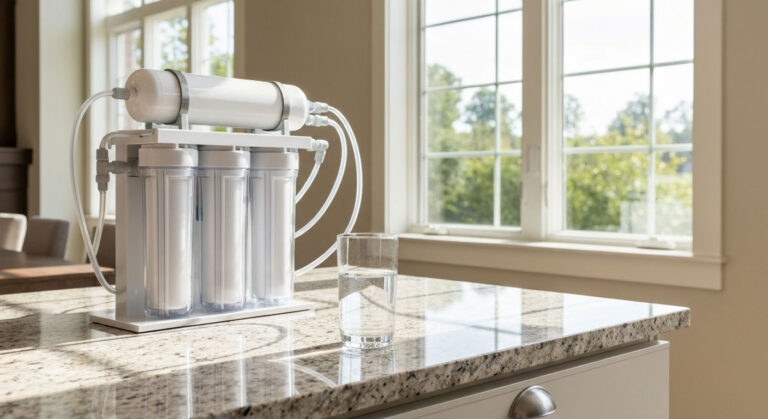
Professional water testing is the right first step. If lead shows up in your results, options range from point-of-use treatment — like a reverse osmosis system, which is highly effective at removing lead — to full pipe replacement. The right path depends on where the lead is coming from and how much of your system is affected. Schedule a free water consultation to get started.
3. Slow or Chronically Clogged Drains
Slow drains are easy to write off as a minor annoyance. In an older home, they are often a symptom of something more significant — decades of grease, soap scum, hair, and mineral deposits layering inside drain lines that were never designed to last this long.
Cast iron drain pipes, common in pre-1960s construction, are durable but prone to interior corrosion and scale buildup over time. Tree roots are another culprit, especially in Bucks County and Chester County neighborhoods with mature landscaping. Roots naturally seek out moisture and can work their way into sewer lines through even the smallest crack.
The Fix
A camera drain inspection tells you exactly what you are dealing with before any work begins. Hydrojetting — a high-pressure water cleaning method — clears most buildup without damaging older pipes. If roots or pipe collapse are involved, a section of line may need to be replaced, but you will not know the scope until someone looks.
Not Sure What’s Going On With Your Plumbing?
Dierolf Plumbing and Water Treatment serves homeowners throughout Bucks, Chester, Montgomery, and Berks counties. Let us take a look.
4. Running or Constantly Cycling Toilets
A toilet that runs for a few minutes after flushing is wasting water. One that runs continuously can add hundreds of gallons to your monthly bill. In older homes, this usually comes down to a worn flapper valve, a faulty fill valve, or a float that is no longer calibrated correctly — all relatively inexpensive fixes when caught early.
The problem is that many homeowners tune out the sound over time, or assume that is just how an older toilet works. It is not. If your toilet runs for more than two minutes after flushing, or if you hear it refilling at random intervals without anyone using it, the internal components need attention.
The Fix
Replacing the fill valve and flapper typically takes under an hour. And if the toilet itself is original to the home and predates the low-flow standards that became code in 1994, replacing it with a modern unit will meaningfully reduce your water use going forward. Our residential plumbing team handles repairs and full replacements throughout the region.
5. Low Water Pressure Throughout the House
Weak pressure at a single fixture usually points to a local issue — a partially closed valve, a clogged aerator, or a failing fixture. Whole-house pressure loss tells a different story.
In older southeastern PA homes, widespread pressure drop is most often caused by corroded galvanized pipes (see section one), a failing pressure-reducing valve, or a water softener or filter that has not been serviced in years and is now restricting flow. On well-fed properties in the more rural stretches of Berks, Chester, and Bucks counties, a worn well pump or a waterlogged pressure tank can produce the same symptoms.
The Fix
Diagnosing the cause matters before you treat it. A technician can test your incoming pressure at the main shutoff and work backward through the system to find where the restriction begins. If your home uses well water, a well pump or pressure tank inspection should be part of that process. We also cover this topic in depth in our articles on low pressure on well water and low pressure on city water.
6. Water Heater Age and Sediment Buildup
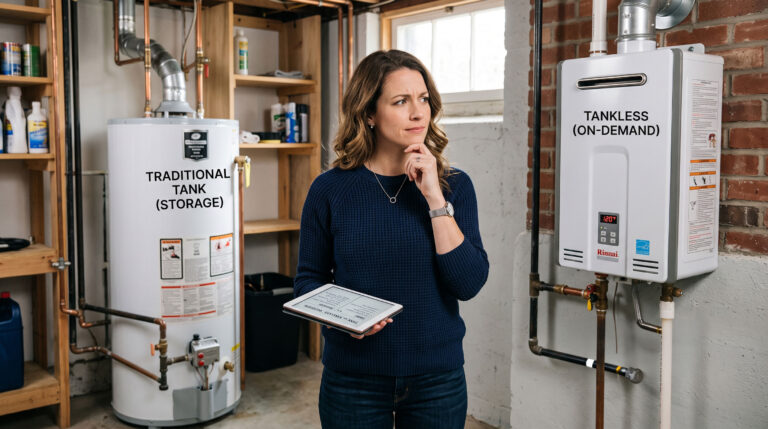
The average water heater lasts eight to twelve years. In southeastern Pennsylvania, where hard water is common, that lifespan can be shorter. Dissolved minerals settle at the bottom of the tank over time, reducing efficiency and accelerating wear. If you hear popping or rumbling sounds when the heater runs, that is sediment being heated along with the water. Not a good sign.
An older water heater working harder than it should costs more to operate and is more likely to fail without warning. Tank failures can cause significant water damage — especially in the finished basements common to older Bucks and Chester County homes.
The Fix
Annual flushing removes sediment and extends the unit’s life. If your water heater is more than ten years old and has not been serviced recently, a professional inspection will tell you whether maintenance is enough or whether replacement makes more sense. Our water heater service team covers both. It is also worth reading about how a water softener protects your water heater — in a hard water region like southeastern PA, the connection between water quality and appliance lifespan is direct.
Dierolf often runs promotions on water heater service and installation. Check what is available before you schedule.
See Current Water Heater Specials
7. Well System Wear on Rural Properties
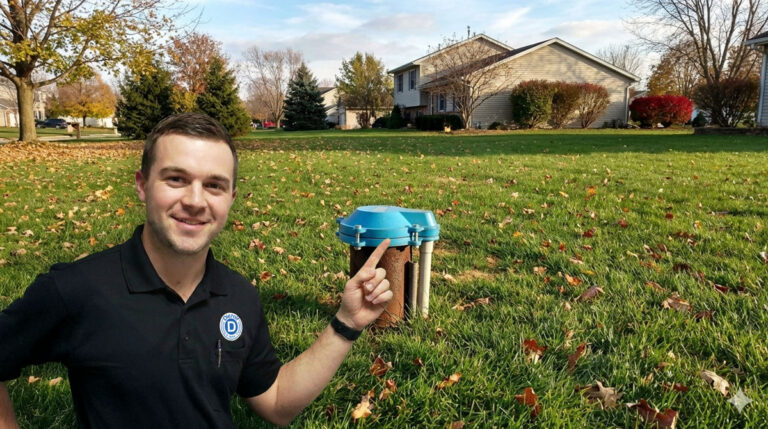
Not every home in southeastern Pennsylvania connects to a municipal water supply. In the more rural stretches of Bucks, Berks, and Chester counties — and across much of Montgomery County’s outer townships — private wells are common. Older wells come with their own set of concerns.
Well pumps typically last ten to fifteen years. Pressure tanks, which maintain consistent water pressure between pump cycles, have a similar lifespan. When either component starts to fail, you may notice pressure fluctuations, short cycling (the pump turning on and off rapidly), or air spurting from faucets. Left unaddressed, a failing pump can burn out completely and leave your household without water.
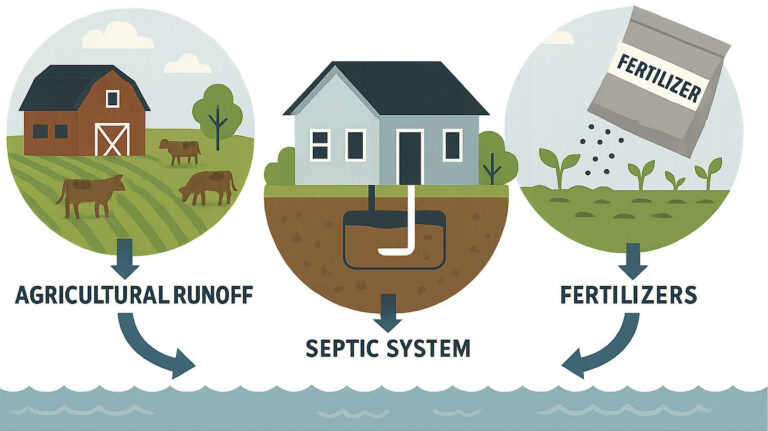
Beyond the mechanical side, older wells can also develop water quality issues. Sediment, bacteria, iron, and hardness are all common given the geology of this region. The Pennsylvania DEP recommends annual water testing for private well owners. If you have not scheduled an annual well water check-up recently, this year is a good time to do it. What is in your water is not just a plumbing question — it is a health question for your whole family.
How Dierolf Plumbing and Water Treatment Can Help
Older homes deserve experienced hands. Dierolf Plumbing and Water Treatment has been serving homeowners across Bucks County, Berks County, Chester County, Montgomery County, and surrounding southeastern Pennsylvania communities — handling everything from residential plumbing repairs to full water treatment system installations.
Our experienced service technicians understand the specific challenges that come with older construction in this region: the galvanized pipes, the hard water, the aging well systems, and the water quality issues that often go unnoticed until they become urgent. Whether you are dealing with a persistent plumbing problem or you simply want to understand what is going on inside your pipes and your water supply, we can help you find answers and a practical path forward.
If you are planning to be away this summer, it is also worth reviewing how to prepare your plumbing before you leave — older systems are more vulnerable when a home sits unoccupied. And for homeowners in Doylestown and surrounding communities, our article on addressing water concerns in Doylestown, PA covers what local homeowners are most commonly dealing with and how to respond. You may also want to read about why water treatment is recommended for older homes — it pairs directly with everything covered above.
💧 Find out exactly what is going on with your plumbing and water — no obligation, no pressure.
Schedule a Free Plumbing and Water Consultation
Tell us a little about what you are experiencing and we will set up a time to come out, take a look, and give you a straight answer. No sales pressure — just honest information from people who know southeastern PA homes.
Serving Bucks, Chester, Montgomery, Berks, and Delaware Counties
Fill out the short form below and someone from our team will be in touch to schedule your consultation.
FAQs
How do I know if my older southeastern PA home has galvanized steel pipes?
Galvanized pipes have a dull gray appearance and feel heavier than copper. You can often spot them in exposed areas like basements and utility rooms. If your home was built before 1960 and has never had a plumbing update, there is a good chance galvanized steel is present somewhere in the system. An experienced technician can confirm this during an inspection. Contact us to schedule a visit.
What are the signs that my water heater is failing?
Common signs include rusty or discolored hot water, a rumbling or popping sound during heating cycles, water pooling around the base of the unit, and noticeably reduced hot water capacity. Any of these symptoms in a unit over ten years old warrant a professional evaluation. In southeastern PA’s hard water conditions, water heaters often wear faster than average.
Can low water pressure throughout my house be a water quality issue?
Yes. Mineral scale from hard water can build up inside pipes and treatment equipment, restricting flow over time. If your home has hard water and you have noticed gradual pressure loss, a water softener assessment should be part of your diagnosis alongside a standard plumbing inspection. Schedule a consultation to find the source.
How often should a private well be inspected in Pennsylvania?
The Pennsylvania DEP recommends testing private well water at least once a year for bacteria and nitrates, with additional testing based on local conditions and land use. A full mechanical inspection of the pump and pressure tank every few years is also good practice. Rural homeowners in Berks, Bucks, and Chester counties should pay particular attention given the agricultural land use common in those areas.
Is lead in my pipes a realistic concern if my home was built in the 1970s?
Yes. Lead solder was widely used in residential plumbing until it was banned in 1986. Homes built before that year — including those from the 1970s — may have lead solder at pipe joints even if the pipes themselves are copper. Water testing is the most reliable way to determine whether lead is present in your water supply. Request a free water consultation and we can walk you through the process.
What is the difference between a drain clog and a sewer line problem?
A clog in a single drain is usually localized — a blockage in that fixture’s drain line. When multiple drains back up at the same time, or when you hear gurgling in one drain while another is being used, the problem is likely further down in the main sewer line. That requires a camera inspection and professional service. In older neighborhoods with mature tree canopy — common throughout Bucks and Chester counties — root intrusion is a frequent culprit.
When does a plumbing problem in an older home become a water quality problem?
Corroding galvanized or lead pipes can directly affect your water by introducing metals into the supply. Older well systems can allow bacteria or sediment to enter the water. Any time you are dealing with aging plumbing infrastructure, it is worth pairing a plumbing assessment with a professional water test — to make sure what comes out of your taps is genuinely clean and safe. Read more in our article on why water treatment is recommended for older homes.