
Alburtis is a small borough tucked between Lower Macungie Township and Upper Milford Township in Lehigh County — an area where private wells are common and the surrounding farmland creates real seasonal groundwater risk. If your home runs on a well, May is the most important month of the year for your water quality. Spring rains, snowmelt, and agricultural runoff from the fields surrounding this community all converge during this window in ways that directly affect what ends up in your groundwater. Testing now, before summer water use climbs, gives your family a clear picture of what they’re actually drinking.
In This Article
- Why Spring Is the Critical Window for Alburtis Wells
- Water Quality Threats in Alburtis and Surrounding Lehigh County
- Contaminants to Watch for After Spring Runoff
- What a Professional Water Test Actually Covers
- Treatment Options Matched to Your Results
- How Dierolf Plumbing and Water Treatment Can Help
- Schedule Your Free Water Analysis
- FAQs
Why Spring Is the Critical Window for Alburtis Wells
The challenge with well water is that most of what matters most can’t be seen, smelled, or tasted. Bacteria, nitrates, and PFAS give no warning at all. By the time something is obviously wrong with your water, it’s often been a problem for a while.
The U.S. Environmental Protection Agency recommends testing private wells at least once a year. May is the right window in Lehigh County because it follows the seasonal activity that most affects what ends up in your aquifer. Spring rains push surface contaminants downward through saturated soil. Frozen ground thaws unevenly, creating pathways for runoff to reach depths it normally wouldn’t. The test you do in May gives you an accurate read on current conditions — something a January test simply cannot provide.
Water Quality Threats in Alburtis and Surrounding Lehigh County
Nitrates from Agricultural Land in Lower Macungie and Upper Milford
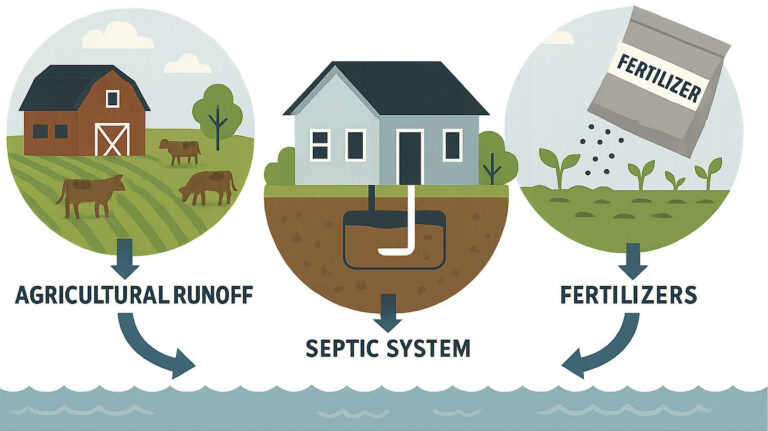
The farmland immediately surrounding Alburtis is one of the most direct nitrate risk factors for private wells in this area. Fertilizers, animal waste, and septic effluent applied to fields during late winter and early spring travel through saturated soil toward the water table. The CDC identifies nitrates as a serious health concern, especially for infants and pregnant women, and they have absolutely no taste, odor, or appearance. A spring lab test is the only way to know if they’re present at dangerous levels.
Hard Water from Lehigh County Geology
Hard water is extremely common in private wells throughout Lehigh County. The limestone-rich geology of the Lehigh Valley produces naturally high calcium and magnesium concentrations in groundwater. Homeowners in Alburtis, Macungie, Emmaus, and surrounding communities often notice scale on fixtures, shorter water heater life, dry skin, and dull hair. It’s not a health issue, but it costs real money over time. Here’s a closer look at how hard water affects your skin and what homeowners can do about it.
Iron from Lehigh Valley Groundwater
Iron-rich groundwater is another common reality for Lehigh County well owners. If you’re seeing orange or rust-colored staining on sinks, toilets, or laundry, iron is the likely cause. Spring runoff can push iron levels higher than your well’s normal baseline, and if you have an existing iron filter, spring testing helps confirm whether it’s still keeping up. You can read more about iron in well water and how treatment works.
PFAS in Lehigh County Groundwater
The Lehigh Valley’s industrial history and the presence of various manufacturing sites throughout the region have contributed to PFAS contamination in Lehigh County groundwater. The Pennsylvania DEP continues to monitor PFAS levels in private and public water sources throughout Lehigh County. If your well has not been tested for PFAS, spring is an ideal time to add that screening to your annual test.
Contaminants to Watch for After Spring Runoff in Alburtis
Alburtis Well Owners: May Is Your Testing Window
Spring is the most important time to test your private well in Lehigh County. Our team serves Alburtis and the surrounding communities.
What a Professional Water Test Actually Covers
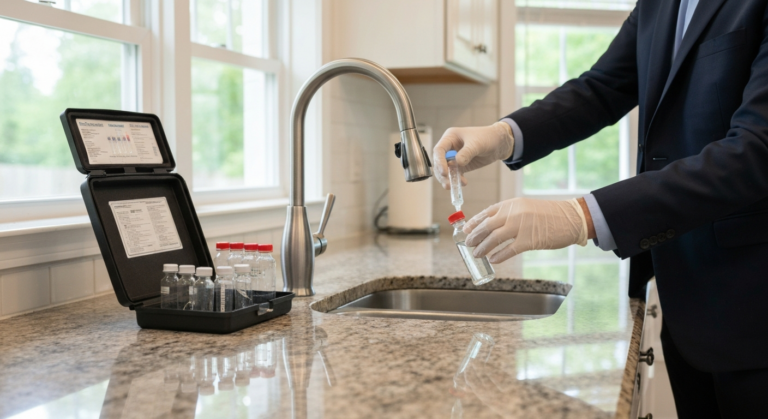
A hardware store test kit checks a few basic parameters and doesn’t give you the actual concentrations needed to make a good treatment decision. A professional water testing and analysis service measures actual levels against EPA and Pennsylvania DEP safety thresholds — and that’s what turns a result into an action plan.
Total coliform and E. coli bacteria — the essential safety baseline for any private well
Nitrates and nitrites — critical for properties near the farmland in Lower Macungie and Upper Milford
pH and hardness — limestone geology makes hard water nearly universal in Lehigh Valley private wells
Iron and manganese — measured precisely to size the right filtration system for your specific well
PFAS screening — recommended for all Lehigh County area wells given the regional contamination history
Turbidity and VOCs — cloudiness and volatile organics, relevant for any property near industrial land use
Treatment Options for Alburtis Well Water
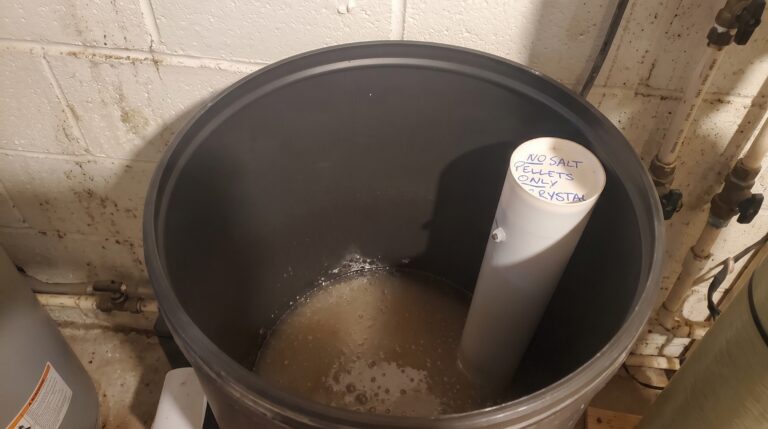
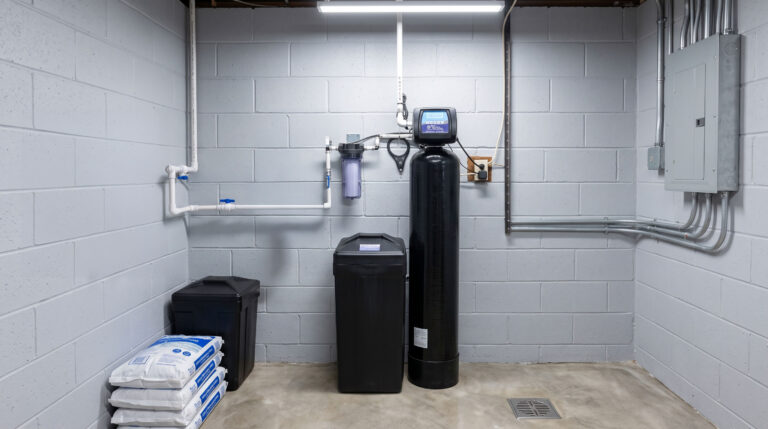
Water Softener
Treats the hard water that’s nearly universal in Lehigh Valley wells. Extends appliance life, reduces scale, and makes an immediately noticeable difference in skin and hair.
Iron Filtration System
Removes dissolved and particulate iron before it stains fixtures and wears on plumbing. Sized precisely from your test results.
UV Filtration
Chemical-free bacteria and virus elimination. Recommended for any Lehigh County well near agricultural land that tests positive for coliform.
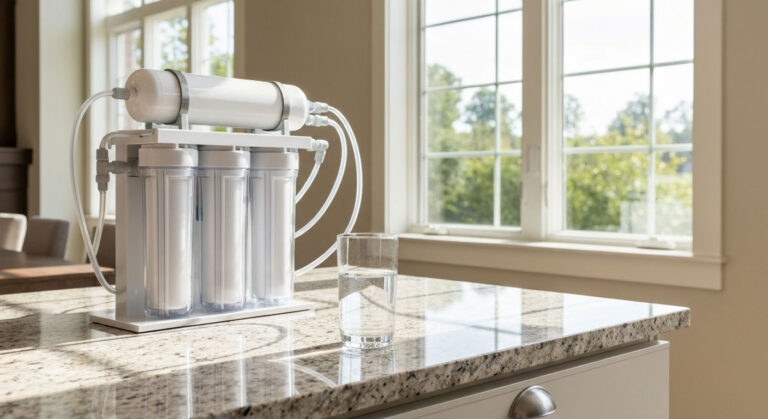
Reverse Osmosis
The most effective point-of-use option for PFAS, nitrates, and heavy metals. Installed at the kitchen tap for drinking and cooking water.
We regularly run promotions on water softeners, iron filters, UV systems, and other treatment equipment. Check what’s currently available before you schedule.
See Current Water Treatment Specials
How Dierolf Plumbing and Water Treatment Serves Alburtis
Dierolf Plumbing and Water Treatment serves homeowners throughout Alburtis, Lower Macungie Township, Upper Milford Township, Macungie, Emmaus, and the broader Lehigh County area. Our experienced service technicians handle everything from the initial water test through the full installation of a treatment system matched to your specific results.
We know the groundwater conditions in Lehigh County and explain what test results mean in plain language so you can make a confident decision about your water. For more background on what annual testing looks like, our annual well water check-up guide covers the full process. And if you’re preparing for summer at the same time, these summer plumbing tips pair well with a spring water test.
💧 May is your best testing window — your Alburtis well deserves a clear spring checkup before summer arrives.
Schedule Your Free Well Water Analysis
Fill out the form below and a member of our team will reach out to schedule your free in-home water test. No obligation — just honest answers about your water.
Get Your Free In-Home Water Analysis
Serving Alburtis, Lower Macungie Township, Upper Milford Township, Macungie, Emmaus, and surrounding Lehigh County communities.
Frequently Asked Questions
How often should I test my well in Alburtis?
At least once a year, and May is the best time in Lehigh County. Testing after the spring runoff season captures what’s actually in your groundwater right now, including any contamination pushed in by April rains or snowmelt from the surrounding farmland.
My water looks and tastes fine. Do I still need to test?
Yes. The most concerning contaminants — coliform bacteria, nitrates, and PFAS — have absolutely no taste, odor, or color. Clear-looking water from a Lehigh County well near farmland can still have elevated nitrates or bacteria at dangerous levels. Only a lab test can tell you for certain.
What’s the most common water problem for wells in the Alburtis area?
Hard water and iron are by far the most frequent findings in Lehigh County wells, driven by the limestone geology of the Lehigh Valley. Nitrate contamination is also common for properties near the farmland in Lower Macungie and Upper Milford. PFAS is increasingly relevant throughout the region.
What happens if my test shows elevated contaminants?
Most findings in Lehigh County wells have clear, established treatment solutions. We’ll go through your results, explain what each finding means for your family, and recommend the right system or combination for your situation. Schedule a free consultation to get started.
Does Dierolf serve Alburtis and Lower Macungie Township?
Yes. We serve homeowners throughout Alburtis, Lower Macungie Township, Upper Milford Township, Macungie, Emmaus, and the wider Lehigh County area. Fill out the form above and we’ll reach out to schedule your free in-home water analysis.