
Table of Contents
- Why Macungie Well Owners Need to Pay Attention Right Now
- How a Well Pump and Well Tank Work Together
- Sign 1: Sudden Drop in Water Pressure
- Sign 2: Air Sputtering From Your Faucets
- Sign 3: Your Pump Runs Constantly — or Won’t Turn On at All
- Sign 4: Unusually High Electric Bills
- Sign 5: Dirty, Discolored, or Gritty Water
- What to Do When You Spot These Warning Signs
- Protecting Your Well System Long-Term
- Schedule a Free Well Inspection
- FAQs
Why Macungie Well Owners Need to Pay Attention Right Now
If your home in Macungie runs on a private well, your well pump isn’t just another appliance. It’s the one piece of equipment standing between your family and clean, safe water every single day.
Macungie and the surrounding Lehigh County communities sit in an area where private wells are common. Homeowners in Upper Macungie Township, Lower Macungie Township, Alburtis, Breinigsville, and nearby Emmaus and Wescosville know the routine — the well handles everything. Drinking water, showers, laundry, cooking. When it works, you don’t think about it. When it doesn’t, everything stops.
The geology of this part of Lehigh County — carbonate rock, limestone formations, and varying aquifer depths — means well conditions can differ dramatically from one street to the next. That makes local knowledge matter. A well drilled into the karst terrain common in parts of Upper Macungie behaves differently than one tapping into the deeper sandstone zones you find farther west toward Fogelsville and Alburtis.
Well pumps rarely fail all at once. They decline gradually. And by the time something feels obviously wrong, the problem may already be affecting your water quality or your plumbing. Knowing the early warning signs is how you stay ahead of it.
How a Well Pump and Well Tank Work Together
Before you can spot a failing pump, it helps to know what the system actually does.
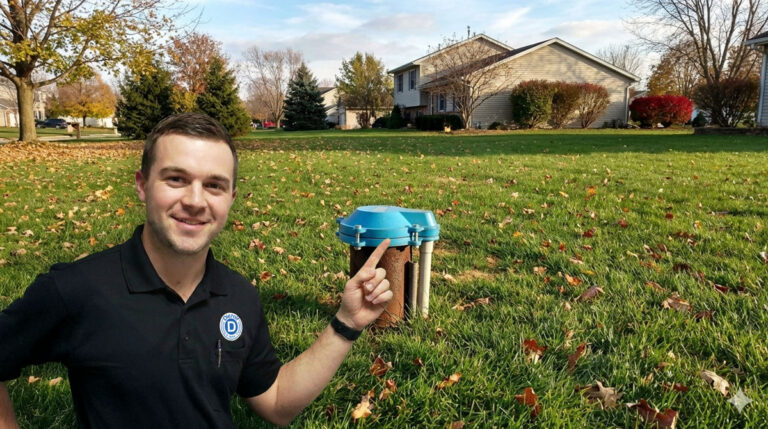
Your well pump draws water up from the aquifer beneath your property and pushes it into your home’s plumbing. Most homes in the Macungie area use a submersible pump — a sealed unit that sits deep inside the well casing, often 100 feet down or more depending on where your well taps into the local water table. Your well tank, also called a pressure tank, holds a reserve of pressurized water so the pump doesn’t have to kick on every time you open a faucet. Together, they keep water pressure consistent throughout the house.
When either component starts to go, symptoms show up quickly — and they often look identical. A pump problem and a tank problem can produce the same warning signs but need completely different fixes. Dierolf Plumbing and Water Treatment inspects and services both, so you get a real diagnosis rather than a guess.
Sign 1: Sudden Drop in Water Pressure
Low water pressure is one of the most common calls we get from well owners in Macungie and Upper Macungie Township. You notice it in the shower, at the kitchen sink, or the moment you try running two fixtures at once.
A gradual pressure decline can point to a worn pump impeller, a dropping water table during dry months, or a waterlogged pressure tank. A sudden drop — with no change in your household’s usage — often signals something more immediate. A failing pump motor or a faulty pressure switch are the usual culprits.
Don’t write it off as a minor inconvenience. Summer months in the Lehigh Valley can stress well systems as water tables fluctuate — particularly during dry stretches when irrigation demand is high. A pump that’s already working harder than it should can give out entirely under that added load. Homeowners in Lower Macungie and Breinigsville who use irrigation systems see this more often than they expect.
Sign 2: Air Sputtering From Your Faucets
Turn on a faucet and hear a spitting, sputtering sound? That’s air in the line — and it’s worth taking seriously.
Air in your water supply usually means the pump is drawing from a water level that’s dropped below the pump intake, or that the pump is losing its prime. It can also point to a cracked well casing or a failing foot valve. In any of these cases, the pump is working harder than it should, which speeds up wear significantly.
A little air in the lines right after a power outage is normal. Macungie and surrounding Lehigh County communities see their share of storm outages, so a brief sputter when power comes back isn’t automatically a red flag. Persistent sputtering is a different story. If it keeps happening day after day, it’s time to have your well system inspected.
Sign 3: Your Pump Runs Constantly — or Won’t Turn On at All
A healthy well pump cycles on, fills the pressure tank, and shuts off. You might hear it kick on briefly when water demand drops the tank pressure below a set point. What you shouldn’t hear is a pump that never seems to stop.
Constant rapid cycling — where the pump turns on and off over and over in quick succession — often means the pressure tank’s internal bladder has failed. Without that air cushion, the tank can’t hold pressure between cycles, so the pump compensates by running almost nonstop. That kind of strain burns out the motor far faster than normal operation ever would.
On the other end, a pump that won’t turn on at all may have a failed motor, a tripped breaker, or a bad pressure switch. Either extreme means your system needs professional attention. The well tanks and well pumps service page at dscwater.com/ outlines what a proper inspection covers.
Sign 4: Unusually High Electric Bills
Your well pump is one of the larger electrical draws in your home. When it’s running efficiently, it uses a predictable amount of power each month. When your PPL Electric bill climbs without explanation — no new appliances, no change in household size — the pump may be working harder than it should.
This symptom often shows up before anything else does. A struggling pump motor, a partially blocked intake screen, or a dropping water table can all force the pump to run longer cycles, consume more electricity, and wear itself down in the process. Homeowners in Macungie and the surrounding area who have older wells — drilled in the 1980s and 1990s during the buildout of many neighborhoods here — are especially worth watching on this one.
If your utility bills have been creeping up and you can’t explain why, your well system is worth a look. Catching this early costs far less than replacing a burned-out motor.
Sign 5: Dirty, Discolored, or Gritty Water
Clean water should be clear and odor-free at every tap. If your water suddenly looks brown or cloudy, or carries a gritty texture, the pump may be pulling sediment from the bottom of the well. This often happens because the water level has dropped or the pump has shifted inside the casing.
Discoloration can also point to a corroding pump casing or a deteriorating well screen that’s letting fine particles into your supply. In parts of Macungie and Upper Macungie where iron and manganese are naturally elevated in the local aquifer, a struggling pump can make existing water quality issues noticeably worse.
Beyond the obvious aesthetic problem, sediment and particulates can carry bacteria and other contaminants that affect your family’s health. Water quality changes should never be ignored. If you’re seeing discoloration alongside any of the other signs above, schedule both a well system inspection and a water testing and analysis appointment. You can also read more about what a thorough well water check-up involves in this guide from Dierolf. And if manganese is a concern in your well, this article on manganese removal covers your options in detail.
What to Do When You Spot These Warning Signs
Acting early makes a real difference. If you recognize one or more of these signs in your Macungie home, here’s a practical sequence to follow.
Start with the basics. Check whether the circuit breaker for your pump has tripped. Look at your pressure gauge — the normal range for most residential systems is 40 to 60 PSI. A reading of zero, or one that swings wildly, points directly to a pump or tank issue.
Get a professional inspection. Well systems involve electrical components, pressurized water, and equipment installed deep underground. Diagnosing them accurately takes the right tools and real hands-on experience. A licensed professional can test the pump motor, check the pressure tank’s bladder, inspect the pressure switch, and assess the overall condition of your well casing.
Pair the inspection with a water test. Mechanical problems and water quality problems often show up together. If your pump has been struggling, your water may have been exposed to sediment, bacteria, or other contaminants in the meantime. The Pennsylvania DEP recommends that private well owners test their water at least once a year — and after any known system disturbance, testing becomes even more important.
Protecting Your Well System Long-Term
The best way to avoid an emergency is a consistent maintenance routine. Annual well water check-ups catch small problems before they become expensive ones, and they give you a clear picture of both your system’s mechanical health and your water quality.
For homeowners in Macungie and the surrounding Lehigh County communities, seasonal changes add another layer to think about. Summer droughts — and the Lehigh Valley sees its share of dry stretches — can lower water tables and put real strain on pumps, especially in higher-elevation areas around the South Mountain ridge. Winter freezes can affect above-ground components and pressure tank connections in unheated spaces. A spring check-up before peak demand season is a simple habit that pays off consistently.
Dierolf Plumbing and Water Treatment offers water treatment services that work alongside a healthy well system, including iron filtration and ultraviolet filtration systems designed to address contaminants common in Lehigh County well water. When your pump is working properly, it delivers water to those treatment systems efficiently — which means your entire water supply chain performs better.
If you’re buying or selling a home in Macungie, Alburtis, or anywhere in the Lehigh Valley with a private well, a professional inspection isn’t just smart — it’s often required by lenders and local real estate transactions. Dierolf’s real estate water testing services are built specifically for that transition, giving buyers and sellers confidence in the condition of the well system and water quality before closing.
Schedule a Free Well Inspection in Macungie
FAQs
How long does a well pump typically last in the Macungie area?
Most submersible well pumps last between 10 and 15 years with proper maintenance. Pumps that cycle frequently due to a failing pressure tank, or that operate in wells with higher sediment levels — which can be a factor in some Lehigh County aquifers — tend to wear out sooner. Annual check-ups help you track your pump’s condition and plan ahead rather than react to a sudden failure.
What is a well pressure tank, and how is it different from the pump?
The well pump draws water up from the aquifer underground. The pressure tank stores that water under pressure so the pump doesn’t have to turn on every time you open a faucet. When the tank’s internal bladder fails, the pump cycles on and off rapidly — a condition called short cycling — which dramatically shortens the pump’s lifespan.
Can I replace just the pressure tank without replacing the pump?
Yes, in many cases. If the pump motor is in good condition and only the tank bladder has failed, replacing the tank alone can restore normal operation. A professional inspection will identify which component is actually at fault before any work begins.
How do I know if my well water is safe after a pump problem?
You should have your water tested after any significant pump issue, especially if you noticed discoloration, sediment, or unusual odors. Bacteria and particulates can enter the water supply when a pump is struggling or when the well casing is disturbed. Water testing and analysis gives you a clear picture of what’s in your water and what treatment, if any, is needed.
How often should I have my well system inspected in Lehigh County?
The Pennsylvania DEP recommends testing private well water at least once a year and inspecting the mechanical system on a regular basis. For homeowners in Macungie and the surrounding Lehigh Valley, an annual well water check-up that covers both water quality and system components is a practical standard. Read more about what that check-up should cover in this guide from Dierolf.
What causes a well pump to burn out faster than expected?
The most common culprits are a waterlogged pressure tank that forces constant cycling, a dropping water table that makes the pump work harder to draw water, and sediment buildup that clogs the pump intake. Running a pump that’s undersized for your household’s water demand also shortens its life significantly.
Is a failing well pump a health risk?
It can be. A pump pulling sediment or allowing air into the system may also allow bacteria or other contaminants into your water supply. If you notice changes in your water’s appearance, taste, or smell alongside any of the mechanical symptoms described here, treat it as both a plumbing issue and a water quality concern — and address both at the same time. You can learn more about private well health risks in this article on well water safety.
Does iron or manganese in Macungie well water affect the pump?
It can over time. Iron and manganese are naturally present in parts of the Lehigh County aquifer, and elevated levels can contribute to mineral buildup inside pump components and well screens. This buildup forces the pump to work harder and can shorten its lifespan. If you have a known iron or manganese issue, pairing a healthy pump with proper iron filtration protects both your water quality and your equipment.