
Ardmore runs on public water supplied through the Aqua Pennsylvania system, not private wells. But public water doesn’t mean perfectly pure water — and spring is a season when a lot of homeowners in Ardmore, Haverford Township, and the surrounding Lower Merion area start noticing things about their tap water they hadn’t noticed before. Sediment, taste changes, dry skin after showering, and scale buildup on fixtures are all signs that your water may have room for improvement. May is a smart time to take a closer look.
In This Article
- Why Spring Matters for Ardmore Tap Water
- Water Quality Concerns Specific to Ardmore and Haverford Township
- What Public Treatment Doesn’t Address in Your Home
- Treatment Options for Ardmore Homeowners
- What a Professional Water Analysis Covers
- How Dierolf Plumbing and Water Treatment Can Help
- Schedule Your Free Water Analysis
- FAQs
Why Spring Matters for Ardmore Tap Water
Your water utility does the work of meeting federal and state standards before it reaches your meter. That’s a meaningful baseline — but it doesn’t tell the whole story about what comes out of your tap. Spring brings increased runoff into source water reservoirs, higher treatment chemical demands, and seasonal variation in what municipal systems deliver. And once water enters your home’s plumbing, the utility’s job is done. What happens after that is up to your pipes, fixtures, and any treatment equipment you have in place.
Aqua Pennsylvania serves much of Haverford Township, Lower Merion, and surrounding Montgomery and Delaware County communities. Their annual water quality report shows what’s in the treated supply — but it also shows contaminants that are detected at or near the action level, including regulated substances that have raised questions among homeowners in the area. You can read more about the risks of unregulated contaminants in Montgomery County public water.
Water Quality Concerns Specific to Ardmore and Haverford Township
Hard Water Throughout the Main Line
The limestone-dominated geology of Montgomery and Delaware counties means hard water is common throughout the Main Line corridor, including Ardmore, Havertown, Bryn Mawr, and Narberth. Hard water causes scale buildup inside water heaters, shortens appliance life, leaves spots on dishes and glass, and is often what’s behind dry skin and dull hair after showering. A water softener addresses this directly and makes a noticeable difference quickly.
Chlorine and Chloramine in Treated Water
Public water systems use chlorine or chloramine to disinfect treated water. This is necessary for safety in the distribution system, but it also means the water reaching your tap contains these compounds at detectable levels. Some homeowners are sensitive to the taste or smell. Others are more concerned about the longer-term effects of chlorine and chloramine exposure. A whole-home carbon filter or an under-sink system can address this at the point of use.
PFAS in the Regional Water Supply
PFAS have been detected in public water systems across the Philadelphia suburbs, including in systems serving parts of Montgomery and Delaware counties. The EPA’s updated PFAS standards set lower maximum contaminant levels than previously required, and some utilities are still in the process of compliance. Understanding what’s in your water — and whether a point-of-use reverse osmosis system makes sense for your drinking water — is a reasonable step for any Ardmore homeowner right now.
Older Plumbing and Internal Pipe Concerns
Ardmore has a lot of older housing stock — homes built in the early to mid-1900s where internal plumbing hasn’t always been updated. Older solder joints and fixtures can leach lead and copper into water at the tap, even when utility-delivered water tests clean. If your home was built before 1986, this is worth knowing about. Learn more about treating lead in your water and what your options are.
What Public Treatment Doesn’t Address Inside Your Home
There’s a clear gap between what your water utility delivers and what comes out of your tap. Hardness minerals are not removed by standard municipal treatment — they’re naturally present and legally allowed. Treatment chemicals like chlorine and chloramine travel all the way to your faucet by design. And anything that happens inside your home’s plumbing — leaching from old pipes, sediment accumulation — happens after the utility’s responsibility ends.
Ardmore Homeowners: Know What’s Actually in Your Water
A free in-home water analysis tells you exactly what your tap water looks like — beyond what the utility reports.
Treatment Options for Ardmore and Haverford Township Homes
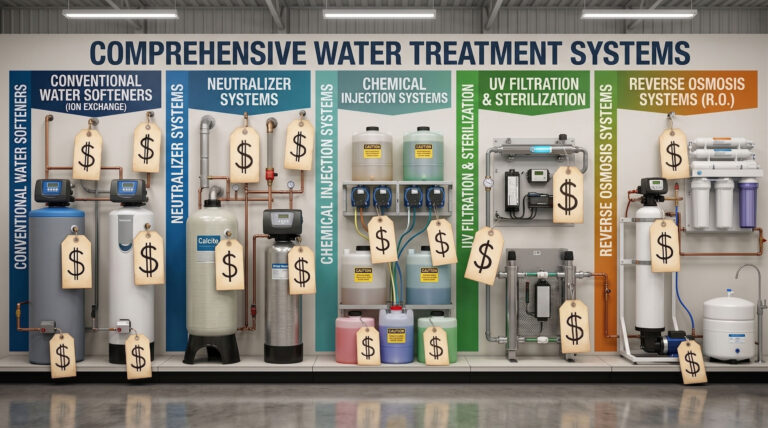
The right treatment depends on what your water analysis finds. Here’s how the most common solutions apply to the most common issues in this area:
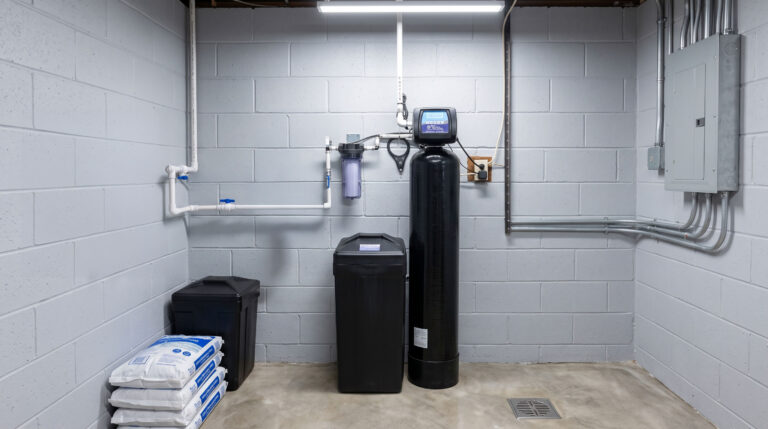
Water Softener
Removes calcium and magnesium through ion exchange. Extends water heater and appliance life, improves skin and hair, and eliminates scale buildup throughout your plumbing.
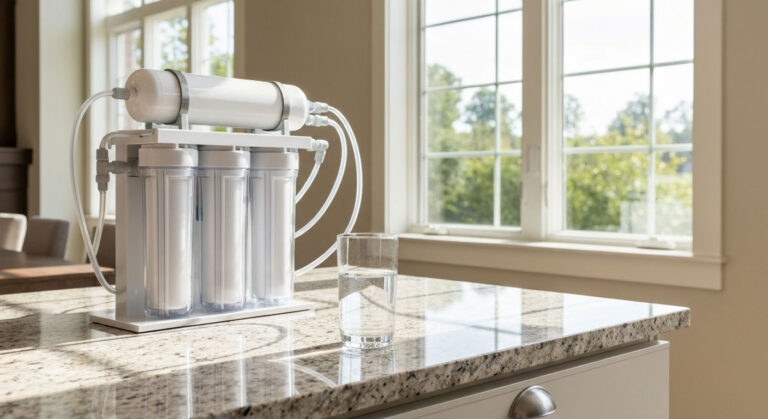
Reverse Osmosis System
The most effective point-of-use option for PFAS, lead, nitrates, and chloramine. Installed under the kitchen sink for drinking and cooking water.
Whole-Home Carbon Filtration
Reduces chlorine and chloramine throughout the home. Good choice for homeowners sensitive to taste, smell, or the effects of disinfectants on skin.
We often run promotions on water softeners and reverse osmosis systems. Check what’s currently available before you book your analysis.
See Current Water Treatment Specials
What a Professional Water Analysis Covers for Ardmore Homes
A professional water testing and analysis service tests your water at the tap — not at the utility’s treatment plant. That’s the difference between knowing what they’re delivering and knowing what’s actually coming out of your faucet.
For an Ardmore area home on public water, a useful analysis typically measures:
pH and hardness — tells you exactly how hard your water is and how it’s affecting your appliances and plumbing
Chlorine and chloramine levels — measured at your tap to reflect what you’re actually using and drinking
Lead and copper — critical for older homes with aging plumbing in Ardmore and Haverford Township
PFAS screening — recommended given the presence of PFAS in the regional water supply
Iron and turbidity — sediment and discoloration can show up at the tap even in public water systems
How Dierolf Plumbing and Water Treatment Serves Ardmore
Dierolf Plumbing and Water Treatment serves homeowners throughout Ardmore, Haverford Township, Bryn Mawr, Narberth, Havertown, and the surrounding Montgomery and Delaware County communities. Our experienced service technicians handle everything from the initial water analysis to the full installation of the right treatment system for your specific results.
Public water is a starting point, not the whole story. We help Ardmore homeowners understand what’s actually coming out of their tap, explain what it means for their family, and put the right solution in place. We also handle residential plumbing and water heater services — so if you’re thinking about a full spring checkup, we can handle more than just the water quality side.
💧 Public water meets standards — but knowing what’s at your tap is a different question entirely. Let’s find out together.
Schedule Your Free In-Home Water Analysis
Fill out the form below and a member of our team will reach out to schedule your free water analysis. No obligation — just honest answers about your water.
Get Your Free In-Home Water Analysis
Serving Ardmore, Haverford Township, Bryn Mawr, Narberth, Havertown, and surrounding communities.
Frequently Asked Questions
Ardmore is on public water. Why would I need a water test?
Public water is tested and treated to meet EPA standards at the point of delivery, but hardness minerals, residual chlorine, trace PFAS, and anything leaching from your home’s internal plumbing are not removed by municipal treatment. A home water analysis tells you what’s actually coming out of your tap — which can be quite different from what the utility delivers.
How hard is the water in Ardmore?
Hard water is very common throughout the Main Line corridor, including Ardmore and Haverford Township, because of the limestone geology underlying this part of Montgomery and Delaware counties. Many homeowners don’t realize how much it’s affecting their appliances and plumbing until they get a test and see the actual numbers. A water softener is the straightforward fix.
Should I be concerned about PFAS in Ardmore’s water supply?
PFAS have been detected in public water systems serving parts of the Philadelphia suburbs, including in Aqua Pennsylvania’s regional supply. The EPA has set stricter standards that utilities are working to meet, but a reverse osmosis system at the kitchen tap provides additional reduction for drinking and cooking water right now. If this is a concern for your household, a water analysis is a good starting point.
My home is older — should I be concerned about lead in my pipes?
If your Ardmore home was built before 1986, it’s worth having a conversation about this. Lead and copper can leach from older solder joints and fixtures even when utility-delivered water tests clean. A tap-water test that specifically screens for lead at your faucet will tell you what’s actually happening at the point of use. Reach out to schedule a free analysis.
Does Dierolf serve Ardmore and Haverford Township?
Yes. We serve homeowners throughout Ardmore, Haverford Township, Bryn Mawr, Narberth, Havertown, and the surrounding area. Fill out the form above and we’ll reach out to schedule a free in-home water analysis at your convenience.