
Your well water might look crystal clear. It might taste fine. But clear and safe are not the same thing, and homeowners in New Hope, Solebury Township, Upper Makefield, Buckingham, and the surrounding communities know this better than most.
Northern Bucks County sits on some of the most geologically complex ground in Pennsylvania. That complexity is part of what makes this area so beautiful. Rolling hills, old farms, creek corridors, and historic stone homes define the landscape. It is also what makes private well water here a topic worth taking seriously.
If you rely on a well, you are entirely responsible for what comes out of your tap. The Pennsylvania Department of Environmental Protection does not test private wells for you. That responsibility falls to you as the homeowner. This guide walks through what you need to know in 2026.
Why Well Water Testing Matters in New Hope
New Hope Borough itself is served by public water, but step outside the borough limits and private wells become common fast. Solebury Township, which surrounds New Hope on nearly every side, is heavily rural. So are Upper Makefield, Buckingham Township, Plumstead, and Wrightstown. Dozens of older farms and residential properties in these communities rely entirely on wells drilled into the bedrock.
The geology here is part of the Triassic-Jurassic Newark Basin. The U.S. Geological Survey conducted a detailed study of northern Bucks County groundwater in cooperation with New Hope Borough and surrounding townships including Solebury, Buckingham, Plumstead, Tinicum, and Wrightstown. That study documented water quality across more than 1,300 wells and found wide variation in pH, metals, radon, volatile organic compounds, and other parameters depending on which rock formation a well taps into.
The Triassic-age sedimentary rocks underlying much of this area, along with pockets of carbonate rock and diabase intrusions, create different water chemistry in wells that may be just a few hundred yards apart. A neighbor with great water does not tell you much about your own.
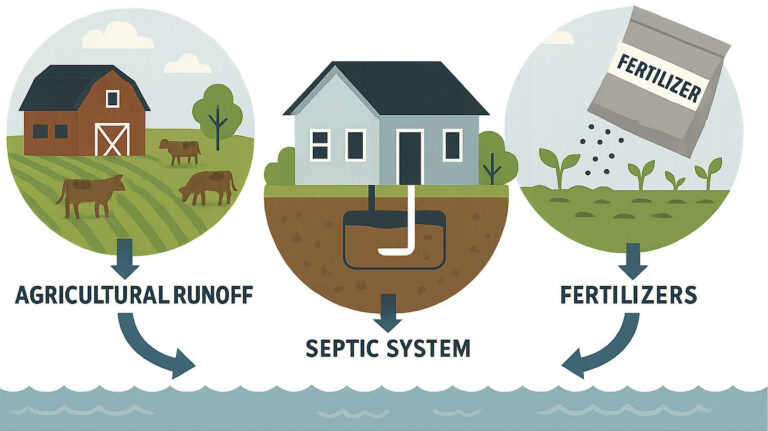
Add to that the agricultural history of northern Bucks County, older farm structures with potential contamination sources, aging septic systems on large lots, and the proximity to creek systems like Aquetong Creek, Pidcock Creek, and Paunnacussing Creek, and you have a strong case for regular testing.
Pennsylvania Well Water Testing Requirements
Pennsylvania does not require routine annual testing for most private wells. There are a few situations where testing is legally required or practically necessary.
New Well Construction: When a new well is drilled, you must test for coliform bacteria and nitrates within 30 days of completion.
Real Estate Transactions: Many mortgage lenders require water testing before closing. DEP-compliant testing typically covers bacteria, nitrates, and basic chemistry. In northern Bucks County, buyers of well properties increasingly expect comprehensive testing that goes beyond the basics.
Septic System Permits: Installing or modifying a septic system near your well may require baseline water quality testing of nearby wells.
Bucks County’s own guidance recommends testing for bacteria at least every 14 months, and for pH and total dissolved solids every three years. That is a reasonable baseline, but it does not account for local risk factors. Most water quality professionals in this region recommend annual testing at minimum.
What Contaminants to Test For
What you test for depends on your well location, your home’s age, and what surrounds your property. Here is what matters most in the New Hope area.
Essential Annual Tests
Coliform Bacteria: The most important safety test. Any presence indicates potential contamination from surface water or sewage intrusion. This requires immediate action.
Nitrates: Elevated nitrates are a risk in agricultural areas. Buckingham Township and parts of Plumstead have significant farmland. Nitrates are particularly dangerous for infants. The safe limit is 10 parts per million.
pH: Low pH, meaning acidic water, is one of the most common problems in northern Bucks County wells. Acidic water corrodes copper pipes, leaches lead and other metals, and creates blue-green staining on fixtures. Bucks County’s own guidance flags water below 6.5 as a concern.
Additional Tests to Consider
Iron and Manganese: These metals are common in the sedimentary rock formations that underlie much of this area. Iron causes orange-brown staining on laundry, fixtures, and tile. Manganese causes black staining and a metallic taste.
Hardness: Hard water is typical in wells that draw from carbonate rock zones. It causes scale buildup on water heaters, dishwashers, and plumbing. It shortens appliance life and leaves spots on dishes and glassware.
Sulfur (Hydrogen Sulfide): Produces the rotten egg smell that many well owners in this area recognize. Not typically a health hazard at low concentrations, but it affects water quality and can corrode metal plumbing.
Radon: The USGS northern Bucks County study specifically documented radon in groundwater here. Radon dissolves in groundwater and releases into indoor air when you use water, adding to airborne radon exposure.
PFAS: These “forever chemicals” have turned up in groundwater across Pennsylvania, including parts of Bucks County. If your property is near any industrial or commercial history, PFAS testing is worth including. The EPA finalized maximum contaminant levels for six PFAS compounds in 2024.
Lead: If your home was built before 1986 or has older plumbing, test for lead. Acidic water accelerates lead leaching from solder and older pipes. Many of the historic stone homes in Solebury Township, Carversville, and New Hope predate modern plumbing materials by decades.
Location-Specific Concerns
Near Agriculture: Properties in Buckingham, Plumstead, or rural Solebury should test for nitrates, pesticides, and herbicides.
Near Older Structures or Former Industrial Use: Test for volatile organic compounds and petroleum products if your property has any commercial or industrial history nearby.
Older Homes: Lead testing is particularly important for homes in New Hope Borough itself, where housing stock goes back well into the 1800s.
When to Test Your Well Water
Annual Testing Schedule
Spring is the best time for annual testing. Snowmelt and heavy spring rains push surface water and contaminants downward. Testing in March or April catches anything that may have developed over winter. This is especially relevant in areas like Solebury and Upper Makefield, where large-lot properties sit near creek corridors and low-lying ground. Our annual well water check-up guide walks through exactly what to include each year.
Schedule additional testing any time you notice changes in taste, odor, or color. Also test when you see new staining on fixtures or laundry, when family members have unexplained gastrointestinal illness, or when any neighbor reports well problems.
After Major Events
Test your well water after heavy flooding or storms, nearby construction or excavation, any work done on your well or pressure tank, septic system problems, or a power outage lasting more than six hours. The Delaware River corridor and the creek systems running through Solebury and New Hope are prone to flooding. Any flooding event that reaches your well area warrants immediate testing before resuming normal use.
Real Estate Testing
If you are buying or selling a home with well water in Solebury, Buckingham, Upper Makefield, or any of the surrounding townships, schedule testing early in the process. DEP-compliant testing takes several days to complete, and you need time to address problems before closing. Given the housing prices in this area, a thorough water test is a small investment relative to the overall transaction. Learn more about our real estate water testing and well inspection services.
How to Test Your Well Water
DIY Test Kits
Basic kits available at hardware stores test for bacteria, pH, hardness, and a handful of common contaminants. They are convenient and inexpensive, but they have real limitations. DIY kits are not as accurate as certified lab testing, may not detect everything relevant to your situation, and are not acceptable for real estate transactions. They are fine for a quick spot check but should not replace professional testing for health and safety decisions. We explain why in more detail in our article on why DIY water test kits can do more harm than good.
Professional Testing Services
Professional testing gives you certified laboratory results, proper sample collection procedures, and actual interpretation of what the numbers mean for your home and family. Here is what the process looks like. You can also read our detailed overview of what happens during a professional water test.
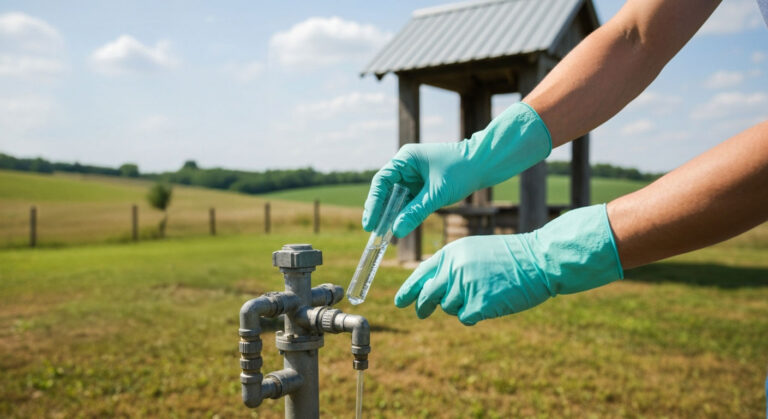
Sample Collection: A technician visits your home to collect samples correctly. Proper collection technique matters for accurate results. Contaminating a sample by touching the faucet, not flushing the line first, or using the wrong container affects what the lab sees.
Laboratory Analysis: Samples go to certified laboratories using EPA-approved testing methods.
Detailed Reports: You receive results with explanations of what each parameter means, what levels are concerning, and what the likely sources are.
Follow-up Recommendations: A good water professional does not just hand you a lab report. They explain your options and help you prioritize any treatment needed.
Understanding Your Test Results
Key Terms
PPM (Parts Per Million): Measures contaminant concentration. One PPM equals one milligram per liter.
MCL (Maximum Contaminant Level): The highest concentration of a contaminant allowed in public drinking water under federal standards. Private wells are not federally regulated, but MCLs are the standard benchmark for comparison. Our guide to MCLG vs. MCL explains the difference between these two standards and why it matters.
Action Level: The concentration that triggers required treatment response under EPA guidelines.
Red Flags to Watch For
Any Coliform Bacteria: Requires immediate disinfection, identification of the contamination source, and retesting to confirm resolution.
Nitrates Above 10 PPM: Dangerous for infants and pregnant women. Do not use the water for infant formula or cooking for young children until the problem is resolved.
pH Below 6.5 or Above 8.5: Acidic water corrodes pipes and accelerates metal leaching. In older homes throughout the New Hope area, low pH is particularly concerning given the age of the plumbing.
Lead Above 15 PPB: Requires immediate action, especially in homes with children. There is no safe level of lead exposure for children.
Well Water Testing Cost in Pennsylvania
Costs vary based on what you test for and whether you use a DIY kit or a professional lab. Here is a general range for 2026.
Basic DIY Kits: $20 to $50 for bacteria and basic chemistry.
Standard Professional Testing: $150 to $300 for bacteria, nitrates, pH, and common contaminants.
Comprehensive Analysis: $300 to $600 for an expanded panel including metals, pesticides, radon, and VOCs.
DEP-Compliant Real Estate Testing: $200 to $400 depending on the parameters required by the lender.
Professional testing costs more upfront, but it gives you accurate results and expert interpretation. For a home with a well in Solebury Township or Buckingham, where property values are significant and water chemistry can be complex, this is not where to cut corners.
Common Water Problems in the New Hope Area
The New Hope area has its own water chemistry profile. Here is what we see most often in wells across Solebury, Upper Makefield, Buckingham, Wrightstown, and Plumstead townships.
Iron and Manganese
Orange-brown staining on laundry, sinks, and toilets is a familiar complaint in this part of Bucks County. The sedimentary rock formations in the Newark Basin contribute iron and manganese to groundwater. Iron at elevated levels also supports bacterial growth, including iron bacteria that create slimy deposits in pipes and reduce water flow over time.
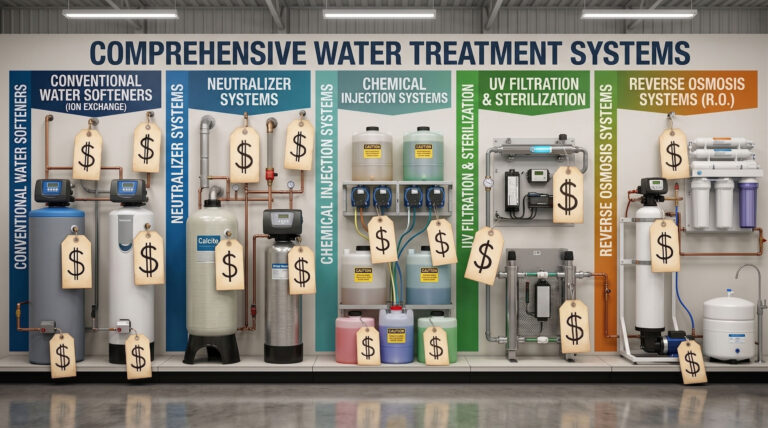
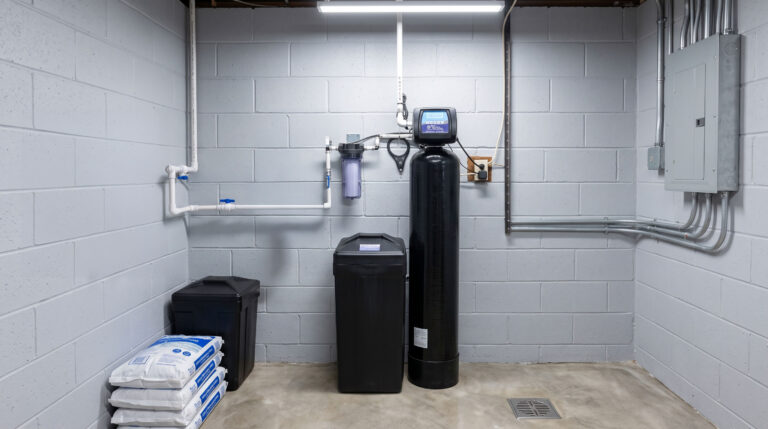
An iron filtration system addresses dissolved and particulate iron before it reaches your plumbing. For some wells, a water softener handles iron at lower concentrations. For others, a dedicated iron filter is necessary. The right answer depends on your specific test results.
Hard Water
Hard water is widespread in wells drawing from carbonate rock zones in northern Bucks County. Scale builds up inside water heaters, reduces appliance efficiency, leaves spots on dishes and glassware, and makes soaps and shampoos perform poorly. Hardness levels of 7 to 15 grains per gallon are common in this area.
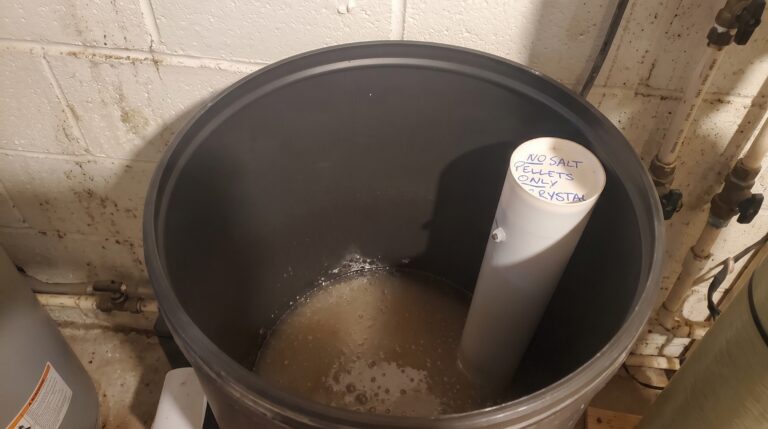
A properly sized water softener removes hardness and protects your plumbing investment. Sizing matters. A system designed for your specific hardness level and household usage works far better than a generic off-the-shelf unit.
Low pH and Acidic Water
Acidic groundwater is one of the most common issues in wells throughout this region. Water with a pH below 6.5 corrodes copper pipes, creates blue-green staining around drains and faucets, and leaches metals from older plumbing. In historic homes throughout Solebury and New Hope, this is a serious concern given the age of some plumbing systems.
A calcite neutralizer or acid neutralizer system raises pH and protects your pipes over the long term. This is not a cosmetic fix. Acidic water left untreated causes pinhole leaks and gradual plumbing deterioration.
Radon in Groundwater
The USGS specifically identified radon in northern Bucks County groundwater during its study of wells in this region. Radon dissolves in well water and releases into indoor air during showering, washing dishes, and other water use. This adds to airborne radon exposure, which is already a concern in parts of Pennsylvania given the underlying geology. EPA guidance on radon is worth reviewing if you have not tested for it.
Sulfur and Rotten Egg Odor
Hydrogen sulfide is common in deeper wells across Bucks County. The distinctive rotten egg smell is unmistakable. At low concentrations it is not a direct health threat, but it makes water unpleasant to use and can corrode metal plumbing components. Our sulfur filtration systems address this effectively, and our article on strange tap water odors covers what different smells usually signal.
PFAS Contamination
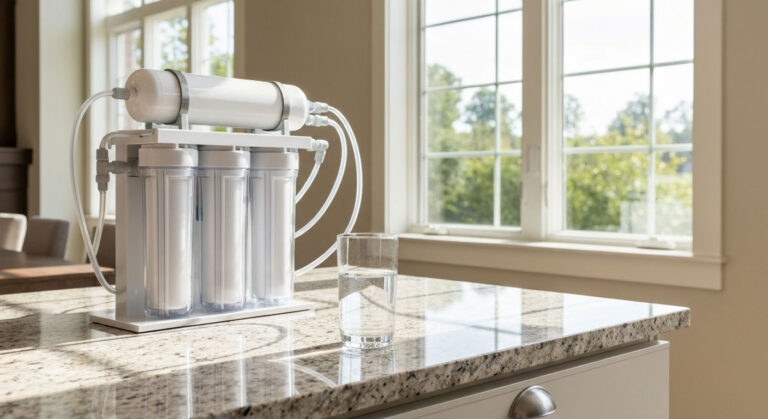
PFAS has emerged as a concern across Pennsylvania, including parts of Bucks County. Private well owners are responsible for their own testing. The PA DEP maintains updated PFAS resources for well owners. If your property is near any former industrial land use, military facilities, or areas flagged by the DEP, PFAS testing belongs on your list. Reverse osmosis systems effectively reduce PFAS to below detectable levels. Our article on how forever chemicals get into drinking water explains the contamination pathways in more detail.
When to Call a Professional
Some water problems are straightforward. Others are not. Reach out to a water treatment professional when your test results show any contamination requiring treatment, when you have multiple issues that need coordinated solutions, when you are preparing for a real estate transaction and need DEP-compliant documentation, or when you need treatment systems properly sized, installed, and commissioned.
At Dierolf Plumbing and Water Treatment, we have been working with well owners across Bucks County for over 25 years. We know the water chemistry in Solebury, Upper Makefield, Buckingham, and surrounding townships. We start every conversation with a free in-home water test. From there, we design treatment that actually fits your water and your home. Our article on whether your well water could be making you sick is a useful read before your first test. You can also explore our full well systems services. Call us at (484) 300-2800 or learn more at dscwater.com/.
Schedule Your Free Water Analysis
If you are on a private well in the New Hope area and you cannot remember the last time your water was tested, now is the right time to change that. Our team offers free in-home water analysis for well owners throughout Solebury, Upper Makefield, Buckingham, Wrightstown, Plumstead, and surrounding communities. We test on-site for the key parameters, explain what we find in plain language, and give you an honest assessment of what, if anything, needs to be done.
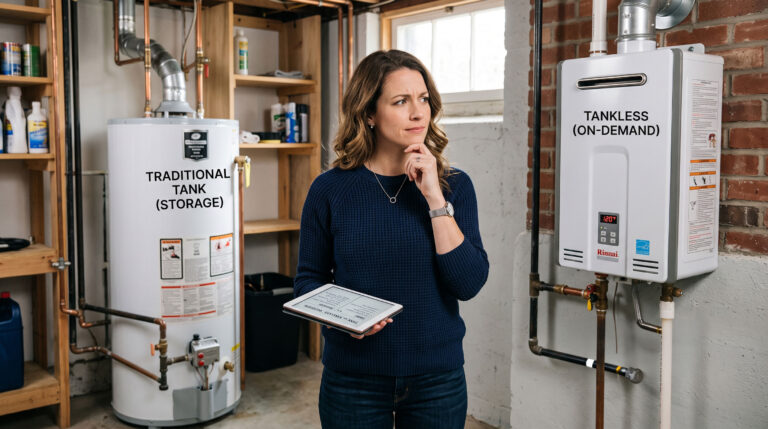
Fill out the form below to schedule your free consultation. We also serve homeowners looking to evaluate their water heater, explore a tankless upgrade, or address any plumbing concern alongside a water quality review.
Frequently Asked Questions
How often should I test my well water in the New Hope area?
Test for bacteria and nitrates at least once a year, ideally in the spring. Bucks County recommends testing for bacteria every 14 months and pH every three years, but annual comprehensive testing gives you a better picture. Test any time you notice changes in taste, odor, or color, or after flooding, nearby construction, or any well work.
My neighbor has great water. Does that mean mine is fine too?
Not necessarily. Northern Bucks County sits on multiple geologic formations that can produce very different water chemistry in wells just a short distance apart. The USGS documented this variation across more than 1,300 wells in this region. The only way to know what is in your well is to test it.
What is the difference between DEP-compliant testing and regular water testing?
DEP-compliant testing follows specific protocols for sample collection, chain of custody, and certified laboratory analysis. It is required for most real estate transactions and provides legally documented results. Standard in-home testing is useful for identifying problems and guiding treatment decisions but does not meet the documentation standard for closings.
Can I drink my well water while waiting for test results?
If your water looks, tastes, and smells normal and you have no reason to suspect contamination, it is generally fine to continue using it while waiting for results. If you suspect a problem, notice unusual characteristics, or recently had flooding near your well, use bottled water until results come back.
How much does professional well water testing cost in this area?
Standard professional testing typically runs $150 to $300 for bacteria, nitrates, pH, and common contaminants. Comprehensive testing including metals, PFAS, radon, and VOCs runs $300 to $600. DEP-compliant real estate testing is generally $200 to $400 depending on the lender’s requirements. Dierolf offers free in-home water testing as a starting point for homeowners in Bucks County.
What should I do if my well test shows bacteria?
Coliform bacteria in a well requires immediate action. Stop using the water for drinking or cooking and switch to bottled water. The next steps are shock chlorination to disinfect the well, identification of the contamination source, and retesting to confirm the problem is resolved. Do not assume a single treatment fixes the underlying issue without finding its cause. Contact a licensed well professional to walk through the process. You can reach our team at dscwater.com/services/water-testing-analysis.
Is low pH water a problem in Solebury Township and northern Bucks County?
Yes. Acidic groundwater is one of the most common issues in this region. Water with a pH below 6.5 corrodes copper and brass plumbing, leaches metals from older pipes, and creates blue-green staining around drains. In historic homes throughout Solebury, Carversville, Buckingham, and New Hope, low pH is a real concern. An acid neutralizer system corrects this and protects your plumbing long term.
Should I test for PFAS if I am on a private well near New Hope?
It is worth considering, especially if your property is near any former industrial land use, commercial activity, or areas the PA DEP has flagged for investigation. PFAS has shown up across Pennsylvania, including parts of Bucks County. Private well owners are responsible for their own testing and treatment. PA DEP’s PFAS resources are a good starting point for understanding what has been identified in your area.
Are home test kits good enough for a well in this area?
They are useful as a quick screening tool but are not a substitute for professional lab testing. DIY kits cannot detect PFAS, radon, or many other contaminants relevant to northern Bucks County wells. They also are not accepted for real estate transactions. Use them between professional tests if you want a quick check, but base your health and treatment decisions on certified lab results.
When is the best time of year to test a well in Bucks County?
Spring is the recommended timing. Snowmelt and spring rains push surface water and contaminants deeper into the ground, and testing in March or April catches anything that developed over winter. Also test after any flooding event, which is relevant given the creek systems and low-lying areas throughout northern Bucks County.
Conclusion
Well water in the New Hope area is not a one-size-fits-all topic. The geology of northern Bucks County creates real variation from one property to the next, and the mix of agricultural land, older homes, creek corridors, and rural character means the contaminant picture is different here than in a suburban development on public water.
Testing annually is the single most important thing you can do as a well owner. It gives you a baseline, catches problems early, and puts you in a position to make informed decisions about treatment. Whether you are in Solebury Township, Buckingham, Upper Makefield, Plumstead, Wrightstown, or anywhere in between, the investment in a comprehensive water test is small compared to what it protects.
If you want to know what is actually in your water, the right first step is to schedule a test. Reach out to our team at dscwater.com/ or call (484) 300-2800. We serve the New Hope area and all of Bucks County, and we start every conversation with a free in-home water analysis.