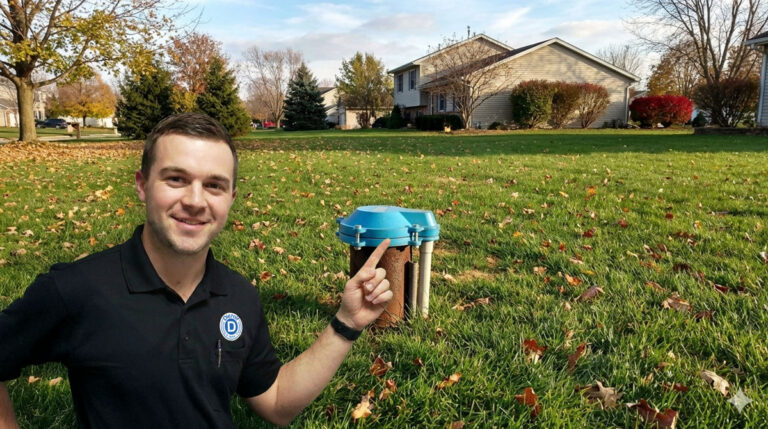

If your Newtown Square home runs on a private well, May is the most important month of the year to pay attention to your water. Spring in Delaware County brings heavy rain, saturated soil, and the tail end of snowmelt season. All of that surface activity pushes contaminants toward the groundwater your well depends on. Testing now gives you an accurate picture of what your family has actually been drinking since winter.
Newtown Square sits in Newtown Township, Delaware County, on some of the region’s older and geologically complex terrain. The fractured Piedmont bedrock that underlies this part of the county creates aquifer conditions that are less forgiving than people often realize. Private wells in Newtown Square and surrounding communities like Haverford, Marple, and Broomall don’t get the regulatory protection that public water systems do. That makes annual testing especially important, and spring is the best window to do it.
Why Spring Is a Critical Moment for Well Water
Most homeowners in Newtown Square don’t think about their well water until something changes — a sulfur smell, orange staining in the shower, or a taste that wasn’t there before. By that point, the problem has usually been building for months.
The U.S. Environmental Protection Agency recommends that private well owners test their water at least once a year. May is the right time for that annual check because the seasonal conditions that most threaten groundwater quality happen in the weeks just before it. Heavy April rains, late snowmelt, and thawing ground all move surface contaminants downward toward the water table. Testing right after those events gives you results that reflect what is actually in your water today, not what was there last fall.
Penn State Extension recommends that private well owners test annually for coliform bacteria and every three years for pH and dissolved solids — with additional testing based on local conditions. In Newtown Square and throughout Delaware County, local conditions make a compelling case for the comprehensive annual approach.
What Winter and Spring Actually Do to Your Well
Winter is harder on private wells than most homeowners realize. Freeze-thaw cycles put pressure on well casings and can open small cracks in the soil around your wellhead — cracks that become pathways for surface water when things warm up in March and April. Once the ground is fully thawed and saturated, those pathways don’t close back up right away.
Newtown Square has a significant amount of older residential development, with neighborhoods dating back decades. Homes in older parts of Newtown Township, as well as adjacent communities like Marple Township and Haverford Township, often have wells that were drilled before modern sealing and casing standards were in place. Older wells are simply more vulnerable to seasonal intrusion. If your well predates 1990, testing every spring is not optional — it’s the minimum responsible step.
The fractured Piedmont bedrock that underlies much of Delaware County also matters here. According to USGS geohydrology research on southeastern Pennsylvania, groundwater in the region’s igneous and metamorphic Piedmont Upland flows through interconnected fractures, joints, and cleavage planes in bedrock rather than through sediment layers. That network of fractures can move contaminants quickly and unpredictably when spring recharge is high. It also means that what happens on the surface of your property — and your neighbors’ properties — can reach your well faster than you’d expect.
Snowmelt and Runoff: The Hidden Threat in Delaware County
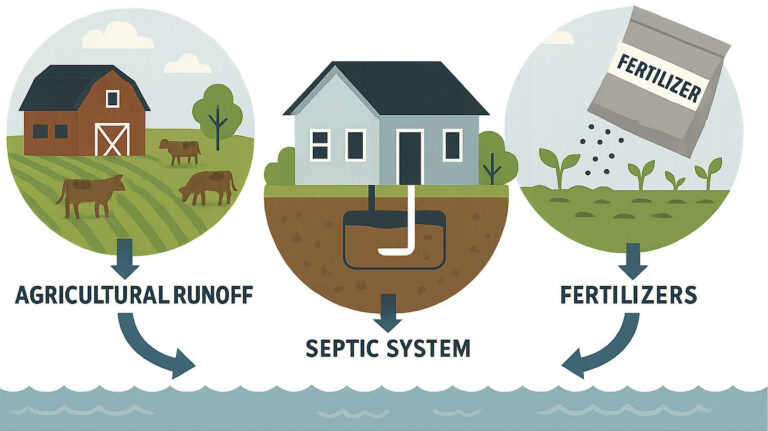
When snow melts across Newtown Square and surrounding communities, it doesn’t simply evaporate. It moves across lawns, driveways, roadsides, and older septic drain fields, picking up whatever it encounters — and then percolates down toward the water table. That process carries bacteria, nitrates, road salt, and pesticides toward private wells.
Delaware County’s mix of established suburban neighborhoods, older commercial corridors, and legacy industrial sites creates its own set of runoff concerns. Properties near Route 3, Route 252, or any area with older commercial development should take spring well testing seriously. Road salts and petroleum products from high-traffic corridors can travel through shallow soils before reaching a fractured bedrock aquifer.
Neighboring Marple Township and Haverford Township share similar geology and land use patterns. If your well is near the border of any of these communities, the contamination pathways your well faces may not even originate on your own property.
Contaminants to Watch for After Spring Thaw
After a wet Delaware County spring, the contaminants most likely to show up in private well water include:
- Coliform bacteria — a reliable indicator that surface water has reached your well. Coliform is naturally present in soil and animal waste, and spring is when it’s most likely to travel. Our article on understanding total coliform explains what a positive result means and what to do about it.
- Nitrates — common near older septic systems and any areas with lawn fertilizer use. According to the CDC, elevated nitrates pose a serious health risk to infants and pregnant women. Our guide to nitrate removal for Pennsylvania homeowners covers treatment options.
- Iron and manganese — the fractured Piedmont rock underlying Newtown Square can contribute both minerals to well water, and spring recharge can push levels higher. Iron shows up as rust-colored staining on fixtures and laundry. Manganese is less visible but more concerning from a health standpoint. See our article on removing manganese from well water in southeastern Pennsylvania.
- Low pH (acidic water) — a documented issue for private well owners in Delaware County’s Piedmont geology zone. Slightly acidic water corrodes copper plumbing and fixtures over time, leaving blue-green staining and shortening the life of your pipes and water heater. Our article on identifying what’s in your well water covers this alongside iron and other common issues.
- PFAS (per- and polyfluoroalkyl substances) — man-made chemicals that have been documented in groundwater throughout the Philadelphia suburbs. Delaware County sits near several areas of known PFAS concern related to industrial history and transportation corridors. Our article on how forever chemicals get into drinking water explains the pathways.
If your property is near any site with industrial history, a dry cleaner, a gas station, or a golf course, the case for comprehensive spring testing is even stronger. Delaware County’s development history means many older properties have legacy contamination nearby that well owners may not know about.
Water Quality Concerns Specific to Newtown Square and Newtown Township
Most of Newtown Square is served by Aqua Pennsylvania for municipal water, but a meaningful number of homes in the township and in surrounding communities remain on private wells. Those homeowners carry the full responsibility for their water quality. Pennsylvania does not regulate private wells, which means there are no required inspections and no notifications when something changes in your groundwater. If you’re on a well, testing is entirely up to you.
Newtown Township, Delaware County also sits within the Southeastern Pennsylvania Groundwater Protected Area — a designation by the Delaware River Basin Commission that reflects the groundwater stress and sensitivity in this part of the region. That designation is a signal, not a safety guarantee. It means the aquifer system here is under real pressure from development and land use.
Low pH is a particular concern for well owners in this part of Delaware County. The Piedmont Upland bedrock tends to produce slightly acidic groundwater, and that acidity corrodes copper pipes and plumbing fixtures over time. Many Newtown Square homeowners notice blue-green staining around faucets or find that their water heaters wear out faster than expected. A neutralizer system addresses this problem at the source.
Hardness is also common in this area. The geology of Delaware County and neighboring Chester County contributes calcium and magnesium to groundwater, producing hard water that builds scale inside pipes, water heaters, and appliances. It’s not a health risk, but it costs you money in shortened appliance lifespans and higher energy bills. Our article on how hard water affects your skin gives a good picture of the day-to-day impact.
PFAS is a growing concern throughout Delaware County. The proximity to industrial corridors, legacy manufacturing sites, and the broader Philadelphia region’s history of industrial land use means PFAS screening is worth adding to any comprehensive spring well test in Newtown Square. Our overview of PFAS and how to reduce your exposure in southeastern Pennsylvania covers what’s known about local risk.
What a Professional Water Test Actually Covers
A basic home test kit picks up a handful of parameters and gives you a rough snapshot at best. A professional water testing and analysis service goes considerably further, and the difference in the usefulness of the results is significant.
A thorough professional test typically measures:
- Total coliform and E. coli bacteria
- Nitrates and nitrites
- pH and total hardness
- Iron and manganese
- Turbidity (cloudiness, which can signal sediment or biological activity)
- Volatile organic compounds (VOCs), particularly relevant near any commercial or industrial land use
- PFAS, when your location warrants it
The results tell you not just what’s present but how much — and whether those levels exceed the safe thresholds set by the EPA or Pennsylvania DEP. That context is what turns a list of numbers into an actual plan. For a full walkthrough of what to expect, our article on your annual well water check-up walks through the process step by step.
If you’ve ever wondered whether a store-bought kit is good enough, our article on why DIY water test kits can do more harm than good is worth a read before you decide.
What Happens After Your Test: Treatment Options That Match the Problem
Testing tells you what you’re dealing with. What happens next depends on the results.
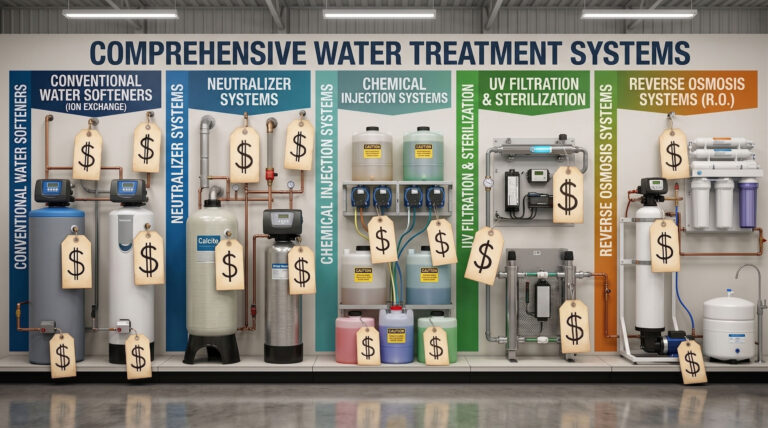
If bacteria are present, a UV filtration system is usually the right answer. UV systems use ultraviolet light to neutralize bacteria and viruses without chemicals, and they’re quiet and low-maintenance once installed. Our guide to ultraviolet water treatment covers exactly how they work and what to expect.
If pH is low, a neutralizer raises pH to a safe, non-corrosive range and stops the ongoing damage to your copper plumbing and fixtures. This is one of the most overlooked issues in Delaware County well water, and one of the most cost-effective fixes once identified.
High iron levels call for a dedicated iron filtration system. These systems remove dissolved and particulate iron before it reaches your fixtures, ending the rust staining on your sinks, tubs, and laundry that iron-heavy water causes.
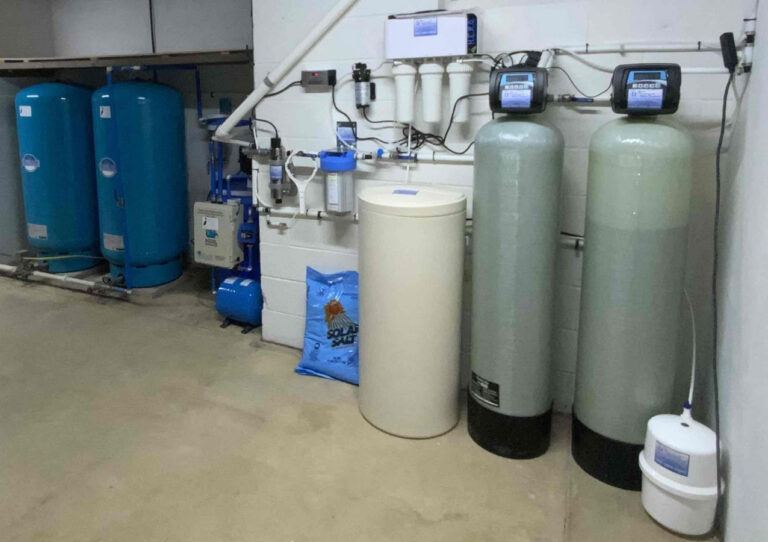
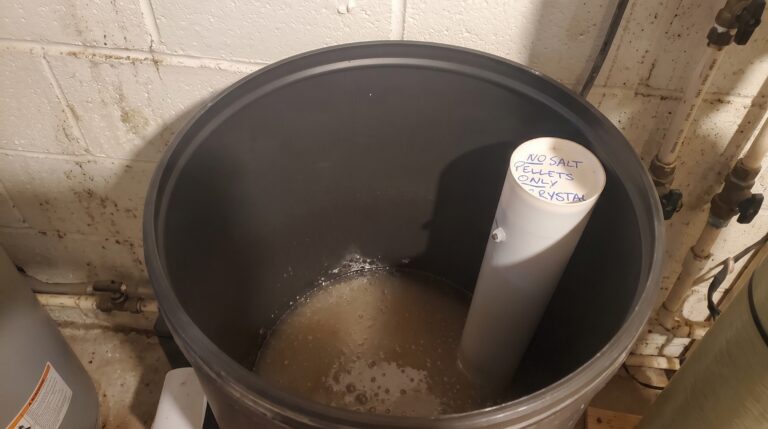
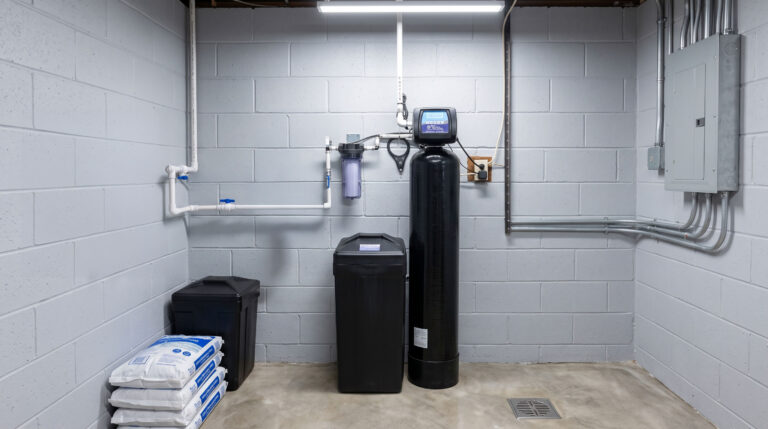
Hard water responds well to a water softener, which uses ion exchange to replace calcium and magnesium with sodium. Softer water protects your water heater and appliances — and it’s one of the reasons our article on how a water softener protects your water heater has been one of our most read pieces.
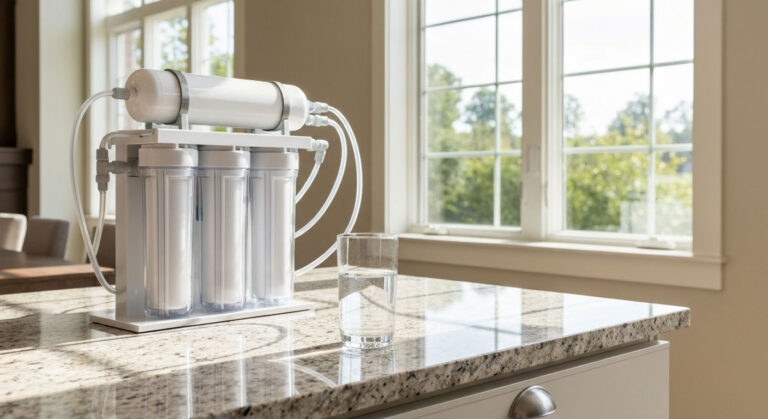
If PFAS or other chemical contaminants are a concern, a reverse osmosis system at the kitchen tap is among the most effective options available. Reverse osmosis pushes water through a semi-permeable membrane that removes a wide range of contaminants including PFAS, nitrates, and heavy metals. Our article on why PFAS filters aren’t all the same helps you understand the difference between treatment approaches before making a decision.
For sulfur — that rotten-egg smell that some well owners in Newtown Township and Marple Township are all too familiar with — a sulfur filtration system addresses the problem at the source. Our article on rotten egg smell in your water explains what’s causing it and why it won’t go away on its own.
How Dierolf Plumbing and Water Treatment Can Help
Dierolf Plumbing and Water Treatment serves homeowners throughout Newtown Square, Newtown Township, Marple Township, Haverford Township, Broomall, Wayne, and the broader Delaware County area. The team includes licensed master plumbers who handle everything from an initial water test through the installation of the right treatment system for your specific results.
This is not a one-size-fits-all approach. The treatment that’s right for a home in Newtown Square with low pH and bacteria is different from the one that’s right for a home in Marple Township dealing with iron and hardness. Results drive every recommendation.
With summer coming and household water use climbing — garden hoses, outdoor showers, extra laundry — there is no better time to get a clear picture of your well’s condition. If you’re already thinking ahead to the warmer months, our article on preparing your plumbing for summer pairs well with a spring water test.
Schedule Your Free Water Analysis
Dierolf Plumbing and Water Treatment offers free in-home water analyses for homeowners throughout Newtown Square and Delaware County. One of our licensed water treatment specialists will come to your home, collect a water sample, and walk you through what the results mean — no pressure and no obligation. Just honest answers about your water.
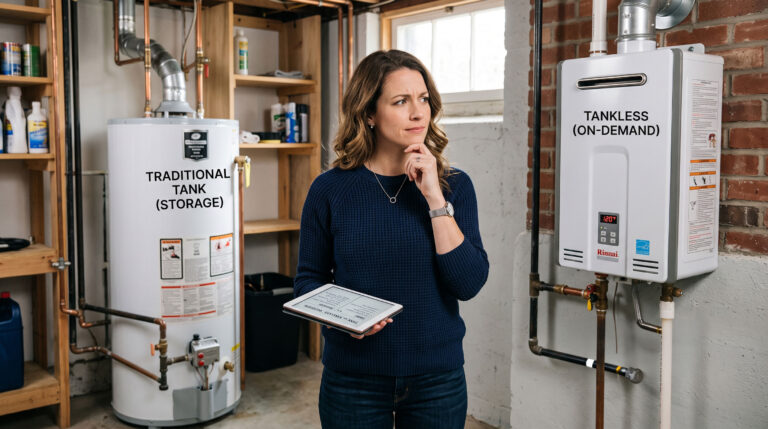
The form below also works if you’d like to talk with us about a water heater replacement or a tankless water heater upgrade. Spring is a smart time to evaluate your hot water system before the higher demand of summer, and our licensed plumbers handle both water treatment and water heater work under the same roof.
FAQs
How often should I test my private well water in Newtown Square?
The EPA recommends testing at least once a year. Penn State Extension echoes that recommendation specifically for coliform bacteria. May is the ideal window in Newtown Square and throughout Delaware County because it follows the seasonal conditions — snowmelt, heavy spring rain, saturated soil — that most affect groundwater quality. Well owners near older septic systems, commercial properties, or any area with industrial history should consider testing twice a year.
What contaminants are most common in Newtown Square well water?
The most frequently found contaminants in private wells across Newtown Township and surrounding Delaware County communities include coliform bacteria, low pH (acidic water), iron, manganese, hardness minerals, nitrates, and PFAS. The fractured Piedmont bedrock underlying this part of Delaware County contributes naturally to low pH, iron, and hardness. PFAS is an emerging concern throughout the Philadelphia suburbs given the region’s industrial history. A professional test identifies which, if any, are present in your specific water.
Pennsylvania doesn’t regulate private wells. Does that mean my water is safe?
Not automatically. It means the safety of your well water is entirely your responsibility. There are no required inspections, no notifications when groundwater quality changes, and no regulatory oversight of what’s in your water. Annual testing is the only reliable way to know what your family is drinking. Our article on maintaining your private Pennsylvania well covers the full scope of what private well ownership requires.
Can I use a home test kit instead of a professional test?
Home kits check for a limited number of parameters and don’t give you the quantitative data needed to make sound treatment decisions. They can also create a false sense of security by returning “pass” results on the few things they check while missing everything else. A professional water testing and analysis service gives you accurate, actionable results across a full range of contaminants. Our article on why DIY test kits can do more harm than good explains the risks in more detail.
My water looks and tastes fine. Do I still need to test it?
Yes. Many of the contaminants most common in Newtown Square area wells — including coliform bacteria, nitrates, PFAS, and low pH — have no noticeable taste, odor, or color at levels that are still harmful. Low pH is a good example: water can be acidic enough to corrode your copper plumbing for years before you notice any sign of it. Testing is the only reliable way to know.
What does a professional water test cost, and is it worth it?
Costs vary depending on the scope of testing. Dierolf offers a free in-home water analysis — fill out the form above or visit our water testing page to get started. Given that the results inform decisions about your family’s drinking water and your home’s plumbing, the investment almost always pays for itself in avoided damage and treatment costs.
How long does a professional water test take?
Sample collection at your home typically takes less than an hour. Lab results usually come back within a few business days. After that, a Dierolf water treatment specialist walks you through what the numbers mean and what, if anything, needs to be addressed.
What should I do if my test comes back with elevated contaminants?
Don’t panic. Most contaminants found in Delaware County well water have clear, well-established treatment solutions. Depending on what the test finds, the answer may be a UV system, an iron filter, a neutralizer, a water softener, a reverse osmosis system, or some combination. A Dierolf specialist will match the right treatment to your specific results — nothing more and nothing less than what your water actually needs.
I’ve been on this well for years with no problems. Why should I start testing now?
Groundwater conditions change over time. New development nearby, aging septic systems, shifting land use, and the gradual degradation of older well casings all affect what reaches your water table — often without any visible sign at the tap. Annual testing is the only way to catch changes before they become serious problems. Many of the homeowners who call us about a sudden problem say their water had “always been fine.” That’s usually true right up until it isn’t.