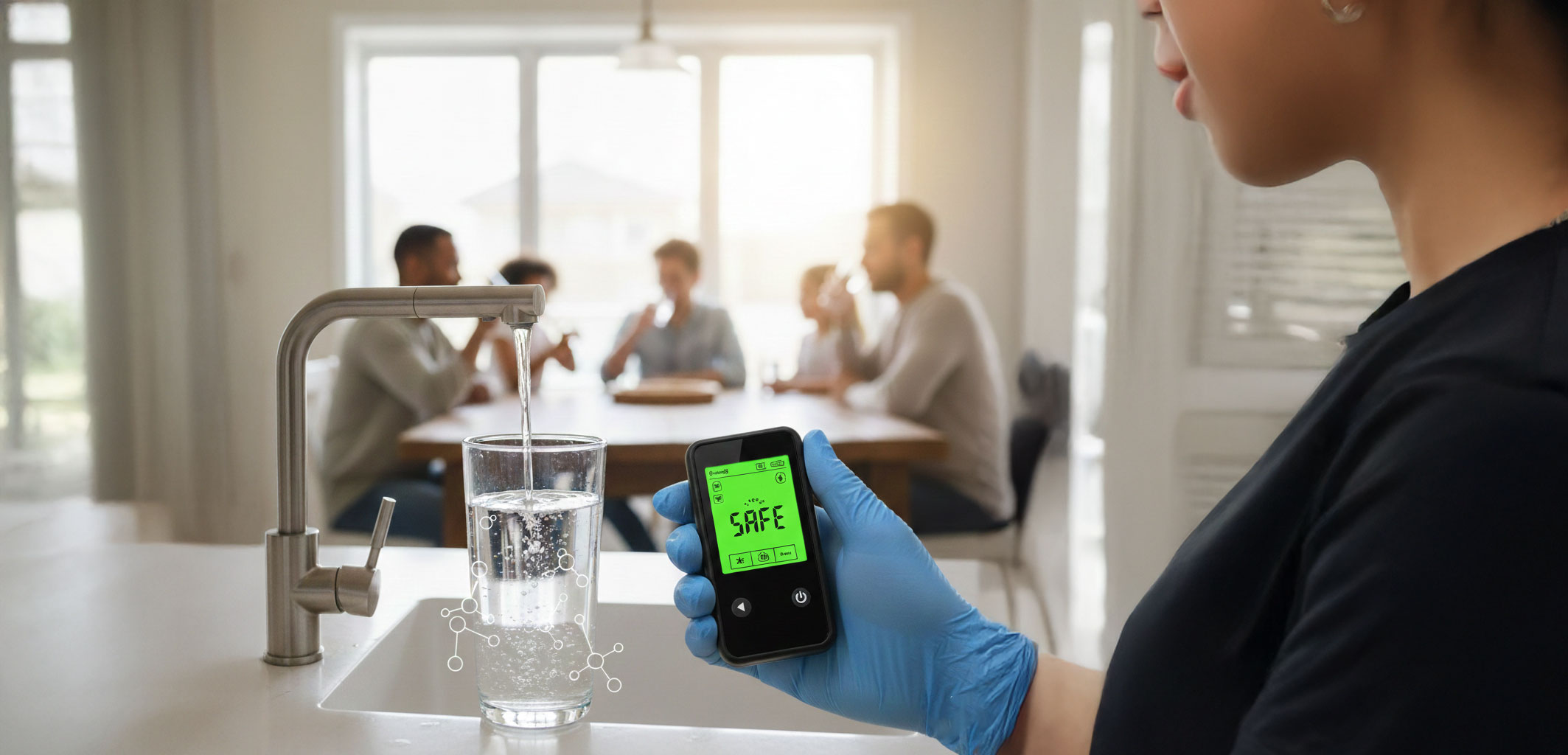
If you have searched for a PFAS filter, you have probably noticed something confusing. Nearly every filter on the market claims to reduce PFAS. Pitcher filters, refrigerator filters, faucet attachments, and whole house systems all sound like they do the same thing.
The reality is very different.
PFAS filters are not all the same and choosing the wrong one can leave you with a false sense of security. Real PFAS reduction depends on verified performance, the right treatment technology, and matching the system to your specific water.
For homeowners across Southeastern Pennsylvania, understanding these differences is the key to protecting drinking water with confidence.
Why “PFAS Filter” Is a Marketing Term, Not a Guarantee
PFAS refers to a large family of synthetic chemicals, not a single contaminant. Different PFAS compounds behave differently in water, and not every filter is designed to remove them effectively.
Many consumer filters rely on vague claims like “helps reduce contaminants” or “improves water quality.” These statements sound reassuring, but they do not confirm whether a filter has been independently tested to reduce PFAS at meaningful levels.
The U.S. Environmental Protection Agency recommends looking for verified certification and testing, not marketing language. Their guidance on how to identify drinking water filters certified to reduce PFAS explains exactly what homeowners should look for before trusting any product.
Without certification and proper application, a filter may improve taste while doing very little to address PFAS.
Why Water Testing Comes Before Any PFAS Solution
One of the most common mistakes homeowners make is buying a PFAS filter before testing their water. Without test results, there is no way to know which PFAS compounds are present or at what concentration.
Professional water testing and analysis provides clarity. It identifies PFAS levels alongside other common local issues such as hardness, iron, manganese, chlorine, and pH. These factors matter because they directly affect which treatment technologies will perform properly over time.
Homeowners throughout Bucks, Montgomery, Chester, Berks, Delaware, and Lehigh Counties rely on Direolf Plumbing and Water Treatment for professional testing to avoid guesswork. Testing ensures the solution is designed for your water, not a generic national average.
The PFAS Treatment Technologies That Actually Matter
Not all filtration methods perform the same when it comes to PFAS. Understanding the differences is essential.
Activated Carbon Filters
Activated carbon can reduce certain PFAS compounds when properly designed and maintained. Performance varies widely based on carbon type, contact time, and water chemistry. Many small consumer filters lack the capacity required for consistent PFAS reduction.
Reverse Osmosis Systems
Reverse osmosis is widely recognized as one of the most effective technologies for reducing a broad range of PFAS at the drinking water tap. When properly designed and installed, these systems also reduce many other contaminants at the same time.
Professionally installed reverse osmosis drinking water systems are designed based on water test results, not shelf space. This is why they consistently outperform many off-the-shelf PFAS filters.
Why Professional Design Matters
The Water Quality Association outlines how activated carbon, reverse osmosis, and ion exchange perform against PFAS, and why system design and maintenance are critical to long-term results.
This is where professional water treatment services make a measurable difference. The goal is not to sell a product. It is to deliver verified results.
PFAS Is a Local Issue in Southeastern Pennsylvania
PFAS contamination is not a distant or abstract issue for this region. Pennsylvania communities have faced PFAS detections in both municipal water supplies and private wells.
Local reporting from WHYY highlights how Pennsylvania water providers are responding to PFAS regulations and what it means for residents.
Water quality can vary significantly depending on location and water source. Conditions in Doylestown may look very different from Boyertown, Horsham, West Chester, Media, or Allentown.
Dierolf Plumbing and Water Treatment works throughout these communities, designing solutions based on real local water conditions rather than national assumptions:
Local experience matters when contaminants vary from one neighborhood to the next.
Learning From Real Local PFAS Cases
Homeowners often gain confidence by seeing how PFAS treatment works in real situations. Local case studies such as How to Remove PFAS and PFOS from Doylestown Water and Safeguarding Bucks County’s Water: Tackling PFAS show how testing leads to tailored solutions for families in this region.
These examples reinforce a critical point. Effective PFAS treatment is not about buying a filter. It is about understanding your water and choosing a system designed to protect it over time.
What to Look for When Choosing a PFAS Filter
If you are evaluating PFAS treatment options, focus on these essentials:
- Independent certification that specifically includes PFAS reduction
- A treatment method matched to your water test results
- Proper system sizing and professional installation
- Ongoing maintenance to preserve performance
The Centers for Disease Control also provides a clear video overview explaining PFAS health concerns and ways to reduce exposure, including water treatment considerations.
Frequently Asked Questions About PFAS Filters
What is the best filter for removing PFAS from drinking water?
The best filter depends on your water chemistry, PFAS concentration, and system design. Reverse osmosis systems are widely recognized as one of the most effective options when properly installed and maintained. Some activated carbon systems can also reduce PFAS, but performance varies significantly.
Do pitcher or faucet filters remove PFAS?
Some may reduce certain PFAS compounds, but many are not certified for meaningful PFAS reduction. These filters often lack the capacity and contact time needed for consistent results.
How do I know if a PFAS filter actually works?
Look for independent certification from organizations such as NSF that specifically reference PFAS reduction. Avoid relying on general contaminant claims or marketing language.
Should I test my water before buying a PFAS filter?
Yes. Testing is essential. PFAS is a group of chemicals, and concentrations vary widely. Testing ensures the system is designed for your specific water.
Is PFAS only a concern for private well water?
No. PFAS has been detected in both municipal water systems and private wells across Pennsylvania. Testing is the only way to know your exposure level.
How often does a PFAS filtration system need maintenance?
Maintenance depends on system type, water quality, and usage. Skipping filter changes can significantly reduce PFAS removal performance over time.
The Bottom Line for Homeowners
PFAS filters are not interchangeable. Choosing the right solution requires verified information, professional testing, and local expertise.
For homeowners in Southeastern Pennsylvania, professionally designed treatment systems provide confidence that generic filters cannot. When the goal is protecting your family’s drinking water, accuracy matters.
If you are unsure where to start, call Dierolf Plumbing and Water Treatment today. With over 1000 5- star reviews on Google, and local experts who are highly trained, we are the best choice for unbeatable knowledge and exceptional service. The right information leads to the right solution.