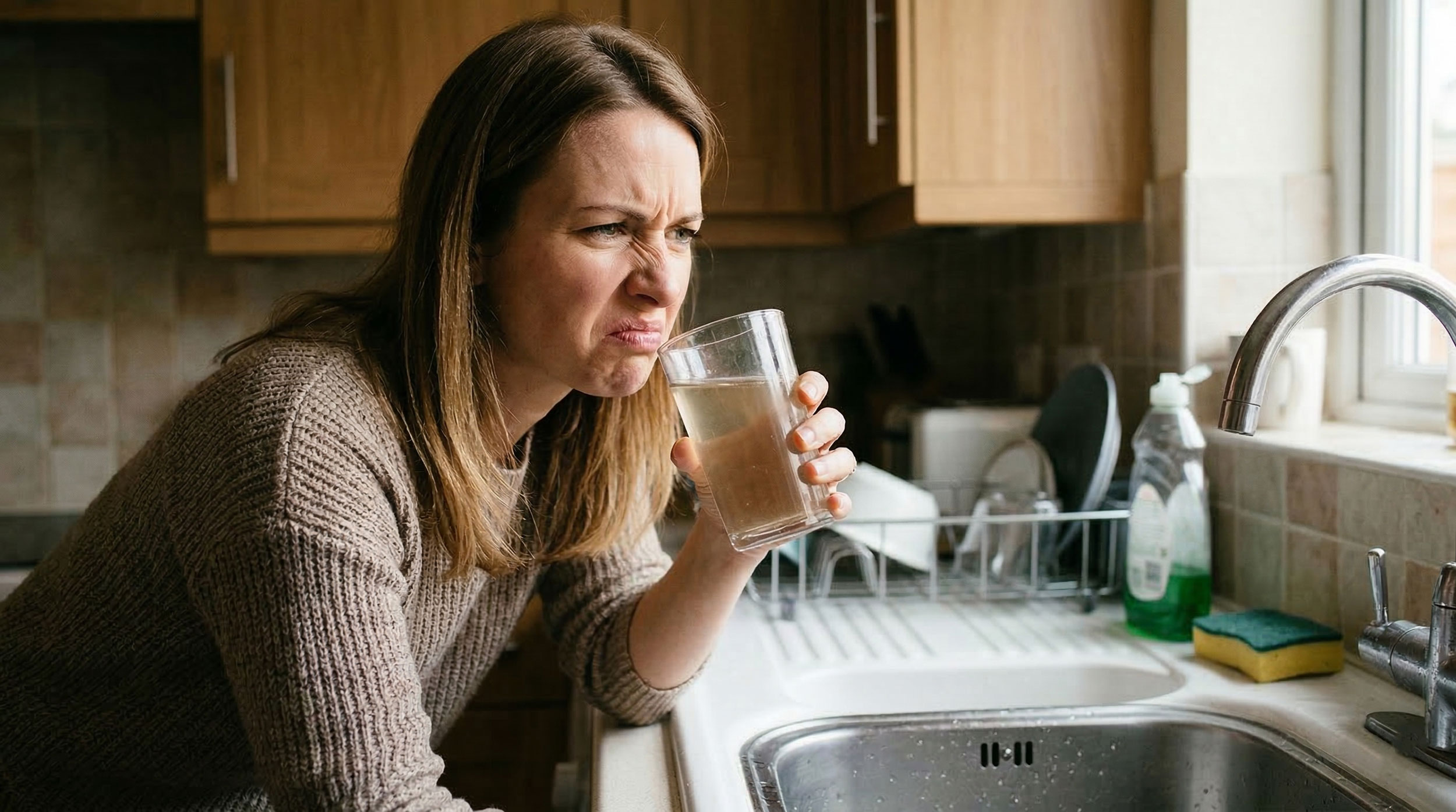
Low water pressure is one of the most common complaints among homeowners with private wells. Showers struggle to rinse, faucets slow to a trickle, and everyday tasks take longer than they should.
The challenge is that well systems are more complex than municipal water. Pressure problems are rarely caused by just one component, and guessing often leads to unnecessary repairs.
At Dierolf Plumbing and Water Treatment, we work on private well systems every day across Southeastern Pennsylvania. In our experience, low water pressure almost always comes down to a handful of predictable system-level issues that can be identified with proper testing.
Below are the 7 most common causes of low water pressure on well water, what’s really happening, and how the problem is correctly fixed.
1. Failing or Undersized Well Pump
Your well pump is responsible for moving water from the well into your home. Over time, pumps lose efficiency, or they may simply be too small for the home’s current water demand.
The U.S. Department of Energy explains that pump performance directly impacts household flow rate and pressure, especially during peak usage like showers, laundry, or irrigation.
Common signs
- Pressure drops when multiple fixtures run
- Long recovery time after water use
- Pressure that gradually worsens over time
What actually fixes it
Pump performance testing and proper sizing verification. In many cases, replacing an aging or undersized pump restores consistent pressure immediately.
2. Pressure Switch Problems
The pressure switch tells your pump when to turn on and off. If it’s misadjusted, dirty, or failing, pressure can drop before the pump activates or fluctuate constantly.
InspectAPedia identifies pressure switch issues as one of the most frequent causes of inconsistent well pressure.
Common signs
- Pressure swings rapidly
- Pump short-cycles
- Delayed water flow when a faucet opens
What actually fixes it
Testing, recalibration, cleaning, or replacement of the pressure switch. This is a relatively small repair that often produces a noticeable improvement.
3. Waterlogged or Undersized Pressure Tank
Your pressure tank stores water and stabilizes pressure between pump cycles. If the internal bladder fails or the tank is undersized, pressure becomes erratic.
Penn State Extension explains that waterlogged tanks can no longer regulate pressure properly, causing rapid drops and spikes throughout the home.
Common signs
- Rapid pressure swings
- Frequent pump cycling
- Pressure that feels “bursty”
What actually fixes it
Checking the air charge, inspecting the bladder, and confirming the tank is properly sized for the home’s water usage.
4. Clogged Sediment or Whole-House Filters (Extremely Common)
This is one of the most overlooked causes of low well water pressure.
Well water often contains sand, silt, iron, or sediment. As filters clog, they restrict flow before water ever reaches your plumbing.
The Water Quality Association confirms that clogged filtration media can significantly reduce household water pressure.
Common signs
- Gradual pressure loss
- Pressure temporarily improves after filter changes
- Uneven pressure at fixtures
What actually fixes it
Replacing clogged filters, correcting micron ratings, routine maintenance of the system and ensuring filtration systems are properly sized for flow demand.
5. Mineral Buildup Inside Pipes
Iron, manganese, and hardness minerals don’t just stain fixtures. Over time, they build up inside pipes, narrowing the internal diameter and restricting flow.
The U.S. Geological Survey explains how mineral hardness leads to scale formation inside plumbing systems.
Common signs
- Slow, long-term pressure decline
- Uneven pressure between fixtures
- Staining or discoloration
What actually fixes it
Professional water testing followed by targeted treatment, such as iron filtration or water softening, to stop further buildup and protect plumbing.
6. Low Well Yield or Seasonal Water Table Changes
Sometimes the issue isn’t pressure equipment at all, but water availability.
During dry seasons or heavy household use, a well may not recover fast enough to meet demand. The U.S. Geological Survey explains how seasonal groundwater fluctuations affect well output.
Common signs
- Pressure drops during extended use
- Problems worsen in summer months
- System recovers after long rest periods
What actually fixes it
Measuring well recovery rate and adjusting system design, usage patterns, or storage capacity to match actual yield. Our expert well inspection services can help you determine the overall performance of your system
7. Partially Closed Valves
This one surprises many homeowners. A partially closed main shutoff, bypass valve, or isolation valve can restrict flow throughout the entire home.
The American Society of Home Inspectors notes that partially closed valves are a common cause of low pressure discovered during inspections.
Common signs
- Sudden pressure change after service work
- Pressure loss isolated to certain areas
What actually fixes it
Systematically verifying all valves are fully open, including those near the pressure tank and treatment equipment.
Why Low Well Water Pressure Is Often Misdiagnosed
Many homeowners are told they need a new pump when the real issue is filtration restriction, pressure tank failure, or system imbalance.
In our experience evaluating well systems, proper diagnosis almost always prevents unnecessary replacements and saves homeowners money.
Schedule a Professional Well Water Pressure Evaluation
If your home relies on a private well and water pressure doesn’t feel right, guessing can lead to wasted time and costly mistakes.
Dierolf Plumbing and Water Treatment specializes in complete well system evaluations, including pump testing, pressure tank analysis, filtration inspection, and well yield assessment. Our team has helped thousands of local homeowners restore consistent water pressure by identifying the real cause, not just the symptom.
If you’re experiencing low water pressure on well water, scheduling a professional evaluation can give you clear answers and a plan that actually works.
Frequently Asked Questions
Why did my well water pressure suddenly drop?
Sudden pressure loss is often caused by clogged filters, a failing pressure switch, or a valve that was partially closed during service.
Can a water filter cause low pressure?
Yes. Sediment and iron filters are one of the most common causes of pressure loss on private well systems.
Does low pressure always mean a bad pump?
No. Many pressure problems stem from tanks, switches, filtration, or system sizing rather than pump failure.
Is low well water pressure bad for my system?
Yes. Issues like short cycling can damage pumps and shorten system lifespan if left uncorrected.
How often should a well system be evaluated?
Any time pressure changes noticeably, or annually as part of preventative maintenance.
Proudly serving homeowners throughout Bucks County, Montgomery County, Chester County, Berks County, and surrounding Southeastern Pennsylvania communities.