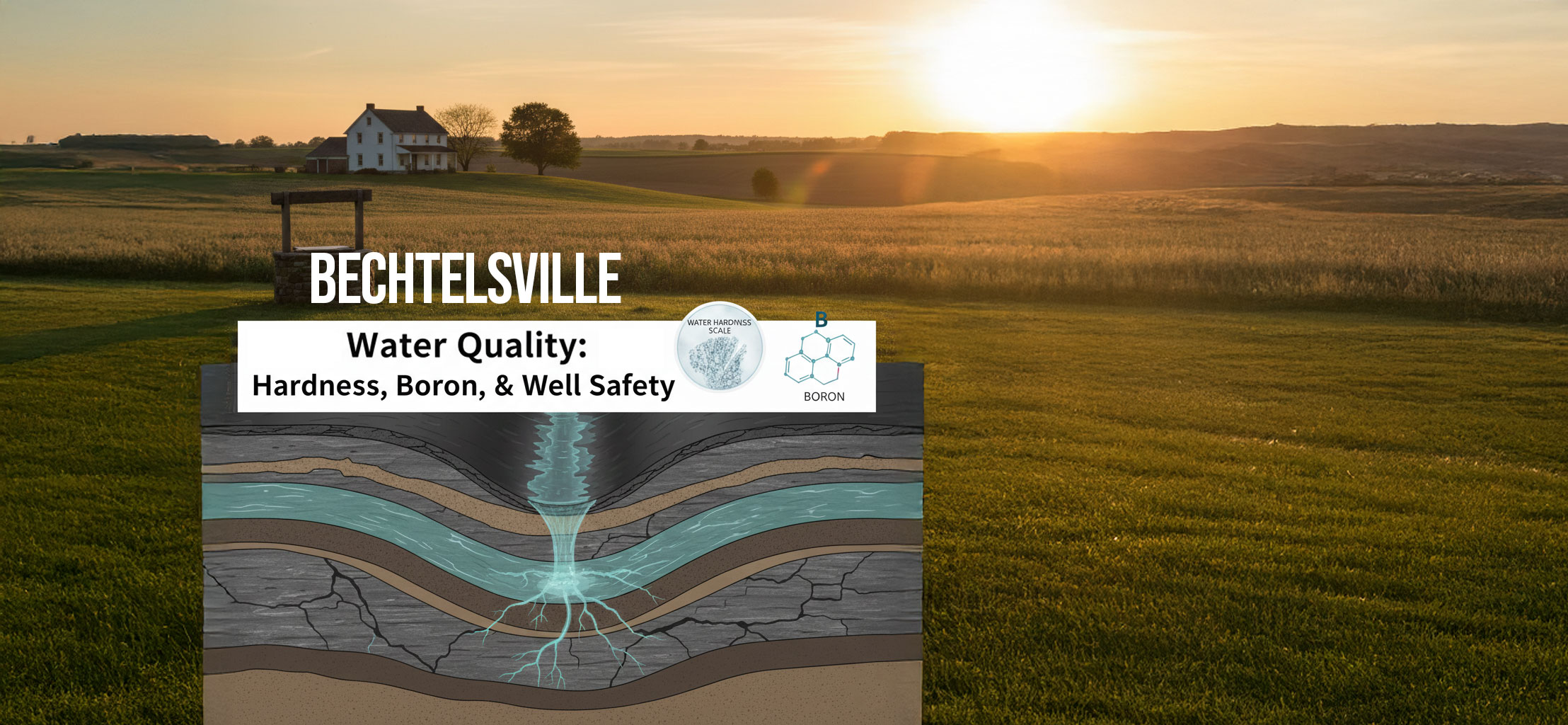
Overview of Bechtelsville Water
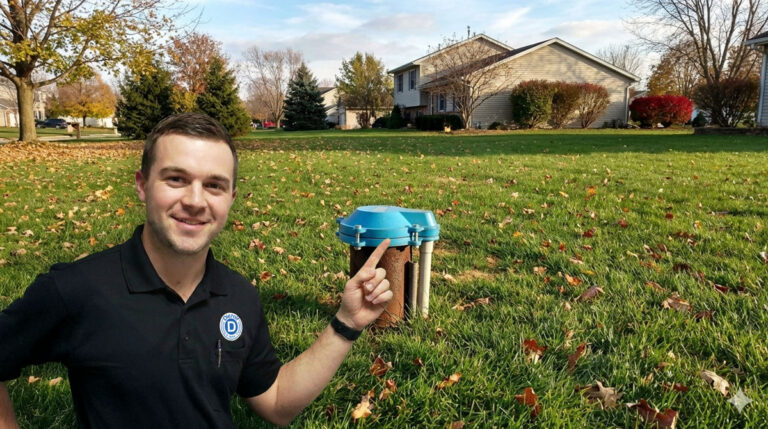
Bechtelsville, Pennsylvania does not operate a large municipal water system. Most homes rely on private groundwater wells drawing from local bedrock aquifers in Berks County. Because private wells are not regulated under the Safe Drinking Water Act, homeowners are responsible for testing and treatment. Common regional concerns include hard water, elevated total dissolved solids, naturally occurring metals such as iron and manganese, nitrate risk from agricultural activity, and occasional total coliform bacteria detection. In parts of Berks County, naturally occurring boron has also been detected in groundwater at levels that warrant monitoring. Testing is especially important for homes with older wells, shallow wells, or properties near farmland.
Understanding Bechtelsville’s Water Source
Unlike larger boroughs in southeastern Pennsylvania, that operate centralized treatment plants, Bechtelsville residents typically draw water from private wells tapping fractured bedrock aquifers. These aquifers are part of the broader hydrogeologic formations common throughout Berks County and eastern Pennsylvania.
Groundwater in this region moves through rock fractures rather than sand or gravel. That means water chemistry is heavily influenced by the mineral composition of the underlying rock. As water moves through these formations, it dissolves naturally occurring minerals, which explains why hardness, total dissolved solids, iron, manganese, and pH imbalance are common.
Because most Bechtelsville homes use private wells, there is no annual Consumer Confidence Report for individual properties. Public water systems must publish CCRs under the Safe Drinking Water Act, but private well owners must test independently. Pennsylvania’s Department of Environmental Protection also outlines groundwater protection and testing guidance.
Seasonally, heavy rainfall and snowmelt can influence bacterial presence and nitrate movement into shallow aquifers. Drought periods can concentrate dissolved solids and minerals.
The Questions Bechtelsville Homeowners Are Actually Asking
- Is hard water common in Bechtelsville?
Yes. Groundwater in Berks County frequently contains elevated calcium and magnesium due to natural bedrock dissolution. Hardness does not pose a direct health risk, but it contributes to scale buildup, reduced appliance life, soap inefficiency, and dry skin. Many homes in the Bechtelsville area test above 7 grains per gallon, which is considered moderately to very hard water.
The US Geological Survey explains how geology affects groundwater mineral content. If you’re experiencing these issues, speak with a local water specialist about your options.
- Why are some wells showing increased boron concentrations?
Boron can occur naturally in certain rock formations. In parts of Pennsylvania, elevated boron has been identified in groundwater due to natural geologic sources rather than industrial contamination. While boron is not currently regulated under a federal Maximum Contaminant Level, the EPA provides health advisory information for monitoring purposes.
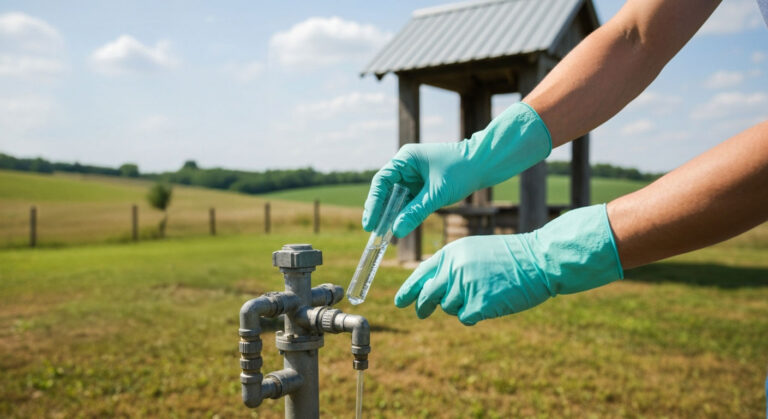
Testing is the only way to determine whether boron is present in your well.
- Should I worry about nitrates in Bechtelsville?
Bechtelsville sits in a region surrounded by agricultural land. Fertilizer application and manure management can contribute to nitrate migration into shallow wells. Nitrates are regulated under the Safe Drinking Water Act because high levels can cause serious health effects, particularly for infants.
Homes near farmland, properties with shallow wells, and homes with older septic systems should test annually.
- What does total coliform bacteria mean in a private well?
Total coliform bacteria indicates that surface water or environmental bacteria may be entering the well system. It does not necessarily mean harmful pathogens are present, but it signals that the well may be vulnerable to contamination.
Pennsylvania DEP guidance on private well testing recommends regular bacterial screening.
If total coliform is detected, further testing and system inspection are necessary.
- Why does my water leave orange or black stains?
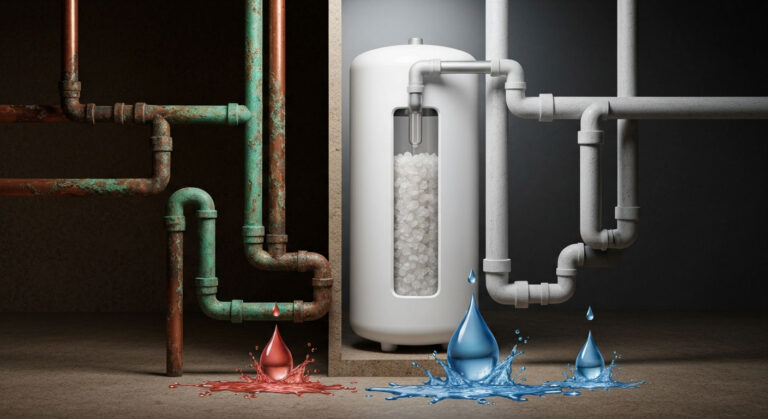
Orange staining typically indicates iron. Black staining often indicates manganese. Both metals occur naturally in Pennsylvania groundwater. While not usually dangerous at typical concentrations, they create aesthetic issues and can affect plumbing fixtures and laundry.
Penn State Extension provides clear explanation of iron and manganese in wells.
- What causes high total dissolved solids in this area?
Total dissolved solids represent the combined mineral content in water. Because Bechtelsville wells draw from mineral-rich bedrock, elevated TDS readings are common. High TDS can affect taste and may indicate elevated sodium, calcium, magnesium, or other dissolved minerals.
Testing helps determine whether TDS is primarily aesthetic or health-related.
- Why is my well water pH low?
Pennsylvania groundwater is often slightly acidic due to natural geology. Low pH can cause corrosion of plumbing components, potentially introducing metals such as copper or lead into household water through plumbing contact.
Corrosivity is addressed under EPA drinking water guidance.
If pH is below 6.5, neutralization may be recommended.
- Are metals in Bechtelsville wells coming from industry?
In most cases locally, metals are naturally occurring rather than industrial. Unlike heavily industrialized Pennsylvania regions, Bechtelsville does not have a major industrial contamination history. However, natural geology can still produce measurable iron, manganese, and occasionally other trace elements.
The Pennsylvania Groundwater Information System documents aquifer composition statewide.
- Is there PFAS risk in Bechtelsville?
There have not been major PFAS enforcement headlines specific to Bechtelsville itself. However, PFAS contamination has been identified in several Pennsylvania communities statewide, and testing standards continue to evolve under EPA regulations.
Private well owners who want added peace of mind can include PFAS screening in comprehensive testing panels.
- How often should Bechtelsville homeowners test their well?
Pennsylvania recommends annual testing for bacteria and nitrates, and periodic testing for metals, pH, and total dissolved solids. Wells older than 20 years or those near agricultural activity should be tested more frequently.
Local Environmental Context
Bechtelsville sits within a rural corridor of Berks County where agriculture remains a significant land use. Groundwater in this region is influenced primarily by:
- Natural bedrock mineral dissolution
- Agricultural nutrient runoff
- Septic system density
- Seasonal recharge cycles
Unlike municipalities such as Reading or Allentown that operate centralized treatment systems, Bechtelsville homeowners rely on independent well systems. That means regulatory oversight differs significantly.
Public water systems must comply with federal Maximum Contaminant Levels under the Safe Drinking Water Act. Private wells do not. Responsibility shifts entirely to the homeowner.
Understanding this regulatory distinction is critical.
What Bechtelsville Homeowners Should Do
If You Use a Private Well
- Test annually for total coliform bacteria and nitrates
- Test every 2–3 years for metals, TDS, hardness, and pH
- Inspect well cap and casing for surface intrusion
- Evaluate treatment if hardness exceeds 7 grains per gallon
- Address low pH to prevent plumbing corrosion
If You Use Shared or Community Water
Request the most recent water quality report from the provider. Review hardness levels and disinfectant usage. If you have taste or skin concerns, targeted testing at the tap can help clarify whether treatment is beneficial.
A Practical, Local Approach to Water Testing
In a town like Bechtelsville, water chemistry varies street by street because wells draw from fractured rock systems. Two neighboring properties can produce very different lab results.
That is why generalized assumptions do not work here.
A professional water consultation should include:
- Comprehensive mineral analysis
- Bacteria screening
- pH and corrosivity evaluation
- Discussion of geology-specific treatment options
Dierolf Plumbing and Water Treatment serves Bechtelsville and has worked with homeowners throughout Berks and Montgomery Counties for decades. The goal is not to sell equipment. The goal is to understand what is actually in your water and whether action is necessary.
Water quality decisions should be based on data, not fear.
Schedule your free in-home water test and let one of our professionals help you understand what is really in your water and what you can do about it.
Know What’s in Your Bechtelsville Well Water
Next steps:
- Schedule a free in-home water test to get a clear picture of what’s in your well water — including hardness, metals, bacteria, pH, and more.
- Speak with a local Berks County water specialist who understands the specific geology and groundwater challenges in the Bechtelsville area.
- If testing reveals concerns, explore targeted treatment options tailored to your home’s actual water chemistry — not a one-size-fits-all approach.
👇 Ready to find out what’s really in your Bechtelsville well water? Please fill out the form below to get started.