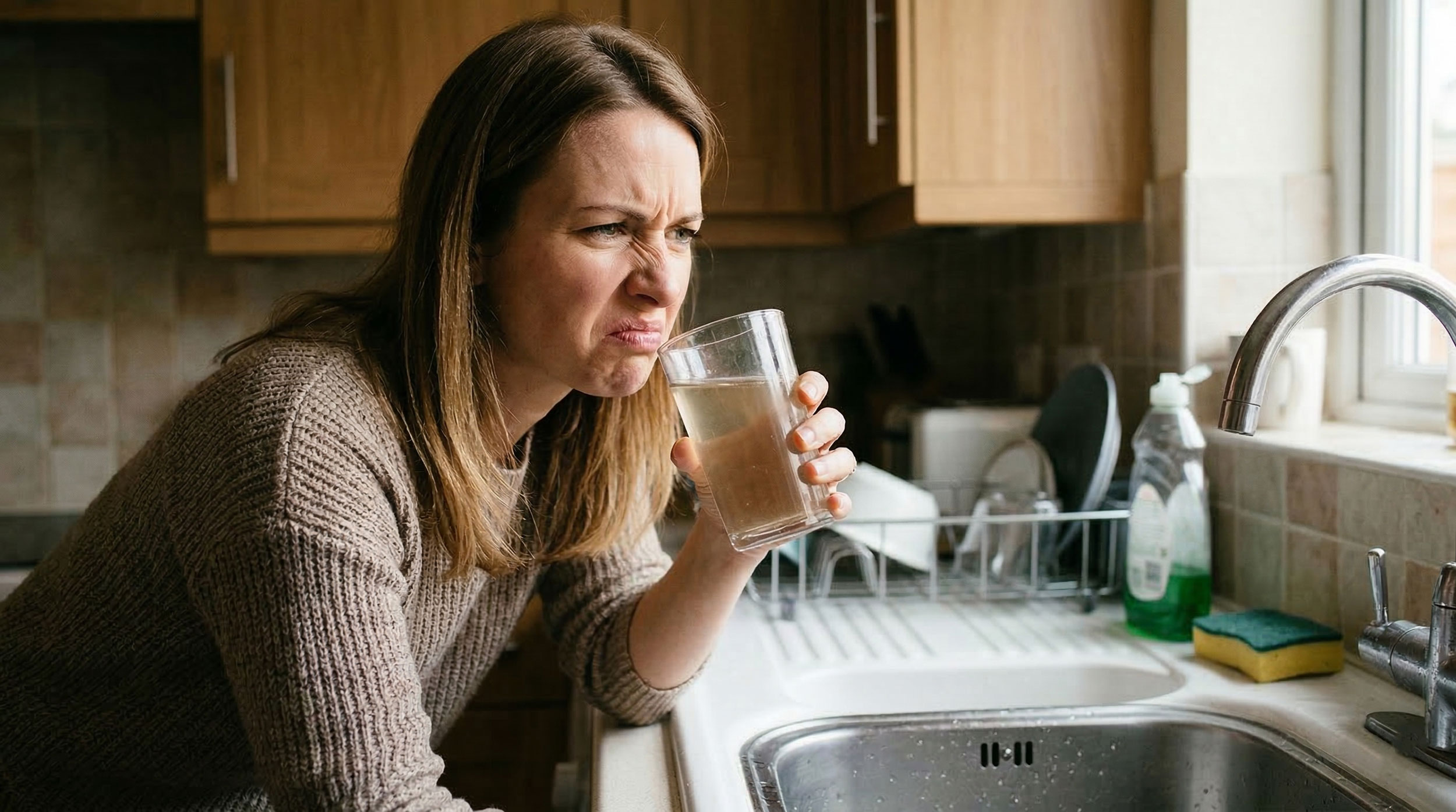
When homeowners think about protecting their water heater, they usually focus on the equipment itself. Tank size. Efficiency rating. Tankless versus traditional. What often gets overlooked is one of the biggest factors affecting performance and lifespan: water quality.
Looking for the Perfect Fit?
For more information on how to choose the right water heater for your home, check out our detailed guide.
In Montgomery County, Berks County, Bucks County, and The Lehigh Valley hard water is common. Whether a home is on private well water or a blended municipal supply, mineral content plays a major role in how long a water heater lasts and how efficiently it operates.
Concerned About Hard Water?
Don’t let mineral buildup damage your home. Schedule a consultation with our experts to find the right solution.
Pairing a water softener with your water heater is one of the smartest long-term investments you can make. Here’s why.
1. Extends the Life of Your Water Heater
Hard water contains calcium and magnesium that separate from water when heated. These minerals form scale inside tanks, on heating elements, and within heat exchangers. The USGS provides an excellent overview to help understand hard water.
In many Montgomery and Bucks County homes, scale buildup is one of the leading causes of premature water heater failure. By removing hardness minerals before water enters the system, a water softener significantly slows scale formation and helps your water heater reach its full expected lifespan. One of the largest manufacturers of water heaters, Rheem helps homeowners answer the question do I need a water softener?
2. Improves Water Heater Energy Efficiency
Scale acts like insulation on heating surfaces. As it builds up, the water heater must run longer and work harder to heat the same amount of water. The Department of Energy helps homeowners understand the benefits of purchasing and maintaining a water softener.
Homeowners throughout Southeastern Pennsylvania often notice:
- Rising energy bills
- Longer recovery times
- Less consistent hot water
Softened water allows heat to transfer more efficiently, helping water heaters operate closer to their rated efficiency and reducing wasted energy. A.O. Smith, one of the most trusted brands in the plumbing industry, explains the effects of hard water..
3. Protects Tankless Water Heaters From Damage
Tankless water heaters are especially sensitive to hard water because of their compact internal heat exchangers. The Department of Energy gives a great overview of considerations when choosing a tankless or on-demand water heater. Even minor scale buildup can restrict flow, reduce output, and increase maintenance needs.
In areas with moderate to high hardness levels, tankless systems without water softening often require frequent descaling and experience shortened service life. Navien, a leader in the tankless water heater industry, helps understand how maintenance of a tankless water heater is impacted by water quality. A water softener helps protect performance and reliability over time.
4. Maintains Consistent Hot Water Output and Recovery
Mineral buildup doesn’t just affect efficiency. It reduces usable capacity.
In traditional tank systems, scale takes up space inside the tank, leaving less room for hot water. In all systems, scale slows heat transfer and increases recovery time between uses.
Many homeowners in New Hope, Doylestown, Gilbertstville, Pottstown, and Perkasie assume their water heater is undersized or failing when the real issue is untreated hard water. Softened water helps maintain consistent hot water delivery and predictable recovery. Bradford White, the most trusted brand by professionals in our region, offers valuable insights into how water quality impacts performance of a water heater.
5. Reduces Maintenance and Service Costs
Hard water increases the need for:
- Flushing and descaling
- Heating element replacement
- Unplanned service calls
By minimizing scale buildup, a water softener reduces stress on internal components and lowers long-term maintenance costs.
Avoid Costly Repairs
Not sure if your system is at risk? Our team can evaluate your water quality and plumbing setup.
6. Helps Protect Manufacturer Warranties
Many water heater manufacturers acknowledge that excessive scale buildup can damage equipment and reduce performance. In some cases, improper water conditions can contribute to denied warranty claims, especially on tankless and high-efficiency systems. Carefully reviewing your water heater warranty information, like this one from Rinnai, helps homeowners understand how water quality can impact coverage.
Installing a water softener helps protect both the physical system and the warranty by maintaining proper operating conditions.
7. Lowers the Total Cost of Water Heater Ownership
While a water softener is an upfront investment, the long-term savings often outweigh the initial cost.
Softened water can lead to:
- Lower energy usage
- Fewer repairs
- Reduced maintenance
- A longer water heater lifespan
Over time, pairing a water softener with a water heater typically results in a lower total cost of ownership compared to operating on hard water alone.
Why This Matters When Replacing or Upgrading a Water Heater
Homes in Montgomery County, Berks County, Bucks County, and The Lehigh Valley vary widely in age, plumbing materials, and water source. A system that performs well in one home may struggle in another without proper water quality protection.
Installing a new water heater without addressing hard water limits performance from day one. Whether you’re replacing a traditional tank, upgrading to tankless, or installing a high-efficiency hybrid system, treating hard water helps ensure your investment delivers the comfort and efficiency you expect.
At Dierolf Plumbing and Water Treatment, we help homeowners choose water heater solutions that account for real-world conditions, including the water quality challenges common throughout Southeastern Pennsylvania.
Frequently Asked Questions
Does hard water really damage water heaters?
Yes. Hard water minerals form scale when heated, which reduces efficiency, causes overheating, and accelerates component wear inside water heaters.
Is a water softener necessary for tankless water heaters?
In areas with hard water, a softener is strongly recommended. Tankless systems are especially sensitive to scale buildup and often require more frequent maintenance without softening.
Can a water softener lower my energy bills?
Yes. By preventing scale buildup on heating surfaces, softened water allows water heaters to operate more efficiently, which can reduce energy consumption over time.
How do I know if my home has hard water?
Common signs include scale on fixtures, cloudy spots on dishes, soap that doesn’t lather well, and frequent water heater issues. A professional water test provides definitive results.
Should I install a water softener when replacing my water heater?
In many cases, yes. Installing a new water heater without addressing hard water can limit its lifespan and performance. Pairing the two often delivers better long-term results.
Final Thoughts
If you’re replacing a water heater, upgrading to tankless, or dealing with inconsistent hot water, a professional evaluation can help you avoid costly mistakes.
The team at Dierolf Plumbing and Water Treatment offers expert water heater guidance and water quality solutions tailored to homes throughout Montgomery and Bucks County. A short consultation can help determine whether a water softener makes sense for your home and your hot water needs.
Ready for Better Water?
Schedule a professional evaluation today and make sure your next water heater performs the way it should!