Table of Contents
What Is Reverse Osmosis, and Why Are Doylestown Homeowners Asking About It?
For a lot of people in Doylestown, water quality has gone from a background concern to a front-burner topic. And honestly, that makes sense. Between news coverage of PFAS “forever chemicals”, aging infrastructure in older neighborhoods, and homeowners who are just paying closer attention to what their families are drinking, questions about filtration come up constantly.
Reverse osmosis, or RO, is one of the most thorough filtration methods available for residential use. It pushes water through a semi-permeable membrane that blocks contaminants at the molecular level. What comes out the other side is exceptionally clean drinking water, right from your own tap.
RO isn’t right for every home, and it isn’t the only tool in the toolbox. But for drinking and cooking water specifically, very few systems match it for contaminant reduction. This article breaks down what an RO system actually does, what’s in Doylestown’s water, and how to figure out whether one makes sense for your situation.
What’s Actually in Doylestown’s Water?
Doylestown sits in the center of Bucks County, and water sources vary quite a bit depending on where you live. The borough itself is served by the Doylestown Borough Water Department, which draws from local wells and surface sources. Homeowners in surrounding areas, including parts of Doylestown Township, New Britain Township, Plumstead, and Chalfont, may be on their own private wells or connected to smaller community systems.
Municipal water goes through treatment before it reaches you, but treatment is not the same as contaminant-free. Chlorine and chloramines are added as disinfectants, which solves one problem but can create others, including taste and odor issues and potential byproducts like trihalomethanes. Older distribution lines and household plumbing can introduce trace lead. And PFAS compounds have been detected in water systems throughout Bucks County and across Pennsylvania.
For a detailed look at what Doylestown homeowners are dealing with specifically, our article on what Doylestown PA homeowners are asking about public water covers the most common questions we hear. We also wrote a focused piece on how to remove PFAS and PFOS from Doylestown water if that’s your primary concern.
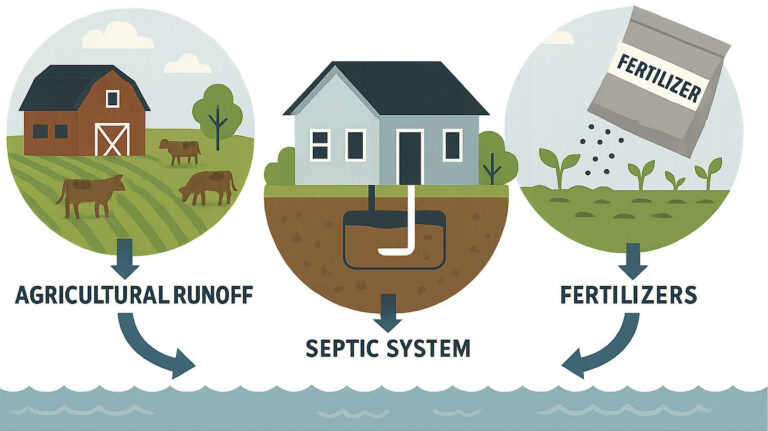
Well water is its own category. Bucks County’s geology includes areas with naturally occurring iron, hardness minerals, nitrates near agricultural land, and in some locations, arsenic. Without regular testing, you genuinely don’t know what’s there. The EPA’s private well guidance recommends annual testing at minimum, and more often if your area has known contamination issues.
For a broader look at water quality concerns in the area, check out our coverage of water concerns in Doylestown, PA.
What a Reverse Osmosis System Removes
A properly installed and maintained RO system can significantly reduce or eliminate a long list of contaminants that show up in Bucks County water. Here’s what it addresses:
- PFAS (per- and polyfluoroalkyl substances) — synthetic chemicals linked to health risks with long-term exposure. The EPA set enforceable maximum contaminant levels for several PFAS compounds in 2024.
- Lead — can enter water from aging distribution pipes and household plumbing, even in homes that appear well-maintained. See our article on treating lead in your water.
- Nitrates — common near agricultural land and a concern for well water users in the townships surrounding Doylestown.
- Chlorine and chloramines — disinfectants that affect taste and smell and can form byproducts with long-term exposure concerns.
- Arsenic — a naturally occurring contaminant found in some Pennsylvania groundwater. Our article on treating arsenic in your water goes deeper on this.
- Dissolved solids and heavy metals — including sediment, certain trace metals, and other compounds. Our piece on heavy metals in home water is worth a read.
- Microplastics — an emerging concern. See our coverage of the impact of PFAS and microplastics on human health.
That said, RO is a point-of-use system. It treats the water at one dedicated tap, not throughout your whole home. It won’t address hard water scale on your appliances, iron staining in your showers, or rotten egg smell from your well. Those require separate whole-home treatment. The Water Quality Association recognizes RO as a reliable treatment for a broad range of contaminants when the system is properly maintained.
How a Reverse Osmosis System Works in Your Home
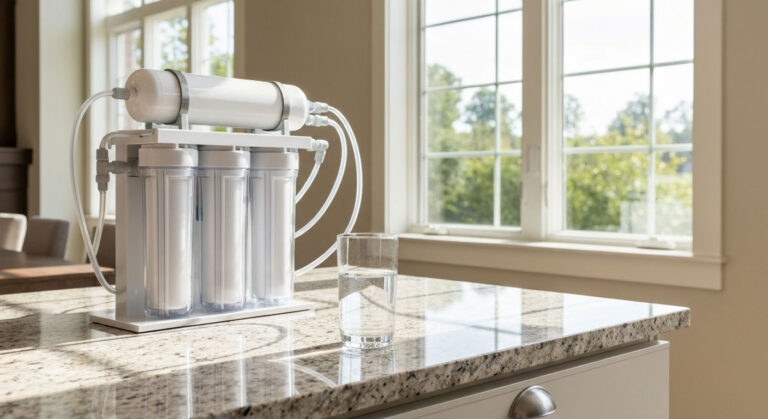
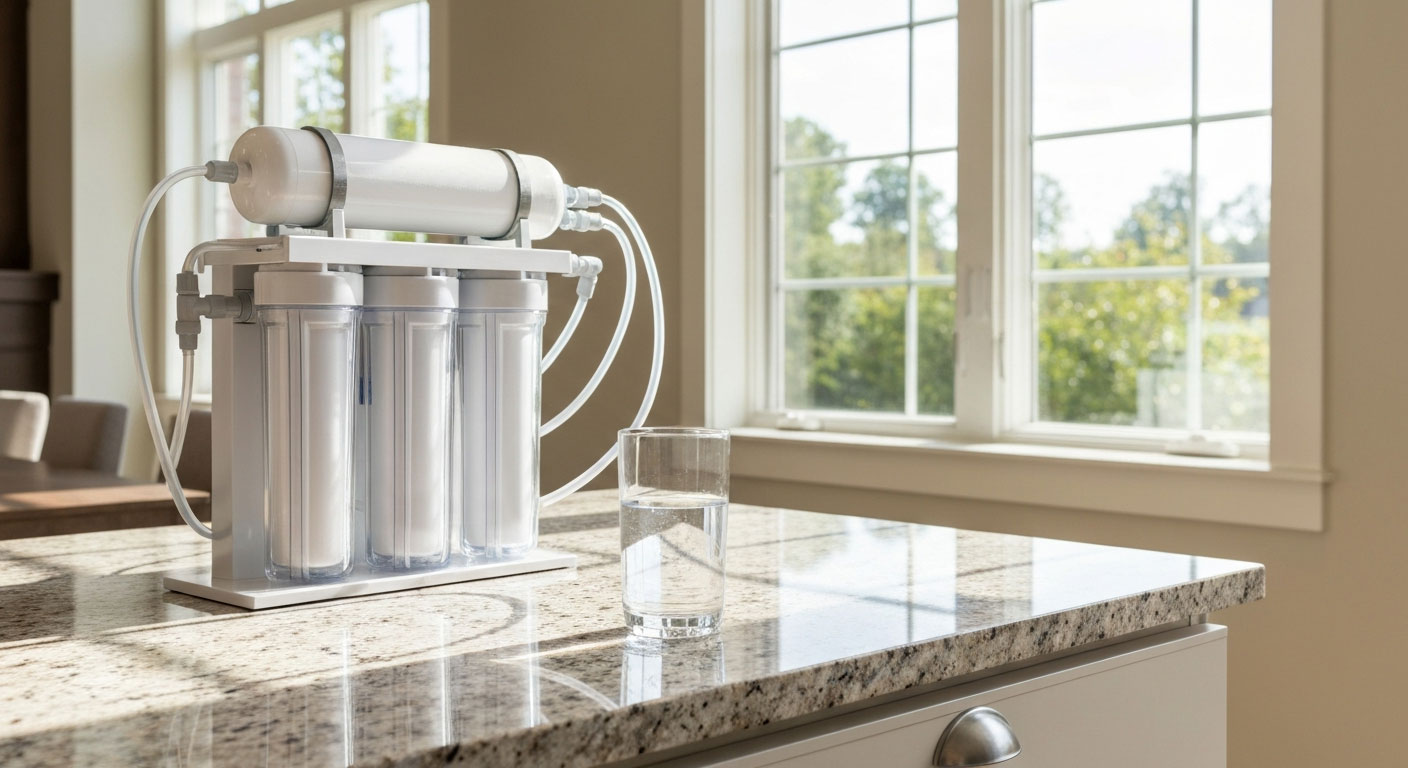
Most residential RO systems install under the kitchen sink and connect to a small dedicated faucet on your countertop or sink deck. The setup is compact, mostly hidden, and doesn’t require changes to your main plumbing.
Water moves through a series of pre-filters first, removing sediment and chlorine that would otherwise damage the membrane. Then it passes through the RO membrane itself, where contaminants are blocked and flushed away as wastewater. A post-filter polishes the water before it reaches your glass. A small pressurized storage tank holds treated water so it’s ready on demand rather than producing it slowly each time you open the tap.
The process is slow by design. That’s what makes it work. Most under-sink systems produce somewhere between 50 and 100 gallons per day, which is more than enough for drinking and cooking in a typical household.
If you’ve come across skepticism about RO systems online, our article debunking common myths about reverse osmosis addresses the most frequent objections. And if you want to understand the full process, how a reverse osmosis system works is a solid starting point.
Signs an RO System Might Be Right for You
Not every home needs one. But certain situations make an RO system a genuinely practical investment for Doylestown and Bucks County homeowners.
If your water test has come back with elevated PFAS, nitrates, lead, or arsenic, an RO system is one of the most direct responses available. If you’re on a private well and haven’t had a comprehensive test in a while, that’s the first step, but an RO system is a reasonable precaution regardless. Our article on whether your well water could be making you sick covers what to watch for.
If your household buys bottled water regularly because the tap water tastes off or you don’t trust it, an RO system typically pays for itself within a year or two. Bottled water isn’t necessarily cleaner anyway, and it adds up fast.
Older homes in Doylestown Borough and the surrounding townships are worth taking seriously. The EPA is clear that no level of lead exposure is safe for children, and an RO system at the drinking tap is one of the most direct ways to address that risk in an older home.
Families with immunocompromised members, pregnant women, infants, or people on dialysis also have more reason to consider point-of-use filtration. Our article on water filtration for immunocompromised individuals goes into the specifics.
What to Consider Before Installing One
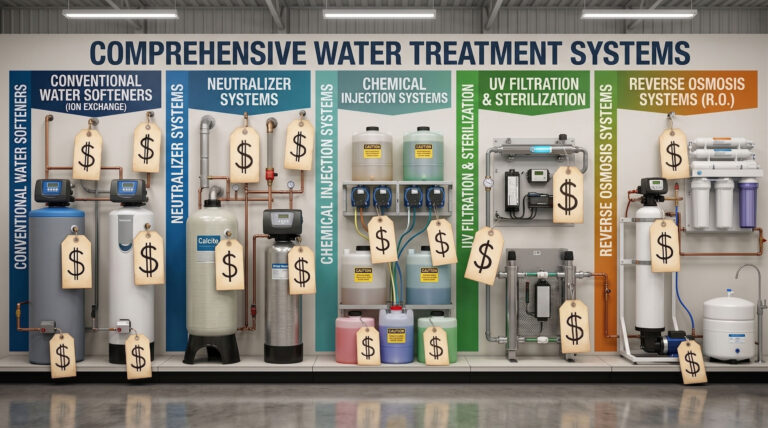
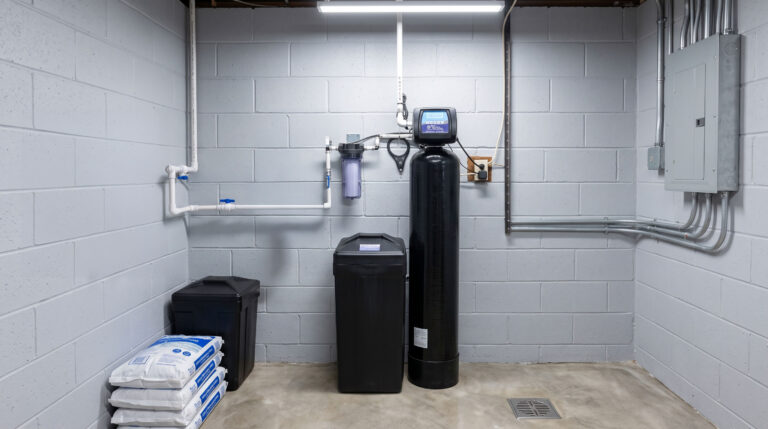
An RO system is a targeted solution, and that’s worth understanding upfront. It treats water at one tap, not throughout your home. If you’re dealing with hard water that’s scaling your water heater, clogging fixtures, or making soap lather poorly, a water softener is the right tool for that. If you have iron staining in your sinks, showers, and laundry, you need iron filtration. These can all work together alongside an RO system.
Maintenance is part of the picture. Pre-filters need replacement every six to twelve months. The RO membrane typically lasts two to three years depending on your water quality and how much water your household uses. If you skip maintenance, effectiveness drops. Factor that in when you’re weighing the decision.
If bacteria is a concern, particularly for well water users in New Britain, Plumstead, or Buckingham Township, an RO membrane alone won’t address that. A UV filtration system paired with an RO system covers both chemical and biological concerns. Our guide on ultraviolet treatment for homeowners explains how that works.
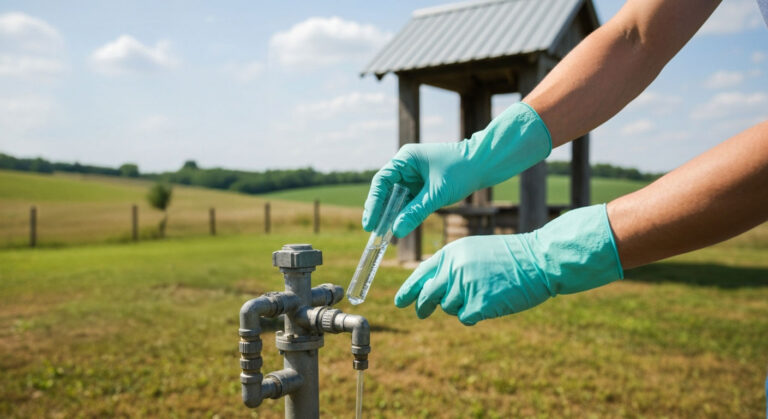
Start with a water test if you’re not sure which direction to go. Testing tells you exactly what’s in your water, which makes the treatment decision straightforward rather than a guess. Our article on how to choose the right reverse osmosis system walks through the selection process in more detail. You can also read about what happens during a free water test so you know what to expect.
How Dierolf Plumbing and Water Treatment Can Help
Dierolf Plumbing and Water Treatment serves homeowners throughout Bucks County, including Doylestown Borough, Doylestown Township, New Britain, Chalfont, Warminster, Warrington, New Hope, Buckingham, and the communities in between. Our licensed plumbers handle water testing, system selection, installation, and ongoing service.
It starts with water testing and analysis to get a clear picture of what’s actually in your water. From there, we recommend treatment based on your results, not a package that sounds good on paper. If a reverse osmosis system is the right fit, we handle installation and walk you through maintenance so you know what to expect long-term.
For homes on well water in the Doylestown area, we also offer well water testing and treatment as part of a comprehensive approach. If you’re in a home with plumbing concerns or want to understand all your options across water treatment systems, we can help you sort through it.
Clean, safe drinking water at your tap is worth getting right. If you’re ready to find out what’s in your water and what to do about it, reach out through dscwater.com/ to schedule a water test or consultation.
Schedule Your Free In-Home Water Analysis
Not sure what’s in your Doylestown water? The best place to start is a free in-home water analysis with one of our licensed water treatment specialists. We’ll test your water on-site, walk you through what we find, and give you honest, straightforward recommendations, whether that’s an RO system, a whole-home solution, or something in between. No pressure, no one-size-fits-all packages.
Fill out the form below to schedule your free analysis and consultation:
FAQs
Is reverse osmosis water safe to drink every day?
Yes. Water treated by a properly maintained RO system is safe for daily drinking and cooking. Some people worry that RO water is “too pure” because it removes beneficial minerals, but the World Health Organization notes that minerals in drinking water make up only a small fraction of your daily nutritional intake. If mineral content is a specific concern, remineralization filters are available as an add-on to most systems.
How much does a reverse osmosis system cost to install in Doylestown, PA?
It depends on the system and your home’s plumbing. Under-sink RO systems for residential use typically range from a few hundred to over a thousand dollars installed. Starting with a water test helps make sure you’re investing in the right solution for your specific situation rather than just the most popular option.
Does a reverse osmosis system remove PFAS?
Yes. Reverse osmosis is one of the most effective methods for reducing PFAS compounds in drinking water. The EPA and independent research both support RO as a reliable treatment option. You can learn more in our article on how to remove PFAS and PFOS from Doylestown water.
How often do reverse osmosis filters need to be replaced?
Pre-filters generally need replacement every six to twelve months. The RO membrane itself typically lasts two to three years, depending on water quality and household usage. Your installer can give you a maintenance schedule based on your specific system and water test results.
Can I use a reverse osmosis system with well water?
Yes, though well water often contains contaminants like iron, sediment, or bacteria that can clog or damage an RO membrane if not addressed first. A water test is essential before installing any treatment system on a well. Pre-treatment steps may be needed to protect your RO system and keep it running effectively. Our article on annual well water checkups covers what testing you should be doing regardless.
Does a reverse osmosis system help with hard water?
Not directly. RO systems do remove some dissolved minerals that contribute to hardness, but they are not designed as a whole-home softening solution. If hard water is causing scale buildup on your appliances, fixtures, or water heater, a dedicated water softener is the right treatment. The two systems can work together, with the softener handling whole-home hardness and the RO handling your drinking water.
How do I know if I need a reverse osmosis system or something else?
Start with a water test. Testing identifies which contaminants are present and at what levels, which makes it much easier to match the right treatment to your actual water quality. Guessing at a solution without knowing what’s in your water is how people end up spending money on the wrong system. Dierolf offers water testing and analysis for homeowners throughout Bucks County. You can also read our guide on which water purification system is right for you for a broader comparison.
What’s the difference between reverse osmosis and a whole-house water filter?
A whole-house filter treats all the water entering your home, which is useful for sediment, chlorine taste and odor, and some contaminants throughout your plumbing. An RO system treats water at one specific tap and goes further in contaminant reduction, including PFAS, nitrates, arsenic, and lead. Many Doylestown homeowners use both. Our article on water filtration vs. water treatment vs. water purification breaks down the differences clearly.