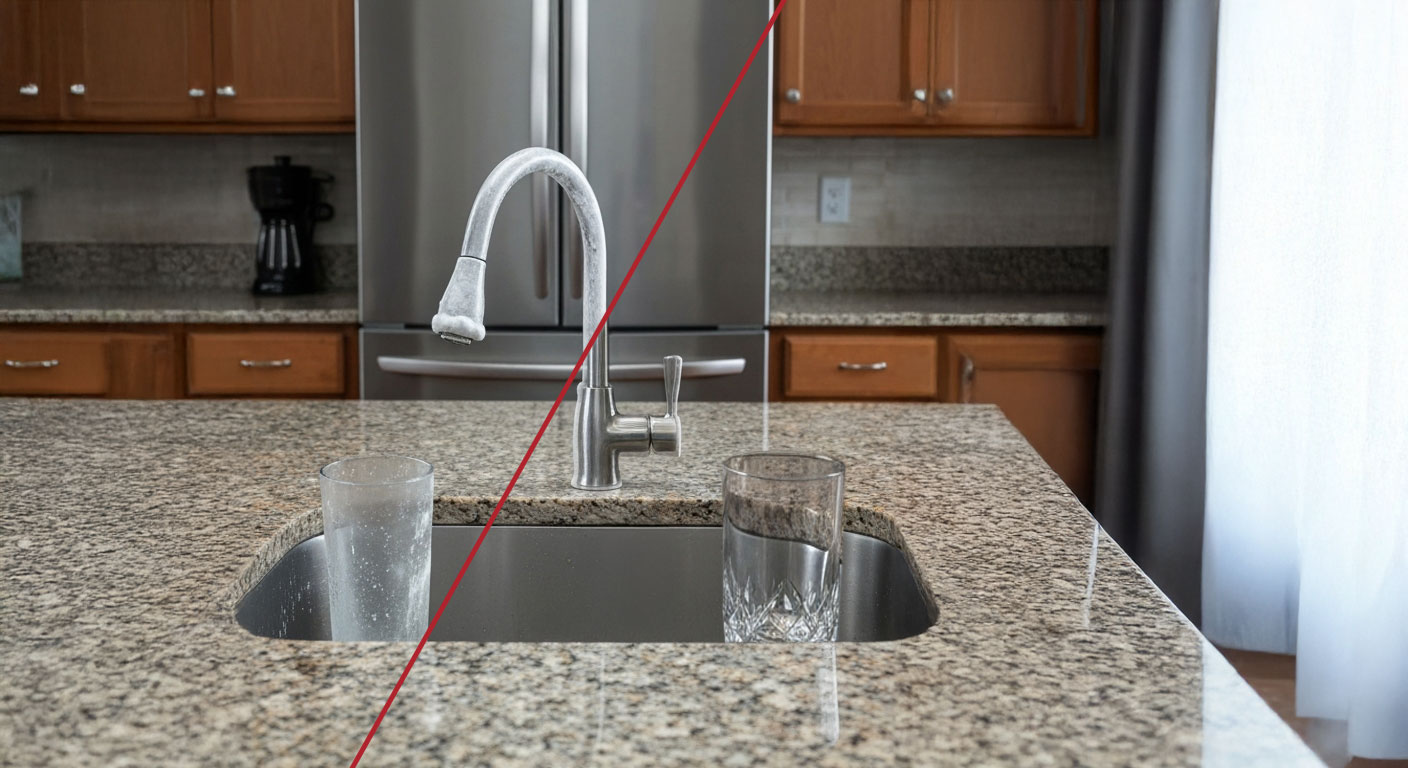
If you live in Collegeville and you’ve noticed chalky buildup on your faucets, soap that won’t lather the way it should, or laundry that comes out stiff no matter what detergent you use — you’re not imagining things. Hard water is extremely common here in Montgomery County, and it affects homes throughout the Collegeville area, including Trappe, Skippack, Royersford, Perkiomen Township, Lower Providence, and Eagleville.
The good news is that once you know what’s going on, it’s one of the more straightforward water quality issues to address. Here’s what hard water and soft water actually mean, how to tell which one you’re dealing with, and what your options are.
Table of Contents
- Why Water Hardness Matters for Your Home
- What Is Hard Water, Exactly?
- Signs of Hard Water in Collegeville and Nearby Communities
- What Is Soft Water?
- Hard Water vs. Soft Water: A Side-by-Side Look
- Why Collegeville Homes Are Especially Prone to Hard Water
- How a Water Softener Works
- Is a Water Softener Right for Your Home?
- Getting the Right Solution for Your Water
- Schedule a Free Water Analysis
- FAQs
Why Water Hardness Matters for Your Home
Hard water isn’t an emergency. But it is a slow, steady drain on your plumbing, your appliances, and your wallet. Scale builds up inside water heaters and chips away at their efficiency over time. Mineral deposits clog showerheads and faucet aerators. Soap and shampoo don’t rinse cleanly, leaving residue on skin and hair.
Over months and years, those effects compound. Appliances wear out faster. Plumbing repairs come sooner. And your everyday experience with water — bathing, cooking, cleaning — is noticeably worse than it needs to be.
Knowing whether you have hard or soft water is the first step toward fixing it.
What Is Hard Water, Exactly?
Hard water contains elevated levels of dissolved minerals — primarily calcium and magnesium — that enter groundwater naturally as it moves through rock formations underground. The more mineral-rich the geology beneath your home, the harder your water tends to be.
Water hardness is measured in grains per gallon (GPG) or milligrams per liter (mg/L). The U.S. Geological Survey classifies it like this:
- Soft: 0 to 1 GPG
- Slightly hard: 1 to 3.5 GPG
- Moderately hard: 3.5 to 7 GPG
- Hard: 7 to 10.5 GPG
- Very hard: Over 10.5 GPG
Most homes in the Collegeville area — whether on municipal supply or a private well — fall in the moderately hard to very hard range. And if you’re on a private well in Perkiomen Township, Skippack, or the rural edges of Upper Providence, your hardness levels can climb even higher depending on local geology.
Signs of Hard Water in Collegeville and Nearby Communities
You may already be living with hard water without connecting the symptoms to the source. Common signs include:
- White or yellowish scale on faucets, showerheads, and around drains
- Soap scum that builds up quickly in sinks, tubs, and shower walls
- Spots on dishes and glassware after washing, even in the dishwasher
- Dull, stiff, or scratchy laundry despite using detergent
- Dry skin and hair after showering, or a filmy feeling that won’t rinse away
- Reduced water pressure from mineral-clogged pipes or fixtures
- Higher energy bills from a water heater working harder against scale-coated heating elements
If several of these sound familiar, it’s worth getting your water tested. schedule a free water analysis with Dierolf Plumbing and Water Treatment to get a clear picture of what’s actually in your water — not just hardness, but a full range of potential contaminants.
What Is Soft Water?
Soft water has had most of its calcium and magnesium removed, either naturally or through treatment, and typically measures below 1 GPG. The difference is noticeable almost immediately.
Soap lathers easily and rinses completely. Dishes come out spot-free. Laundry feels softer. Your water heater and appliances run more efficiently because there’s no mineral scale accumulating inside them. Skin and hair tend to feel genuinely clean after bathing rather than coated.
One thing worth knowing: softened water does contain slightly elevated sodium levels as a byproduct of the ion exchange process most softeners use. For the vast majority of households, this isn’t a concern. But if someone in your home follows a sodium-restricted diet, it’s worth discussing with both your doctor and your water treatment professional before moving forward.
Hard Water vs. Soft Water: A Side-by-Side Look
| Factor | Hard Water | Soft Water |
|---|---|---|
| Mineral content | High calcium and magnesium | Low calcium and magnesium |
| Soap lathering | Poor — requires more soap | Good — lathers easily |
| Appliance wear | Faster wear from scale buildup | Longer appliance lifespan |
| Plumbing | Scale accumulates in pipes over time | Pipes stay cleaner |
| Dishes and laundry | Spots, residue, stiffness | Cleaner results |
| Skin and hair | Can feel dry or filmy | Feels cleaner after rinsing |
| Sodium content | Very low | Slightly elevated |
| Taste | Often neutral to slightly mineral | Can taste slightly salty to some |
Why Collegeville Homes Are Especially Prone to Hard Water
Geography plays a real role here. The Collegeville area sits on the Brunswick Formation — a geological layer of red shale, sandstone, and siltstone that underlies much of central Montgomery County. The Collegeville-Trappe Joint Public Works Department actually pulls its municipal supply from ten groundwater wells drilled directly into this formation. That means even homes on town water are drawing from a source with naturally elevated mineral content.
Homeowners on private wells in Perkiomen Township, Skippack Township, and the more rural stretches of Upper and Lower Providence feel this most directly. Private well water has no treatment step between the aquifer and your tap, so whatever minerals the geology imparts come straight into your home. Our article on what Pennsylvania well owners need to know about water quality covers more of what can show up alongside hardness.
Municipal systems in Collegeville, Trappe, and nearby Royersford treat water for safety and regulatory compliance — but hardness is generally not part of that treatment. The EPA does not regulate water hardness as a health contaminant, so it’s left to homeowners to address on their own.
The older housing stock throughout the Borough of Collegeville — many homes dating to the early and mid-1900s along Main Street and the streets near Ursinus College — also tends to have aging plumbing that is more susceptible to the long-term effects of mineral scale. Our guide on why water treatment matters for older homes goes deeper on that topic if it applies to your situation.
How a Water Softener Works
A water softener removes calcium and magnesium through a process called ion exchange. Resin beads inside the softener tank carry a sodium charge. As hard water passes through, calcium and magnesium ions swap places with sodium ions — and the water comes out soft.
Over time, those resin beads become saturated with minerals. The system then runs a regeneration cycle, flushing the beads with a salt brine solution to recharge them. That’s why softeners need periodic salt refills.
Modern systems use demand-initiated regeneration, meaning they only run a cycle when the resin actually needs it — not on a fixed timer. This saves both salt and water compared to older models.
A properly sized and installed water softener treats the problem at the whole-house level, so every tap, appliance, and fixture benefits. For a deeper look at the mechanics, see our guide on how a water softener works.
Is a Water Softener Right for Your Home?
A softener is the right call when your primary issue is hardness — elevated calcium and magnesium. But water in the Collegeville area often contains more than just minerals.
Well water in Perkiomen Township, Skippack, and Worcester Township, for example, can contain iron, which leaves orange-brown stains on sinks and laundry. Our article on iron in your water covers what to look for. Some homes also deal with low pH (acidic water), sulfur, or bacteria from older wells — a sulfur filtration system or neutralizer may be needed alongside a softener in those cases. A softener alone won’t address any of those issues, and high iron levels can actually foul a softener’s resin bed if the iron isn’t treated first with a dedicated iron filtration system.
That’s why a water test always comes before any equipment recommendation. Once you know what’s actually in your water, the right combination of treatment solutions becomes clear. For homes with both hardness and drinking water concerns, pairing a softener with a reverse osmosis system at the kitchen tap is a common and effective approach — the RO system handles the added sodium along with other contaminants. Our article on how to choose the right reverse osmosis system for your home walks through that decision in more detail.
For homes on private wells, an annual well water check-up is the smartest way to stay ahead of shifting water quality — hardness included. Groundwater conditions change, and what your well tested at five years ago may not reflect what’s coming out of the ground today.
Getting the Right Solution for Your Water
Hard water is common across Collegeville, Trappe, Royersford, Eagleville, and the surrounding communities of Montgomery County — but it’s not something you have to live with. The right water treatment solution protects your pipes and appliances, yes. But more importantly, it protects the quality of your daily life at home.
Dierolf Plumbing and Water Treatment works with homeowners throughout Montgomery County and the broader southeastern Pennsylvania region to test their water and recommend water treatment solutions that fit both their home and their budget. Our licensed master plumbers handle installation and service, so you’re not just buying equipment — you’re investing in a system that works correctly from day one.
Ready to find out what’s actually in your water? Visit dscwater.com to learn about our water testing and treatment services, or schedule a free water test for your Collegeville home.
Schedule a Free Water Analysis
Not sure what’s flowing through your pipes? We make it easy to find out. Our team offers free in-home water analysis for homeowners throughout Collegeville, Trappe, Royersford, Skippack, Eagleville, and the surrounding Montgomery County communities. We’ll test your water on-site and walk you through the results in plain language — no sales pressure, just straight answers about what you’re working with and what your options are.
Fill out the form below to schedule your free water analysis and consultation.
FAQs
How do I know if I have hard water in my Collegeville home?
A professional water test is the most reliable way to know for certain, but the signs are usually pretty hard to miss — white scale on faucets, soap scum that won’t quit, spots on dishes, stiff laundry, and dry skin or hair after bathing. Most homes in Collegeville and surrounding Montgomery County communities have moderately hard to very hard water, largely due to the region’s Brunswick Formation geology. Learn what to expect during a free water test and schedule yours with Dierolf Plumbing and Water Treatment.
Is hard water dangerous to drink?
Hard water is not considered a health hazard. Calcium and magnesium are naturally occurring minerals, and drinking water that contains them is generally safe. That said, hard water does affect taste and, over time, causes real wear on your plumbing, appliances, and fixtures. If you have additional concerns about contaminants beyond hardness, a free water analysis is the best place to start.
Does Collegeville municipal water get treated for hardness?
No. The Collegeville-Trappe Joint Public Works Department pumps water from groundwater wells drilled into the Brunswick Formation and treats it for safety and regulatory compliance — but hardness is not part of that treatment process. The EPA does not regulate water hardness as a health contaminant, which means addressing it is up to you as a homeowner. Many Collegeville and Trappe residents on municipal supply still benefit significantly from a whole-house water softener.
How does a water softener affect sodium levels in my drinking water?
The ion exchange process does add a small amount of sodium to softened water. For most households, this is a non-issue. If someone in your home is on a low-sodium diet, pairing your softener with a reverse osmosis system at the kitchen tap is a practical solution — the RO system removes the added sodium before it reaches your glass.
Can a water softener remove iron from my well water?
Standard softeners can handle trace amounts of dissolved iron, but they aren’t designed as iron removal systems. High iron levels can actually damage the resin bed over time. If you’re on a private well in Perkiomen Township, Skippack, or Upper Providence and your water test shows elevated iron, a dedicated iron filtration system is typically installed upstream of the softener to address the iron and protect the equipment.
How much salt does a water softener use?
It depends on the softener’s size, your household’s water usage, and how hard your water is. Modern demand-initiated systems are significantly more efficient than older timer-based models, only regenerating when the resin actually needs it. Your water treatment professional can give you a realistic estimate once they’ve reviewed your water test results and household size. You can also read more about salt-based softeners vs. salt-free descalers to understand your options.
How long does a water softener last?
With proper maintenance, most water softeners last 10 to 15 years or more. Regular salt refills, occasional resin cleaning, and periodic professional service keep the system running well. Retesting your water every few years is also a smart habit — groundwater quality can shift over time, especially for homes on private wells in the Collegeville area. Check out our article on 5 warning signs your water softener isn’t working so you know what to look for.
Do I need a water softener if I’m on Collegeville or Trappe municipal water, not a well?
Quite possibly, yes. Municipal water in this area is treated for safety, but hardness isn’t part of that process. Homeowners on town water throughout Collegeville, Trappe, and Royersford regularly benefit from a softener. A water test will confirm your hardness level and give you the information you need to decide whether treatment makes sense for your home.